In the United States, the average subscription fee for streaming services like Disney+ without ads has increased by 25% over the past year. This phenomenon is being referred to as 'streamflation' (streaming + inflation).
The Wall Street Journal (WSJ) reported on the 15th (local time) that Disney, which operates online video services (OTT) such as Disney+ and Hulu, has decided to raise prices again following last fall. Disney's decision follows recent price hikes by Peacock, Max (formerly HBO Max), Paramount+, and Apple TV+. WSJ stated, "Over about a year, the ad-free plans of major streaming platforms have increased by nearly 25%. Call it streamflation."
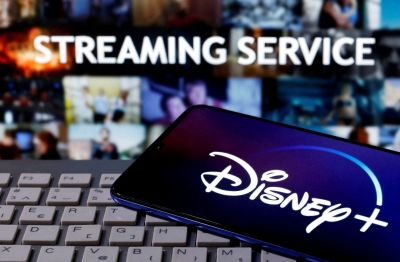
This trend of subscription fee increases is seen as a signal marking a new phase in the streaming wars. Streaming companies, which have so far endured massive financial losses to rapidly acquire subscribers and build an initial base, are now turning their attention to profitability. WSJ conveyed the atmosphere, saying, "They are testing customer loyalty by betting that many people will not cancel their subscriptions even if prices rise."
The monthly subscription fee for Disney+ will increase from the current $10.99 to $13.99 starting this October for the ad-free plan. This is double the launch price of $6.99 in 2019 and significantly higher than the $7.99 price in October 2022. Hulu's plan will rise from $14.99 last October to $17.99 in October this year, making it the most expensive among single streaming services. Paramount+ and Peacock have each increased from $9.99 to $11.99.
In the case of the 'streaming giant' Netflix, there has been no official price increase in the past year. However, by eliminating the basic $9.99 plan, the price for the ad-free plan jumped to $15.49. Along with blocking account sharing, this move is seen as effectively a price increase. Rich Greenfield, an analyst at Lightshed Partners, remarked, "Can you raise prices by 30% without increasing customer churn? That is the big question."
This streamflation trend is confirmed to be encouraging subscribers to choose so-called 'ad-supported plans,' where viewers must watch ads during video playback. Disney, which has raised prices twice in a year, has not changed its ad-supported plan. Regarding this, Disney CEO Bob Iger explained during last week's earnings conference call, "We are clearly using pricing strategies to encourage more subscribers to move to the ad-supported tier."
Starting in October, Disney+ and Hulu customers will be able to use ad-supported plans at prices $6 and $10 cheaper, respectively, compared to the ad-free plans. Netflix also has an ad-free plan at $15.49 and an ad-supported plan at $6.99, greatly widening the price gap depending on whether ads are shown during viewing. WSJ reported, "Overall, prices for most streaming platforms are about twice as high without ads compared to ad-supported plans." These ad-supported plans play a significant role in maintaining subscribers while enhancing the profitability of streaming companies.
Recently, streaming companies have also been focusing on cost reduction. Roy Price, formerly of Amazon who started Amazon On Demand Video, said streaming companies are trying to cut content budgets without losing subscribers. Warner Bros. Discovery CEO Davis Zaslav has pointed out that subscription fees for streaming services have been low relative to the costs invested in content.
According to S&P Global Market Intelligence, U.S. households using one or more streaming services subscribe to an average of 4.1 services and pay $29.64 per month. This amount is nearly double what it was in 2018, before the streaming wars intensified.
© The Asia Business Daily(www.asiae.co.kr). All rights reserved.

















