Organizational Restructuring and Assignment of New Industry Discovery Tasks
Interview Request: "Will Do After the Shareholders' Meeting"
Improving Corporate Structure... Eliminating the Vicious Cycle
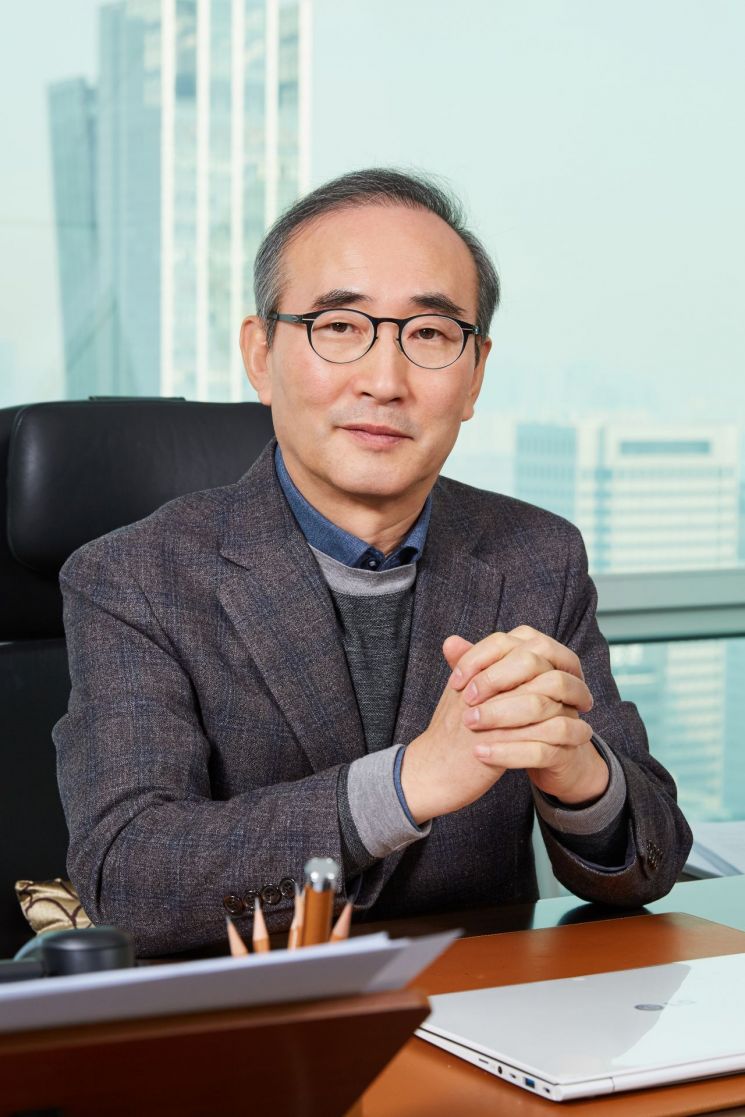
Former LG CNS CEO Kim Young-seop (photo) has been chosen as KT's prospective leader. He faces the task of reorganizing the company and discovering future growth engines for KT to present new growth drivers. It is also crucial that he avoids repeating the misfortunes experienced by previous KT CEOs in the pursuit of true corporate normalization.
LG Background... Emphasis on Digital Innovation
KT's board conducted in-depth interviews on the 4th and selected former CEO Kim as the final candidate for KT's CEO. Although some find it somewhat surprising that the board chose an 'LG man' who spent nearly 40 years at LG, many agree that this decision aims to bring bold innovation from an outsider and to break free from controversies surrounding 'interest cartels.' Kim's corporate management experience and expertise in information and communication technology (ICT) were also highly praised.
Kim was born in April 1959 in Mungyeong, Gyeongbuk. While all previous KT CEOs since privatization were graduates of Seoul National University, Kim graduated from Korea University. He joined Lucky-Goldstar Trading, the predecessor of LG, in 1984 and spent a long time in the finance sector. In 2014, he served as Chief Financial Officer (CFO) at LG Uplus, overseeing finance, before returning to his original company as CEO of LG CNS the following year.
During his tenure as CEO of LG CNS, he emphasized digital innovation that solves customers' pain points and development through collaboration and innovation. In last year's New Year's address, he stated, "It is time to leap forward as a 'digital growth partner' trusted and recognized by customers." He also urged, "Leaders are expected to grow into work innovators and creative entrepreneurs suited for the new era." He stressed the need to prepare for the future ahead of market changes.
Upcoming Appointment Procedures and Challenges
Kim must be approved at an extraordinary shareholders' meeting at the end of this month to be officially appointed as CEO. With changes to the articles of incorporation, the voting threshold has been raised from a majority of 50% of shares participating in the vote to 60%. This makes shareholders' votes even more critical. As of the end of March, KT's largest shareholders are the National Pension Service (8.27%), Hyundai Motor Group (7.79%), and Shinhan Bank (5.57%). Foreign investors hold 40% of shares, and minority shareholders hold 35%. Currently, there are no major objections to his appointment, so barring any surprises, Kim is expected to become KT's new leader.
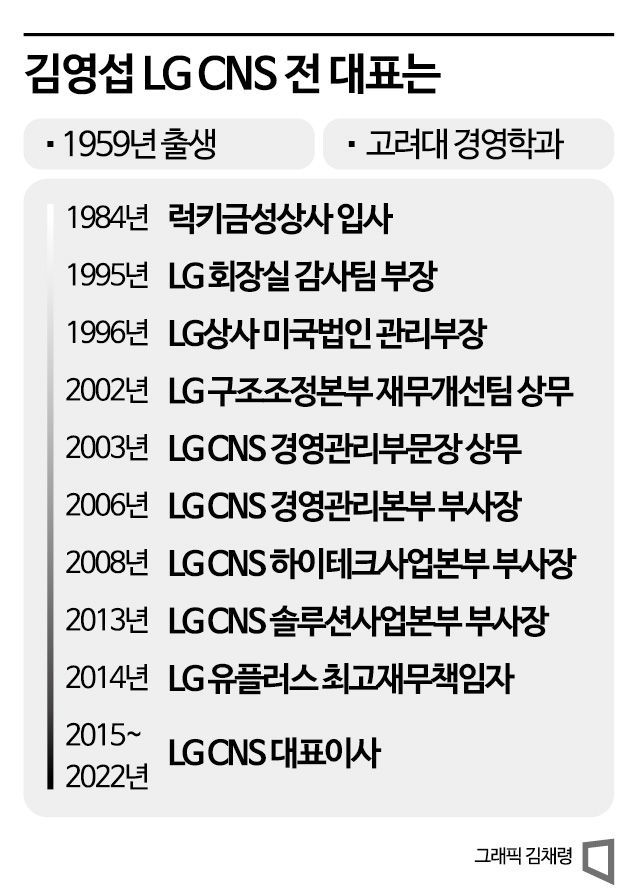
KT, with annual sales reaching 25 trillion won, has experienced a management vacuum for about nine months since November last year. After taking office, Kim, as a financial expert, is expected to reorganize the company to improve work efficiency. Furthermore, he has the responsibility to lead changes in future industries such as artificial intelligence (AI) and to expand new businesses so that KT can grow into a global company. During his time as LG CNS CEO, he transformed the company's structure through large-scale organizational restructuring, improvements in personnel evaluation methods, and promotion of digital innovation.
However, the ongoing prosecution investigation into KT, which began with allegations of preferential subcontracting, poses a burden for Kim. Recently, Hwang Wook-jung, CEO of KDFS, a KT partner company, was arrested and indicted, and the prosecution's focus is now on KT's past management. Kim must be cautious with his words and actions. In fact, he recently expressed a cautious stance in an interview request from Asia Economy, saying, "I will do it after the shareholders' meeting has passed." This appears to be influenced by the case of former KT CEO Yoon Kyung-rim, who voluntarily resigned after being nominated in March amid political criticism.
Kim's long-term challenge is to make KT a company that is not shaken by external pressures. KT has suffered management turmoil and misfortunes every time the government changes. As a so-called 'ownerless company' without a proprietor, KT has been vulnerable to external influences. A former KT executive stated, "It is necessary to break away from the tradition of concentrated authority in the CEO, the closed organizational culture, and political pressure controversies, to put KT back on the right track and transform it into a leading company in the telecommunications industry."
© The Asia Business Daily(www.asiae.co.kr). All rights reserved.
![Clutching a Stolen Dior Bag, Saying "I Hate Being Poor but Real"... The Grotesque Con of a "Human Knockoff" [Slate]](https://cwcontent.asiae.co.kr/asiaresize/183/2026021902243444107_1771435474.jpg)












