"Terms Should Be Interpreted in Favor of the Customer"
Second Trial Remanded After Considering Disability of the Same Body Part
The Supreme Court has ruled that cognitive decline and aphasia resulting from central nervous system damage cannot be considered disabilities occurring in the same part of the body.
Even if insurance or mutual aid contract terms prohibit duplicate payments for disabilities occurring in the same part of the body, the ruling states that since these are separate disabilities, insurance payments must be made for each.
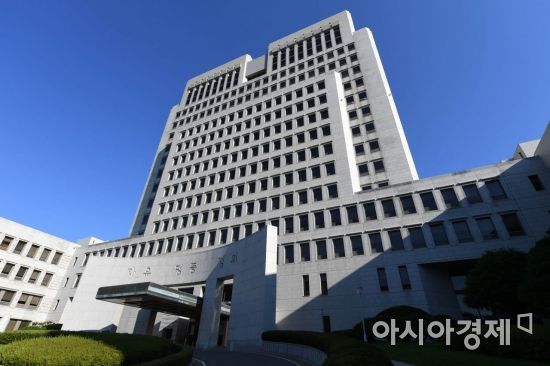
According to the legal community on the 7th, the Supreme Court's 3rd Division (Presiding Justice Ahn Cheol-sang) overturned the second trial's ruling against the plaintiff in the appeal case filed by Mr. A's spouse, Lee, against the Saemaeul Geumgo Central Association, and remanded the case to the Seoul High Court.
The court stated, "The lower court erred in interpreting the contract terms regarding the scope of mutual aid payment and failed to conduct necessary hearings, which affected the judgment," as the reason for overturning and remanding.
In February 2017, Mr. A was standing at the end of a small cargo vehicle's loading bed on a roadside in Dangjin-si, Chungnam Province, loading rice when the driver suddenly moved the vehicle forward, causing Mr. A to fall onto the road and sustain a severe head injury.
Due to the accident, Mr. A suffered central nervous system damage, resulting in cognitive decline severe enough to make daily life impossible without assistance, and also developed aphasia, losing the ability to speak.
When the Saemaeul Geumgo Central Association paid 3.5 million KRW in mutual aid funds in April the following year, corresponding to disability grade 4 under the mutual aid insurance terms, Mr. A's side filed a lawsuit demanding additional payment.
Medical evaluation by the court determined that Mr. A's aphasia was a "disability involving complete and permanent loss of speaking function," and the cognitive decline was a "disability leaving clear damage to the central nervous system requiring lifelong occasional nursing care." According to the contract terms, these corresponded to disability grades 1-2 and 2-1, respectively.
However, the Saemaeul Geumgo Central Association's contract stipulated that "if two or more types of disabilities occur due to the same accident during the mutual aid period, the corresponding living pension, treatment pension, or accident disability mutual aid funds shall be paid for each," but also included a proviso stating, "However, if the disability states occur in the same part of the body, only the highest grade living pension, treatment pension, or accident disability mutual aid fund shall be paid."
Ultimately, the dispute in the trial was whether Mr. A's disabilities should be considered separate disabilities or disabilities occurring in the same part of the body resulting from central nervous system damage.
The first trial ruled in favor of Mr. A, ordering payment of about 400 million KRW for treatment costs and pensions combined. In contrast, the second trial sided with the Saemaeul Geumgo Central Association, reducing the payment amount to about 250 million KRW.
However, the Supreme Court's judgment differed. The Supreme Court ruled that since the two disabilities cannot be regarded as occurring in the same part of the body, mutual aid funds must be paid separately for each.
The court stated, "The lower court interpreted 'disability states occurring in the same part of the body' as including disabilities occurring in one part of the body and disabilities appearing in other parts caused by the former," and added, "Such interpretation by the lower court is difficult to accept as is."
The court cited as grounds for this judgment that ▲ the contract's disability grade classification table separately distinguishes "complete and permanent loss of speaking or chewing function" as grade 1-2 and "clear damage to the central nervous system or mental state requiring lifelong occasional nursing care" as grade 2-1, each as separate reasons for mutual aid payment; ▲ and that the contract's disability grade classification commentary, part of the contract, only includes regulations for "the same part of the body" regarding arms, legs, eyes or ears, and spine, but contains no provisions for the central nervous system area or cases where disabilities in other body parts arise due to nervous system damage.
The court concluded, "The phrase 'disability states occurring in the same part of the body' as defined in this mutual aid contract should be interpreted literally as disabilities occurring and existing in the same part of the body, which aligns with the principles of objective and uniform interpretation," and "it cannot be expanded to include disabilities occurring in two or more different parts of the body simply because they originate from the same part of the body."
It further added, "Even if there is room for such interpretation, the meaning of 'the same part of the body' in this mutual aid contract is not clear, and in such cases, it should be interpreted in favor of the customer and against the contract drafter, which aligns with the 'principle of interpreting ambiguities against the drafter' in contract interpretation."
© The Asia Business Daily(www.asiae.co.kr). All rights reserved.
![Clutching a Stolen Dior Bag, Saying "I Hate Being Poor but Real"... The Grotesque Con of a "Human Knockoff" [Slate]](https://cwcontent.asiae.co.kr/asiaresize/183/2026021902243444107_1771435474.jpg)
















