Court: "Procedural Defense Rights Fully Guaranteed"
A female executive at the Ministry of Gender Equality and Family who committed workplace power harassment received a severe disciplinary action. She claimed that she was retaliated against after reporting internal corruption, but the Supreme Court ruled that the disciplinary action was justified.
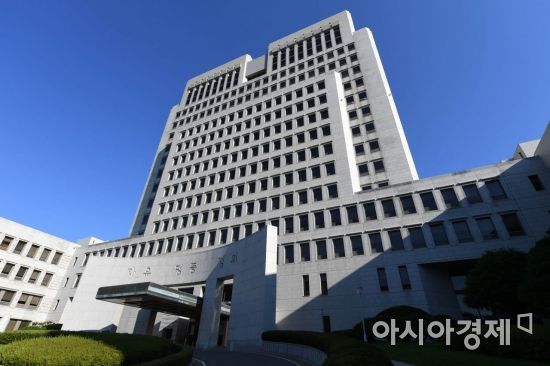
The Supreme Court's Second Division (Presiding Justice Cheon Dae-yeop) announced on the 6th that it upheld the lower court's ruling in favor of the Ministry of Gender Equality and Family in a lawsuit filed against the Anti-Corruption and Civil Rights Commission (ACRC), which sought to cancel the decision to guarantee the status of public official A.
A, who worked as a manager (section chief) at the Ministry of Gender Equality and Family, was subjected to a severe disciplinary action by the Central Disciplinary Committee in February 2020 for reasons including violation of the duty to maintain dignity and abuse of authority, and was suspended from their position. The disciplinary action was taken after a clerk in the department managed by A filed a personnel grievance against A.
In response, A claimed to the ACRC that the disciplinary action and retaliation were in response to whistleblowing on public officials’ “fraudulent claims for overtime pay.” In fact, A had previously reported fraudulent overtime pay claims, which resulted in three public officials receiving minor disciplinary actions.
The ACRC judged that the severe disciplinary action and suspension of A by the Ministry of Gender Equality and Family constituted disadvantages due to reporting internal corruption and decided to guarantee A’s status in June 2020. The Ministry of Gender Equality and Family filed a lawsuit challenging the ACRC’s decision.
Both the first and second trials found the disciplinary action against A to be appropriate. The courts stated, “Even if the ‘public interest’ under the Anti-Corruption and Civil Rights Commission Act is partially impaired, the degree of public interest damage is greater if the severe disciplinary action and suspension are canceled, allowing the participant to commit serious misconduct without any disadvantageous measures and thus harming the public interest.”
The Supreme Court also agreed with the lower courts’ judgment. The court ruled, “There was no illegality or impropriety warranting a job audit, and procedural defense rights were sufficiently guaranteed to the whistleblower during the job audit process.”
© The Asia Business Daily(www.asiae.co.kr). All rights reserved.
![Clutching a Stolen Dior Bag, Saying "I Hate Being Poor but Real"... The Grotesque Con of a "Human Knockoff" [Slate]](https://cwcontent.asiae.co.kr/asiaresize/183/2026021902243444107_1771435474.jpg)
















