Korean Relief Team Returns After 2-Day Firefighting Operation
Fighting Pests in Quebec's Wetlands with Full Effort
Korea, US, and Canada Shine in Cooperation
The Republic of Korea's Overseas Emergency Relief Team (KDRT), dispatched on the 2nd of last month to assist in extinguishing wildfires in Canada, returned on the 2nd after achieving a 94% wildfire suppression rate on site. The firefighting operations were concentrated for about a month in the swampy areas of Quebec Province, which suffered severe wildfire damage.
There were many unexpected hardships, including attacks by black flies (Black Fly), known as "blood-sucking flies," a knee injury from a chainsaw, and some team members contracting COVID-19. However, with cooperation from U.S. and Canadian relief teams and support from local residents, the wildfire suppression was successfully completed.
On the 3rd, KDART members, including team leader Kwon Ki-hwan, met with reporters at the Ministry of Foreign Affairs building and said, "Although the environment was difficult with swamps and swarming pests, we safely carried out the operation for about a month." This KDRT consisted of 152 members: 6 from the Ministry of Foreign Affairs, 70 from the Korea Forest Service, 70 from the National Fire Agency, 3 from the Korea International Cooperation Agency (KOICA), and 3 from the National Medical Center.
Handwritten Letters and Voluntary Interpretation Move Team Members... Trilateral Cooperation Shines
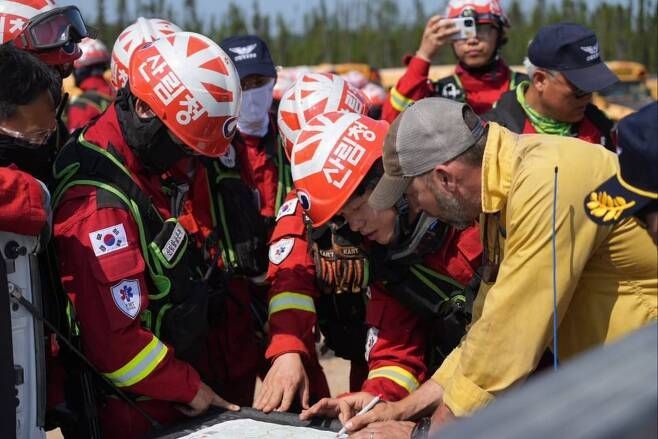 Korean relief team conducting wildfire suppression activities in Canada (Source: Ministry of Foreign Affairs)
Help from local Canadian residents was also a great aid in wildfire suppression. A Ministry of Foreign Affairs official shared an anecdote: "A girl about 7 or 8 years old from the area came to the base camp holding her father's hand and delivered a handwritten letter in Korean expressing thanks." The team members were deeply moved, and it became a source of strength to perform their duties to the best of their ability until the end.
Since the Korean relief team had to work alongside the U.S. relief team in wildfire suppression, English-proficient members were assigned to each team. Additionally, Korean-Canadians voluntarily provided interpretation services, which was also effective support on site.
An official from the National Fire Agency said, "The system for wildfire suppression and disaster response on site was the result of cooperation among Canada, the U.S., and the Republic of Korea," adding, "As Korea aims to become a global pivotal country, it will play an important role in fostering a safe global community that responds to disasters."
Black Fly Bites Surge... Fierce Struggles Amid Suppression Operations
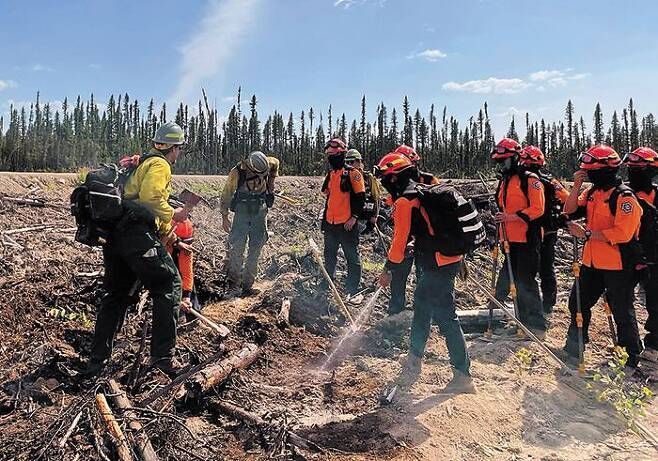 Korean relief team engaged in wildfire suppression activities in Canada (Source: Ministry of Foreign Affairs)
One of the hardships faced by the team during wildfire suppression was interference from black flies (Black Fly) inhabiting Quebec Province, also known as "blood-sucking flies." Being bitten by black flies, which feed on mammalian blood, can cause shock in severe cases. Despite wearing nets in the sweltering heat during suppression operations, many experienced swollen faces and oozing symptoms caused by black flies penetrating the nets.
In particular, one of our relief team members injured his knee with a chainsaw during wildfire suppression. Fortunately, it was not a serious injury, and he is currently recovering steadily.
A medical team official stated, "We provided about 1,400 medical treatments on site, with 70% of symptoms being insect bites," adding, "There was a patient with a stab wound caused during operations, but no major injuries occurred."
Record-Breaking Wildfires Linked to Climate Change... "We Will Uphold National Dignity in Disaster Situations"
This wildfire occurred as an extension of climate change. Previously, there were not as many wildfires in the Quebec region as there have been this year, but abnormal weather influenced the situation. This year's Canadian wildfires were so severe that they altered air quality in 11 U.S. Midwestern states, including New York.
According to the Canadian Interagency Forest Fire Centre (CIFFC), as of the 26th, over 1,000 wildfires continue across Canada. Among these, 660 are in an "uncontrollable" state. At least 12.3 million hectares (123,000 km²) of land have been lost so far, which is larger than the area of South Korea (approximately 100,000 km²).
Team leader Kwon Ki-hwan said, "Going forward, the government will actively perform roles befitting our country's national power and status in international crises and disaster situations, and continue efforts to realize Korea as a global pivotal country."
Canadian Prime Minister’s Surprise Visit... Great Comfort to Team Members
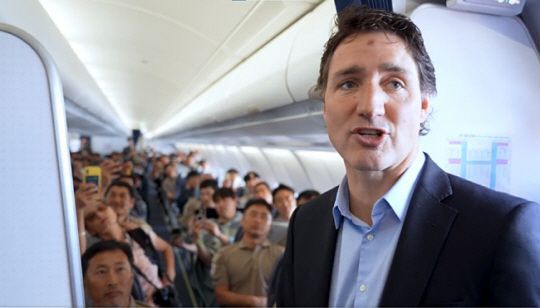 Canadian Prime Minister Justin Trudeau is seen on the 1st (local time) expressing his gratitude while boarding the return flight of the "Korea Disaster Relief Team (KDRT)" dispatched to support wildfire suppression efforts in Canada. (Source: Prime Minister Trudeau's Twitter)
On the 1st (local time), Canadian Prime Minister Justin Trudeau made a surprise visit to the Korean Overseas Emergency Relief Team (KDRT) on the Air Force transport plane after the wildfire suppression operation, expressing his gratitude to the relief team members.
To the approximately 150 team members, Trudeau said, "I want to sincerely thank you for coming all the way to the other side of the world, away from your families, over the past few weeks, and for being here to help our communities and people." He added, "We will never forget this." When he greeted them in Korean with "Gamsahamnida" (Thank you), the team members responded with applause.
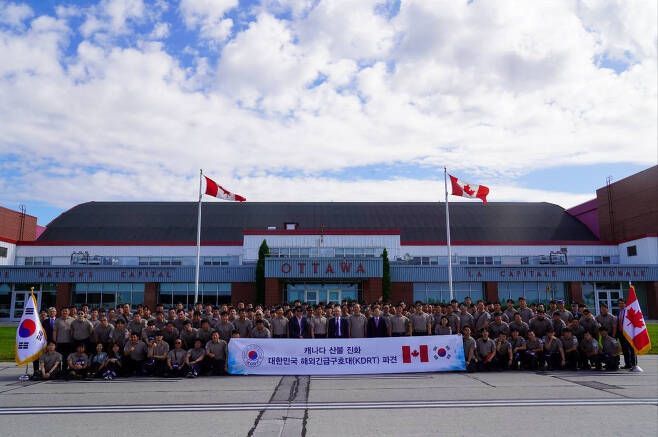
Team leader Kwon Ki-hwan emphasized, "This emergency relief activity was an opportunity to strengthen relations with Canada, our key ally marking the 60th anniversary of diplomatic ties," adding, "It is deeply meaningful that we fought the war against fire together as one with the U.S. and Canadian firefighting personnel, both countries that participated in the Korean War."
© The Asia Business Daily(www.asiae.co.kr). All rights reserved.



















