On the 2nd, Gyeongbuk Province achieved a remarkable feat by winning the Grand Prize overall, ranking first among metropolitan and basic local governments in the public announcement category, as well as the Excellence Award in the outstanding project category at the 2023 National Local Government Job Awards hosted by the Ministry of Employment and Labor.
The Ministry of Employment and Labor has been holding the National Local Government Job Awards since 2012 to promote local governments' efforts in job creation and to raise awareness of regional employment. Every year, it selects and awards local governments with outstanding regional job policies.
Notably, this is the first time a local government has received both the Grand Prize in the public announcement category and the Excellence Award in the outstanding project category, marking a nationwide recognition of the job policies promoted by Gyeongbuk Province.
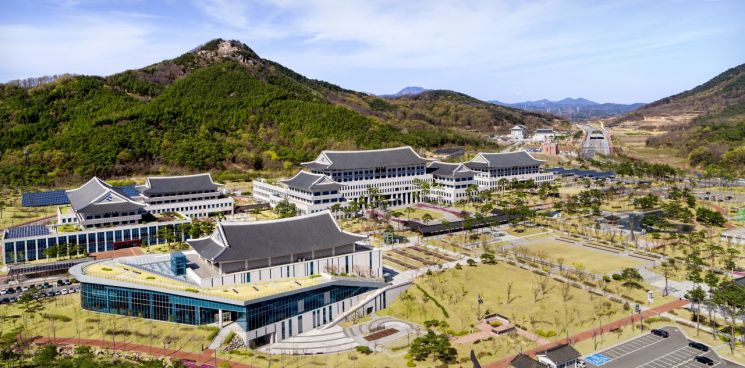
In preparation for the era of industrial and labor transformation, Gyeongbuk Province is promoting the “Living Economic Zone-Centered Job Strategy,” a differentiated job strategy reflecting the characteristics of regions and target groups, in response to the increasing need to enhance regional competitiveness and employment performance.
To address urgent regional issues such as local extinction and youth outflow, Gyeongbuk has been implementing field-oriented job projects that link key local industries with future strategic industries by combining government job contest projects with its own initiatives.
As a result of these strategies, the number of employed persons in Gyeongbuk increased to 1,462,000 last year, up 52,000 (3.7%) from the previous year, and the employment rate rose by 1.9 percentage points to 62.9%.
This is the highest level ever recorded outside the metropolitan area, leading to evaluations that the job policies promoted by Gyeongbuk Province are clearly resulting in job creation.
Since his inauguration, Governor Lee Cheol-woo has emphasized the professionalism and performance-oriented approach of public officials. Accordingly, job officers have served in their roles for more than three years, job duties have been designated as important departmental tasks, and job policy promotion has been supported administratively by designating specialized positions to revitalize regional employment.
Additionally, Gyeongbuk has established an organic cooperative system with the Ministry of Employment and Labor, local universities, national research institutes, and job execution agencies, participating together in the planning process of Gyeongbuk’s job policies and projects to prepare mid- to long-term employment strategies.
In this process, Gyeongbuk has promoted self-planned projects to complement job blind spots, and the living economic zone job package support policy tailored to regional conditions is playing a role as a catalyst for regional employment performance.
Gyeongbuk is fostering future food industries to create a foundation for expanding future jobs. It is leading the development of future industries with growth potential, such as the industrial hemp regulatory free zone, battery regulatory free zone designation, and the establishment of a global vaccine industry cluster, while also taking the lead in workforce training for future new growth industries like robotics, future automobiles, bio, and AI.
Moreover, through aggressive domestic and international investment attraction activities, Gyeongbuk Province has achieved a 10 trillion won scale investment and created 12,000 jobs in the region, including major corporations such as LG Innotek.
Focusing on people, Gyeongbuk is implementing various customized job policies by target group. For youth leading the future of Gyeongbuk, customized projects centered on key local industries and future new industries have been developed, encouraging youth settlement in the region by providing youth wages and settlement support funds to local companies contributing to youth job creation.
In addition, customized jobs are supported through self-initiated projects for target groups in policy blind spots such as middle-aged seniors, women, and foreigners. A win-win job project for co-growth among industry, academia, and government has been planned to cultivate industry-specialized talents with local universities, securing growth engines for regional companies.
Last year, the youth employment rate was 42.1% (an increase of 3.4%), and the female employment rate was 58.3% (an increase of 3.6%), showing the highest growth rate nationwide excluding the metropolitan area compared to the previous year.
In Kimcheon, Gumi, and Chilgok?known as the mecca of the domestic electronics industry, which has experienced large-scale layoffs due to accelerated departure of large corporations and aging industrial complexes?mid- to long-term employment policies are being promoted to resolve regional industrial and employment crises. Package support for local companies including technology advancement and workforce training, support for workers’ lifelong job redesign, as well as analysis of mid- to long-term ripple effects beyond short-term project outcomes, expansion of job creation through industrial upgrading and transformation, and support for labor transition are actively addressing the regional employment crisis.
As a result of these efforts, the number of insured persons under employment insurance reached 660,000 last year, an increase of 20,000 from the previous year, showing an upward trend every year.
Going forward, Gyeongbuk Province plans to actively respond to regional employment revitalization by providing package support that transcends city and county boundaries in areas requiring industrial and labor transformation.
Gyeongbuk’s special job policies responding to population decline and the crisis of local extinction are also attracting attention.
The Neighbors Village pilot village located in Angye-myeon, Uiseong-gun, has grown into a national model of rural innovation growth by simultaneously supporting infrastructure such as youth-specialized streets and residential spaces and regional settlement programs. It is currently being expanded to Yeongcheon City and Yeongdeok County.
Additionally, a Smart Farm Innovation Valley combining advanced technology with the region’s traditional agriculture industry has been established in Sangju, leading the future of agriculture in Korea by fostering specialized personnel and supporting technological innovation.
Thus, along with rising employment indicators and efforts to resolve regional employment crises, Gyeongbuk’s region- and industry-tailored job creation projects have boasted the best nationwide performance for three consecutive years, and the region-led youth job projects have secured the largest national budget among local governments every year.
Governor Lee Cheol-woo said, “Revitalizing local jobs is the driving force leading the era of local autonomy,” adding, “Gyeongbuk Province, which has been widely recognized for its job achievements, will continue to spare no support so that its job policies can have a positive influence as the center of jobs in Korea.”
© The Asia Business Daily(www.asiae.co.kr). All rights reserved.