Exploring Copenhagen Landmark 'Amager Bakke'
A Shift in Perspective... Focus on Civic Consensus and Implementation Process
Park Byung-gyu, Mayor of Gwangsan District in Gwangju Metropolitan City, drew a blueprint for a ‘Carbon Neutral Gwangsan’ in Copenhagen, Denmark.
On the 2nd, according to Gwangsan District, Mayor Park, along with Gwangju Mayor Kang Ki-jung and the Gwangju delegation, toured the world’s top resource recovery facility, ‘Amager Bakke’.
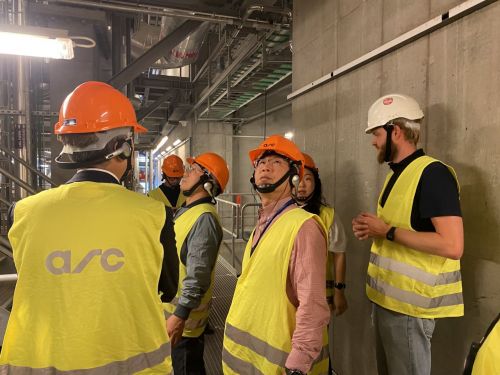
At the site, they discussed practical directions for achieving carbon neutrality.
Amager Bakke, meaning ‘Amager Hill,’ is named after the shape of the building, which houses a ski slope and rock climbing facilities. It is a facility that effectively and safely converts residual waste into electricity and is also famous as a ‘landmark’ of Copenhagen.
Built in 2017, Amager Bakke originated from the ‘Copenhagen Carbon Neutral Policy.’
In particular, the innovative idea of combining waste treatment and resource recycling facilities with cultural and leisure spaces was welcomed by residents. Copenhagen, which previously had no ski resorts, created a ski slope 85 meters high and 450 meters long, along with an artificial rock climbing wall on the facility’s rooftop.
Mayor Park Byung-gyu toured the ARC Combined Heat and Power Plant (Amager Resource Center) and the cultural space CopenHill within Amager Bakke, receiving detailed explanations from on-site officials.
An Amager Bakke official said, “In the case of ARC, it was designed to avoid causing discomfort to city residents, and we pride ourselves on it being the world’s most outstanding facility in terms of eco-friendly energy.” He added, “Beyond converting waste into energy, the ultimate goal of Amager Bakke is to minimize waste generation as much as possible.”
Mayor Park paid particular attention to the process driven by civic consensus.
He emphasized, “The reason why a resource recovery facility, which could have been seen as a nuisance, was welcomed by citizens is because it was based on civic empathy and agreement.”
He continued, “It was impressive that the ARC Combined Heat and Power Plant operates with a focus on reuse by establishing a recycling hub, not just collecting waste but enabling people to find usable items.” He noted, “Copenhagen citizens diligently separate their waste and gradually reduce the amount they produce,” highlighting the significant impact of a single facility leading to changes in citizens’ lifestyles.
Furthermore, he stated, “Social consensus among citizens is important for any policy,” and added, “We will focus on improving citizens’ awareness of daily waste disposal, strive for effective resource circulation, and do our best to realize carbon neutrality that citizens can tangibly experience.”
Currently, aiming to realize a ‘Sustainable Eco-friendly City,’ Gwangsan District is implementing various policies and projects to change citizens’ awareness, including ▲establishing a resource circulation AR·VR experience center ▲supporting reusable containers (for funeral homes, coffee shops, festivals, and events) ▲installing unmanned collection machines for transparent PET bottles ▲expanding the RFID-based food waste volume charging system ▲launching a citizen practice group to reduce waste.
Honam Reporting Headquarters, Reporter Jo Ilsang yjm3070@asiae.co.kr
© The Asia Business Daily(www.asiae.co.kr). All rights reserved.

















