Development Cooperation with Three African Countries Including Zambia... Exploration of Cobalt, Nickel, etc.
Responding to China's Core Mineral Export Restrictions... Reducing Dependence and Diversifying Supply Chains
The Japanese government has decided to establish development cooperation with three African countries, including Zambia, to build a supply chain for critical minerals essential for electric vehicle (EV) battery production. Japanese media analyzed this as an effort to diversify the EV critical mineral supply chain, which is currently overly dependent on China, reflecting the government's strong intention to actively support market activation in the EV sector.
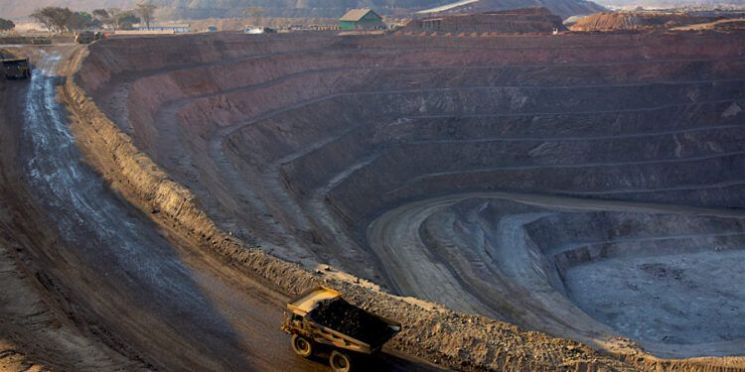
On the 2nd, the Nihon Keizai Shimbun (Nikkei) announced that Economy, Trade and Industry Minister Yasutoshi Nishimura will visit Zambia, Congo, and Namibia from the 6th to the 13th, along with Angola and Madagascar. Minister Nishimura is expected to sign memorandums of understanding (MOUs) on joint mining exploration and development in the countries he visits.
Since mining development involves high risks and requires enormous capital, the Japanese government has stepped up to provide active support. After concluding cooperation agreements with each African country, a council will be launched to attract private investment.
First, in Zambia, joint exploration will begin including nickel, a key raw material for EV batteries, along with cobalt and copper. A private meeting for mining investment will also be held, inviting companies such as Nissan Motor and Hanwha Corporation. In Congo, with support from the Japan International Cooperation Agency (JICA), exploration of copper and lithium will be expanded. The Japanese government plans to form technical alliances through local talent development.
In Namibia, cooperation will be established with state-owned mining companies to strengthen the supply chain for rare earth elements and other minerals. Namibia has abundant zinc and copper, but the mineral supply chain has long been pointed out as insufficient.
The Japanese government decided to invest from the development stage, seeing the potential for future exports from Japan. Nikkei stated, "Namibia has a large port and is considered a future export hub for Africa."
Nikkei analyzed that this move is aimed at reducing dependence on China for critical minerals and diversifying import sources. China has continued large-scale investments in mineral resources centered on Congo in Africa for years and currently holds the lead in mineral refining and processing technologies for nickel and others.
Moreover, with the Chinese government announcing that it will impose export controls on gallium and germanium?critical minerals for semiconductors?from the 1st of next month in response to U.S. semiconductor export restrictions, concerns are rising that China may soon take aggressive measures in the EV market as well. Nikkei reported, "If China, which is strongly confronting the U.S., begins export restrictions, it could act as a constraint on EV adoption in Japan, the U.S., and Europe."
© The Asia Business Daily(www.asiae.co.kr). All rights reserved.

















