Increase in Subway Riders Aged 65+ on Lines 1-8 in July
"Subway Cooling Not a Fundamental Solution"
"Cooling Measures Need Review from a Right to Life Perspective"
The number of elderly people avoiding the heat by staying in subway stations or inside trains instead of using air conditioners at home due to concerns about electricity bills has increased compared to last year.
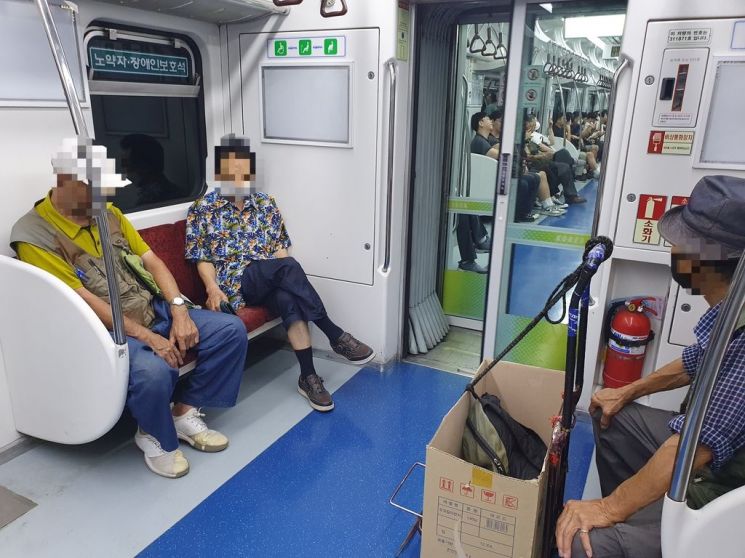 According to Seoul Metro on the 1st, from the 1st to the 25th of last month, 14.68 million elderly people aged 65 and over used subway lines 1 to 8, which is about 750,000 more than the 13.93 million during the same period last year.
 [Photo by Yonhap News]
According to Seoul Metro on the 1st, from the 1st to the 25th of last month, the number of people aged 65 and older who used subway lines 1 to 8 was 14.68 million, about 750,000 more than the 13.93 million during the same period last year.
The main reason elderly people seek refuge from the heat in the subway is that there is no financial burden. In particular, subway fares are free for those aged 65 and older, making it an ideal place to escape the intensified heatwave.
Additionally, the reduced burden of COVID-19 compared to last summer, when indoor mask-wearing was still mandatory, seems to have influenced this trend.
A Seoul Metro official explained, "Since the declaration of the endemic transition of COVID-19, the number of elderly people seeking to escape the heatwave in subways, which were previously classified as 'crowded areas,' has increased compared to last year."
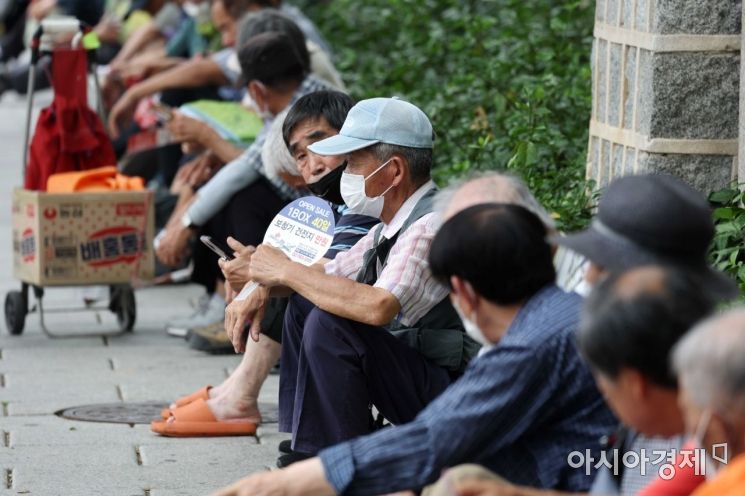 On the 5th of last month, as the heatwave intensified, elderly people were waiting to receive free meals at Tapgol Park in Jongno-gu, Seoul.
 Photo by Mun Ho-nam munonam@
However, experts point out that 'subway cooling' cannot be a fundamental solution, and the government and local governments need to pay more active attention to cooling welfare measures for the elderly.
Seok Jae-eun, a professor at the Department of Social Welfare at Hallym University, advised, "Elderly people living in poor housing conditions often find it difficult to even install cooling devices, so government support measures for cooling costs may have limited effectiveness. It is necessary to expand spaces where solitary elderly or housing-vulnerable elderly can comfortably escape the heat."
The Korea Institute for Health and Social Affairs also emphasized in its report on "Minimizing Health Damage to Heatwave-Sensitive Groups" that "various community resources need to cooperate so that heatwave-sensitive groups such as the elderly can conveniently use cooling shelters near their residences instead of subways."
Heat-related illness cases surge every year... Highest among those aged 80 and above with 6.4 cases per 100,000
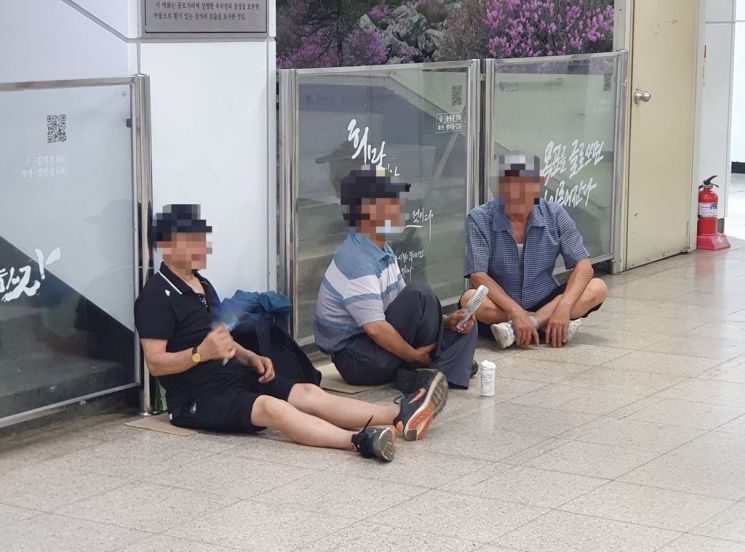
Meanwhile, over the past weekend when a heatwave warning was issued, news of elderly deaths continued in Gyeongsangbuk-do’s Gyeongsan City, Mungyeong City, and Yecheon County.
On the 31st, as the temperature in Seoul rose above 33 degrees Celsius and the heat did not subside, elderly people sought places with cooling facilities or shade. Vulnerable elderly who find it difficult to pay 'seat fees' at cafes or restaurants are enduring the summer by moving between subways and senior centers.
According to the Korea Disease Control and Prevention Agency, the number of heat-related illness cases occurring annually from May 20 to July 29 has been increasing: 910 cases in 2021 (including 12 estimated deaths), 1,005 cases in 2022 (7 estimated deaths), and 1,015 cases in 2023 (10 estimated deaths).
Last year, the age group with the highest number of heat-related illness cases per 100,000 people was those aged 80 and above (6.4 cases), followed by those in their 70s (4.3 cases), 50s (4 cases), and 60s (3.8 cases).
To prevent heat-related illnesses, it is advised to avoid outdoor work and exercise during daytime hours (12 PM to 5 PM) and stay in cool places. If going outside is unavoidable, it is good to block sunlight with parasols or hats. Taking frequent showers and wearing loose, light-colored, lightweight clothing can help lower body temperature. Drinking water regularly and frequently, even without feeling thirsty, also helps prevent heat-related illnesses.
© The Asia Business Daily(www.asiae.co.kr). All rights reserved.



















