Gangbuk-gu, Beondong ‘Seoul’s 1st Moa Town’ Takes Off... 1,242 Households to be Supplied by 2026
Project Implementation Plan Approved in 1 Year and 2 Months... Construction to Start in the First Half of Next Year
35-Story Apartment Complex with 13 Buildings, Households Increased from 870 to 1,242, 1,279 Underground Parking Spaces Created
Gangbuk-gu: “As Seoul’s First Moa Town, We Will Do Our Best to Meet Residents’ Expectations"
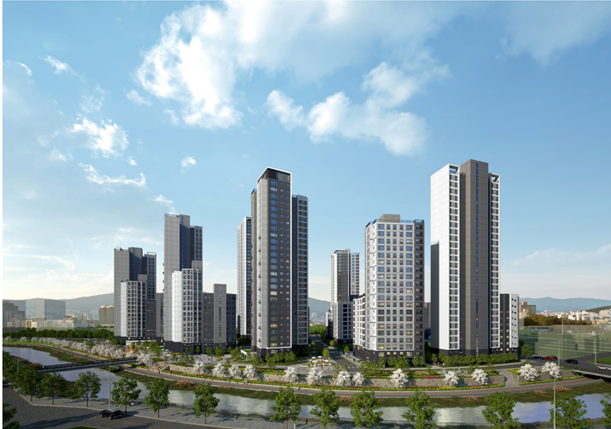
Gangbuk-gu in Seoul announced on the 1st that the project implementation plan for Beondong, the city’s first Moa Town, has been approved after 1 year and 2 months, marking the full-scale launch of the Moa Housing Project (Street Housing Redevelopment Project). Construction is scheduled to begin in the first half of next year, with completion and move-in starting in 2026.
Last month on the 31st, the city finalized the management disposition plan and design for five Moa housing units in the Beondong 429-114 area of Gangbuk-gu and announced that the project implementation plan approval had passed.
Beondong Moa Town passed the integrated review of the ‘Moa Town Management Plan and Moa Housing Project Implementation Plan’ in April last year. After proceeding with the announcement and application for union member sales and conducting appraisals for the establishment of the management disposition plan, the project implementation plan approval was obtained this time.
The city explained that while redevelopment and reconstruction projects typically take 8 to 10 years from the establishment of the maintenance plan to the start of construction, the Moa Housing Project takes only 2 to 3 years from the establishment of the management plan to construction, thus drastically shortening the total period to 6 to 7 years.
This is because some procedures such as establishing the maintenance plan and forming the union promotion committee are omitted, and the project implementation approval and management disposition plan approval, which were previously conducted separately after the integrated review, are now processed simultaneously, enabling rapid approval.
Now, Beondong Moa Town will undergo relocation and demolition, and by 2026, it will be transformed into an apartment complex with a total of 1,242 households, a maximum of 35 floors, and 13 buildings.
The construction period is approximately 31 months, with completion targeted for July 2026, increasing the number of households by about 372 from the existing 870.
The urban landscape of Beondong Moa Town will reflect the purpose of Moa Housing, featuring a row-type building arrangement corresponding to the existing street, with a harmonious blend of low-rise (8 to 10 floors) and high-rise (28 to 35 floors) buildings to create a rhythmic appearance.
High-rise buildings will be appropriately placed to secure a scenic axis from the Uicheon Stream side, with the central space of the complex planned as a low-rise zone to provide openness from vehicle entrances and street fronts. Additionally, each complex will have courtyard-style outdoor spaces, creating stable outdoor activity areas.
A 250-meter pedestrian-only road will be created within the complex, along with open shared facilities (3,015.13㎡) such as a library, cultural and sports facilities, daycare center, and caf?, which will be accessible not only to residents but also to local community members.
A large-scale underground parking lot will also be constructed. Through building agreements among Moa housing units in zones 1 to 5, the underground parking lots of adjacent zones 1, 2, and 3 and zones 4 and 5 will be integrated, transforming the previously limited 129 parking spaces into a unified parking lot with 1,279 spaces. The narrow 6-meter-wide access roads will be widened to 10 to 15 meters, alleviating chronic parking shortages, illegal parking, and difficulties for fire truck access.
By moving parking underground, the ground-level green space, which was previously less than 3%, will be greatly expanded to 27%, improving the quality of life for both residents and the community.
Narrow and inconvenient alleys will be transformed into wide and safe pathways. A public pedestrian passage connecting Deokneung-ro to Uicheon was created to allow residents and locals safe and comfortable access to Uicheon, and a new 6-meter-wide pedestrian-only elevated road was established for convenient use of community facilities.
The riverside park along Uicheon, including walking trails, rest areas, and exercise facilities, will also be improved. Resident shared spaces linked with open shared facilities such as Moa housing complex rest areas and small plazas will be created. To enhance accessibility to Uicheon, a public pedestrian passage connecting to Changbeon Bridge will also be arranged.
The Seoul city government stated that as the pilot project for Beondong, the first Moa Town, enters full-scale implementation, it will spare no effort to support it as a sustainable and leading redevelopment method.
A Gangbuk-gu official said, “Since Beondong is scheduled to be Seoul’s first Moa Town, we will do our best to meet residents’ expectations. We will also actively support the three other Moa Towns in Gangbuk-gu, which are currently establishing management plans, to be developed as premium residential areas reflecting local characteristics.”
© The Asia Business Daily(www.asiae.co.kr). All rights reserved.

















