Extreme Heat, Impaired Thermoregulation
Brain and Organs Damaged When Body Temperature Exceeds 40°C
Today (31st), the daytime high temperature is expected to approach 35 degrees Celsius, continuing the intense heatwave. Heat-related illness deaths are also occurring one after another due to the deadly heat. Extreme heat not only causes discomfort but also poses a risk of damaging the brain and organs.
According to the Korea Meteorological Administration, most regions nationwide are expected to experience a maximum apparent temperature around 35 degrees Celsius on the 31st. Morning low temperatures are forecasted to be between 22 and 27 degrees, with daytime highs ranging from 30 to 35 degrees.
Some areas may experience showers accompanied by gusty winds, thunder, and lightning, with rainfall rates of up to 30 mm per hour. However, the rain is unlikely to alleviate the scorching heatwave.
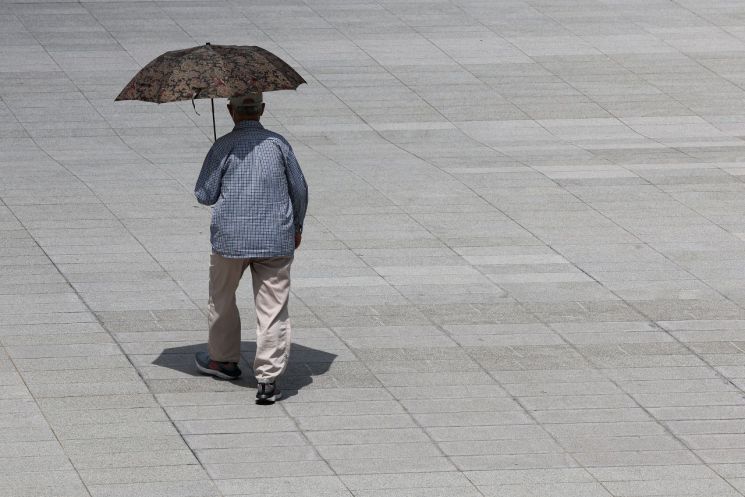 On the afternoon of the 26th, a citizen is moving while shading themselves from the sun with a parasol at Gwanghwamun Square in Seoul. [Image source=Yonhap News]
Since the Korea Meteorological Administration declared the end of the monsoon season on the 26th, the heatwave has continued. Except for some areas such as the mountainous regions of Jeju, heatwave warnings have been issued nationwide in succession.
As a result, heat-related illnesses have surged, including deaths among elderly people working in the fields due to the heat. According to the Korea Disease Control and Prevention Agency's 'Heat-related Illness Emergency Room Surveillance System,' 255 patients visited emergency rooms for heat-related illnesses over four days from the 26th to the 29th.
On the 29th, there were seven suspected deaths due to heat-related illnesses. On that day alone, four elderly people in their 70s to 90s working in the fields in Gyeongbuk died amid the heatwave.
Underestimating the Heat... It Could Lead to Brain and Organ Damage
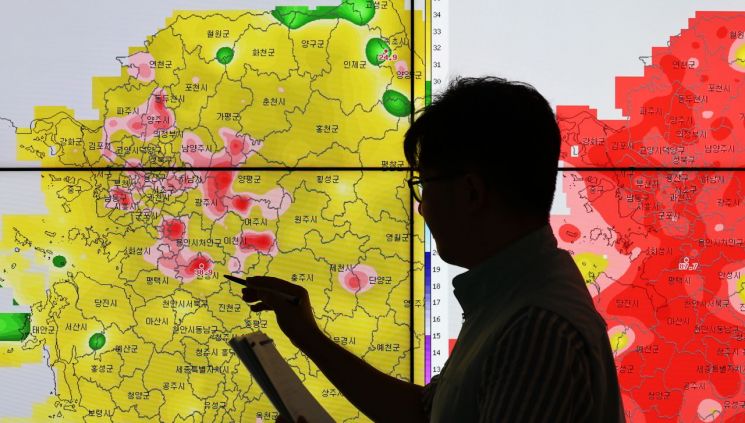 On the afternoon of the 30th, when a heatwave advisory was issued for most regions nationwide, a forecaster at the Seoul Metropolitan Weather Administration in Gwonseon-gu, Suwon-si, Gyeonggi-do, was checking the temperature.
 [Image source=Yonhap News]
Heat-related illnesses refer to acute conditions caused by prolonged exposure to hot environments, resulting in heat accumulation in the body. Symptoms and types vary widely, ranging from relatively mild heat exhaustion to heatstroke, which can be fatal.
Heat exhaustion occurs when excessive sweating leads to significant loss of salt and water. Symptoms include heavy sweating, thirst, fatigue, loss of appetite, headache, and vomiting.
If mild heat-related illness symptoms are not properly addressed, they can progress to fatal heatstroke. Heatstroke is a condition where the body's temperature regulation fails due to hot and humid environments.
The human body normally maintains a temperature between approximately 36.5 and 37 degrees Celsius, but in heatstroke, temperature regulation failure causes the body temperature to exceed 40 degrees Celsius. Such high internal heat can damage the brain and organs, cause functional impairments, and central nervous system disorders.
If not treated immediately, the fatality rate can reach 100%. Even with treatment, the fatality rate is about 80% when the core body temperature reaches 43 degrees Celsius, and about 40% when it is below 43 degrees Celsius.
To prevent heat-related illnesses, it is important to follow health guidelines. Previously, the Korea Disease Control and Prevention Agency presented 'three health guidelines for preventing heat-related illnesses during heatwaves.'
According to these guidelines, one should lower body temperature by △ taking frequent showers △ wearing loose, light-colored, and lightweight clothing △ blocking sunlight when going outdoors (using parasols, hats, etc.). It is important to drink water regularly even if not feeling thirsty, and especially avoid outdoor work or exercise during the hottest hours (12 PM to 5 PM), staying in cool places as much as possible.
© The Asia Business Daily(www.asiae.co.kr). All rights reserved.
![Clutching a Stolen Dior Bag, Saying "I Hate Being Poor but Real"... The Grotesque Con of a "Human Knockoff" [Slate]](https://cwcontent.asiae.co.kr/asiaresize/183/2026021902243444107_1771435474.jpg)

















