From Messaging to Payment... Musk Praises China's WeChat
Dreams of a Super App with Alphabet 'X' Instead of Blue Bird
Obstacles Like US User Habits and Regulations Unlike Asia
Other Silicon Valley CEOs Like Zuckerberg Also Interested in the Past
"Twitter was acquired by X Corporation to guarantee freedom of speech and to accelerate the development of 'the everything app' X."
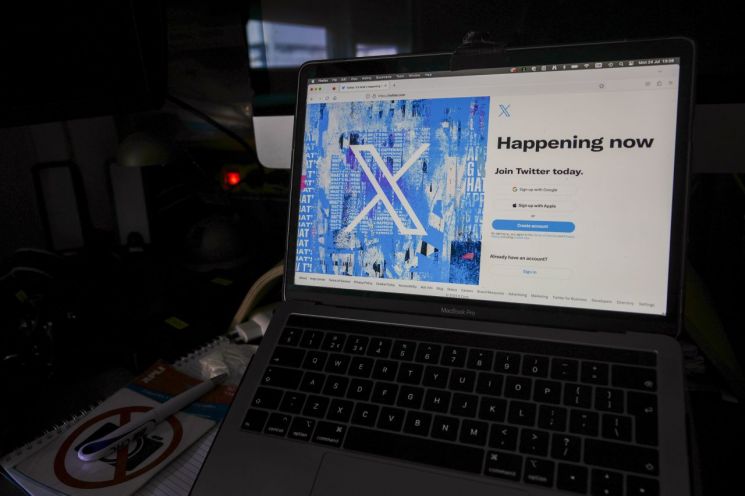
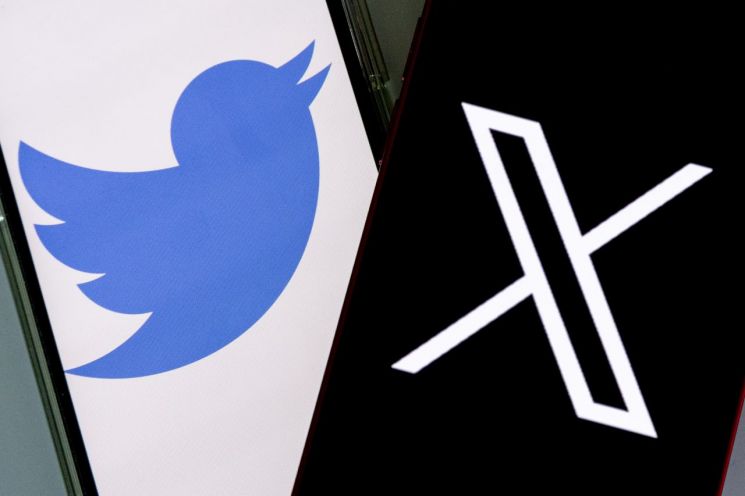
Elon Musk, chairman and chief technology officer (CTO) of the social networking service Twitter, presented a vision to transform Twitter into a super app, an all-in-one application. On the 24th (local time), he took a step toward this transformation by replacing Twitter's iconic 'blue bird' logo with a black letter 'X.'
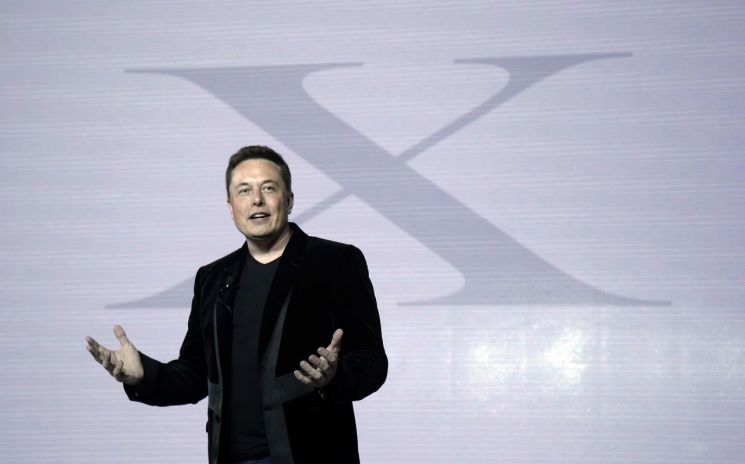
What exactly is a super app, and why is Chairman Musk shaking up Twitter, the world's most powerful SNS, by investing $44 billion (about 56.2 trillion KRW) to acquire it?
◆ "Create one app where everything is possible"… Payments are key
The super app Musk envisions integrates most of the functions users need on their phones into a single app. This means Twitter will no longer be just a channel for communication and news consumption but will enable users to enjoy videos, purchase goods, make payments, and exchange messages?all within one app, covering all aspects of daily life.
Shortly after Twitter changed its logo, Linda Yaccarino, Twitter's CEO, stated in an email to employees, "X will continue to develop experiences in video, audio, messaging, banking, and payments that users can enjoy." Given Twitter's pursuit of rapid transformation, it is expected that new services will be introduced quickly in the near future.
At the core of Musk's super app concept is money. He believes money must circulate within Twitter. The plan is to incorporate various industries into one app to significantly expand the user base and build a system that can generate revenue based on that.
According to IT media The Verge, Musk emphasized the innovative opportunities in payments during a meeting with employees shortly after acquiring Twitter, stating that sending direct messages and transferring money are fundamentally similar. He gave an example, saying that users could send a direct message while making a transfer.
After the logo change, Musk announced, "Within a few months, we will add features that manage comprehensive communication and the entire financial sector." Among the various services CEO Yaccarino mentioned, financial payment services were highlighted first, underscoring their importance. Since acquiring Twitter, Musk has already started moving to circulate money within the platform by introducing paid service models and collaborating with stock and cryptocurrency trading sites like eToro.
◆ Musk enamored with China's WeChat: "A truly great app"
Musk's super app vision aligns closely with China's WeChat. In May last year, during the Twitter acquisition process, he appeared on a podcast and said, "People who have used WeChat think it is a really good model," adding, "If you are in China, you are living inside WeChat." He further praised it as "Twitter plus PayPal and more," calling it "a truly great app" and noting that such an app does not exist outside China.
Owned by China's Tencent, WeChat enables users to conduct all aspects of daily life within the app. From digital payments to ordering food delivery, booking flights, or scheduling hospital appointments, most everyday activities can be handled through WeChat. Even beggars use WeChat Pay. With 1.3 billion users, WeChat's status in China is truly immense.

Musk emphasized the need to be like WeChat or China's SNS TikTok to achieve the goal of 1 billion users during his first meeting with Twitter employees in June last year before the acquisition.
Super apps like WeChat represent a dream platform for IT companies, allowing them to dominate multiple industries. Not only in China, but South Korea's KakaoTalk and Japan's LINE are also considered types of super apps. KakaoTalk started as a messenger service and expanded into areas like money transfers and taxi hailing, while LINE holds a 70% market share in Japan's messenger market and has built services like LINE Pay.
◆ "Creating a super app is not easy"… What are the obstacles?
However, experts say it will not be easy for Twitter to transition into a super app. Super apps like WeChat, KakaoTalk, and LINE emerged mainly in Asia, but there are several obstacles to the birth of super apps in the U.S. and Europe, where Twitter is based.
First, analyses suggest that users in the U.S. and Europe do not have the same desire for super apps as those in Asia. Instead of wanting one app for one-stop payments, they often use SNS, messaging, and banking platforms separately.
Dan Prud'homme, a professor at Florida International University, said, "In the U.S., people find it confusing to have multiple services bundled into one app and are accustomed to apps that provide a single service," adding, "American customers dislike feeling like they rely on one company for everything they need in daily life."
Given this situation, it seems difficult for users to switch from existing platforms to a super app. Experts also note that when WeChat first appeared in China in the early 2010s, smartphones were just spreading, and SNS and online commercial platforms were just emerging, so there was little conflict with existing competitors, allowing WeChat to grow into a super app. At that time, privacy issues had not yet surfaced, and the Chinese government was interested in building online networks, providing active support for growth.
In contrast, Twitter must compete with other SNS platforms like Instagram and Threads, owned by Facebook's parent company Meta. Additionally, to incorporate financial services, Twitter will have to face competition from credit card companies and Wall Street banks, making it challenging to build a super app.
A bigger issue is that once Twitter starts financial services, it is expected to face far more regulations than in the SNS business. Twitter has reportedly applied for licenses to operate money transfer services with U.S. state regulators over the past few months. Building various financial services is expected to take a long time.
The Wall Street Journal (WSJ) reported, "Lending and money transfer companies are supervised by multiple state and federal agencies and face penalties if they fail to comply with regulations," adding, "They will face far more regulations than just moderating content."
◆ Zuckerberg also attempted super app transition… What about Musk?
Since a super app that integrates all functions means an all-purpose platform, several Silicon Valley CEOs have tried this before Musk.
Mark Zuckerberg, Meta CEO, once expressed ambitions in a 2019 blog to turn WhatsApp into a super app, aiming to create a platform for "personal service types." He showed interest in payment systems and launched the cryptocurrency project Libra in 2019, but it failed, and the project was discontinued last year.
Dara Khosrowshahi, Uber CEO, and Evan Spiegel, Snap CEO, also wanted to create super apps. Khosrowshahi aimed to make the Uber app indispensable for daily urban life but did not achieve the desired results. Spiegel, like Musk, showed great interest in WeChat publicly multiple times and even received investment from Tencent, WeChat's parent company, in 2017.
Experts say it is still uncertain whether Musk can successfully transform Twitter into a super app.
However, James Wester, head of payment research at Javelin Strategy & Research, told WSJ that users must be made to trust the platform with their money, predicting that the success or failure of Twitter's super app transition will ultimately depend on consumers.
© The Asia Business Daily(www.asiae.co.kr). All rights reserved.
![Clutching a Stolen Dior Bag, Saying "I Hate Being Poor but Real"... The Grotesque Con of a "Human Knockoff" [Slate]](https://cwcontent.asiae.co.kr/asiaresize/183/2026021902243444107_1771435474.jpg)


















