Korea Federation of Banks Revises 'Virtual Asset Real-Name Account Operation Guidelines'
From now on, virtual asset exchanges must deposit a reserve fund of at least 3 billion KRW with banks to protect users. Additionally, standards and procedures to prevent money laundering through virtual assets will also be improved.
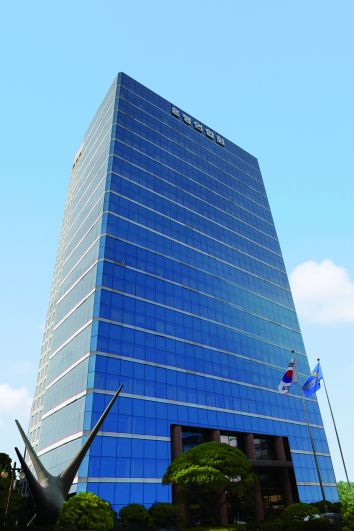
The Korea Federation of Banks announced on the 27th that, after consultations with financial authorities and virtual asset exchanges, it has established the "Virtual Asset Real-Name Account Operation Guidelines" to enhance user protection and strengthen anti-money laundering measures.
The reason the Korea Federation of Banks revised the guidelines is that, until now, the operational standards for real-name accounts provided by banks to virtual asset exchanges and users have varied by institution, causing market confusion. Furthermore, last year, illegal foreign remittance cases using virtual assets were detected.
Accordingly, the Korea Federation of Banks first requires virtual asset exchanges to accumulate a reserve fund of at least 3 billion KRW to ensure compensation for users in case of hacking or system failures. Also, when banks transfer funds from users' accounts to the exchange's accounts based on the exchange's collection instructions, they will verify the user's transaction intent through additional authentication such as electronic signature certification.
Moreover, banks will restrict collection transfers for user accounts with no deposits or withdrawals for over a year and will operate user accounts by distinguishing between limit accounts and normal accounts. Limit accounts will only be converted to normal accounts with confirmed transaction purposes and sources of funds, allowing expanded deposit and withdrawal limits.
Anti-money laundering standards and procedures will also be strengthened. Banks will, in principle, conduct enhanced due diligence (EDD) on real-name account users annually. EDD refers to procedures that verify and validate user identity information as well as additional information on transaction purposes and sources of funds. However, banks may apply different customer verification cycles based on the user's rating according to their internal risk assessment models.
In particular, for high-risk users such as those making large withdrawals, banks will verify transaction purposes and sources of funds by obtaining documents such as "Virtual Asset Transaction History Certificates" and "Certificates of Employment." If document verification is difficult, verification through reliable and independent data or information is also permitted.
The criteria for suspicious transaction reports will also be further strengthened. Banks will review whether to report suspicious transactions if deposits or withdrawals in real-name accounts are complex or large in scale without clear economic or legal purposes, or if they exhibit abnormal patterns.
Measures to protect user deposits will also be improved. Banks require exchanges to separately deposit or entrust users' deposits and receive daily deposit status reports from the exchange for the previous business day to compare and verify with bank records. Additionally, banks will conduct on-site inspections by visiting exchange offices once a month and receive quarterly audit results from external agencies for comparison and verification.
The banking sector plans to implement the new operational guidelines starting January next year after preparing work procedures and building IT systems. However, to promptly implement user protection measures, the reserve fund accumulation will be implemented early starting this September.
A Korea Federation of Banks official stated, "These guidelines are expected to contribute not only to protecting exchange users but also to establishing a sound trading order in the market by enhancing the safety of real-name accounts, strengthening anti-money laundering standards and procedures, and reinforcing the protection of user deposits."
© The Asia Business Daily(www.asiae.co.kr). All rights reserved.
![Clutching a Stolen Dior Bag, Saying "I Hate Being Poor but Real"... The Grotesque Con of a "Human Knockoff" [Slate]](https://cwcontent.asiae.co.kr/asiaresize/183/2026021902243444107_1771435474.jpg)
















