2022 Population and Housing Census Results
Population Aged 65 and Over Accounts for 18.1%
Elderly Dependency Ratio Increases by 1.4 to 24.9
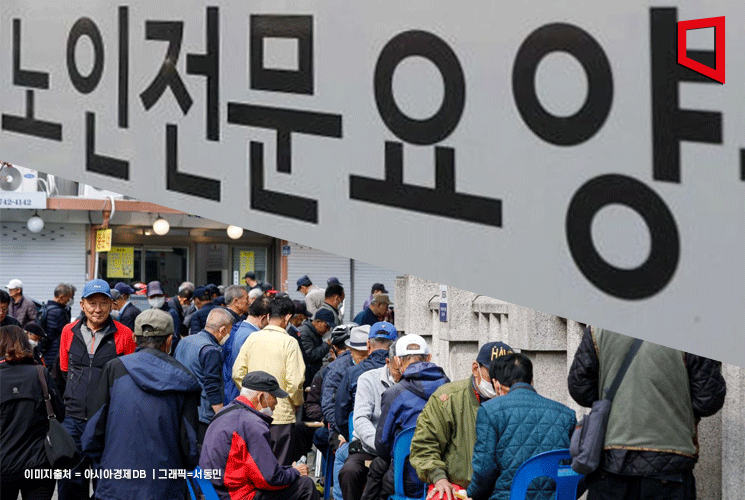
Last year, the elderly population aged 65 and over reached a record high of 9.05 million. As the working-age population decreases and the elderly population increases, the burden of elderly dependency is becoming increasingly heavy.
According to the '2022 Population and Housing Census Results' announced by Statistics Korea on the 27th, the elderly population (based on Korean nationals) was 9.046 million, an increase of 4.9% (426,000 people) compared to the previous year. The proportion of the elderly population in the total population was 18.1%, an increase of 11.7 percentage points compared to 2020. The elderly population has been increasing significantly every year: 9.3% in 2005, 11.3% in 2010, 13.2% in 2015, and 16.4% in 2020.
By age group, those aged 65-74 accounted for 58.1% of the total elderly population, those aged 75-84 accounted for 31.7%, and those aged 85 and over accounted for 10.2%. The sex ratio of those aged 65 and over decreases with age, with the sex ratio for those aged 85 and over dropping to 40.1. The population aged 85 and over increased the most at 6.0% compared to the previous year. The 65-74 age group increased by 5.2%, and the 75-84 age group increased by 4.1%.
By region, the proportion of the elderly population aged 65 and over was highest in rural areas at 34.2%, while it was relatively lower in eup areas (19.1%) and dong areas (16.3%). The proportion of the super-aged population aged 85 and over was highest in Jeonnam at 3.3%. The region with the highest year-on-year increase rate of the elderly population aged 65 and over was Sejong (7.7%), and the lowest was Jeonnam (2.9%).
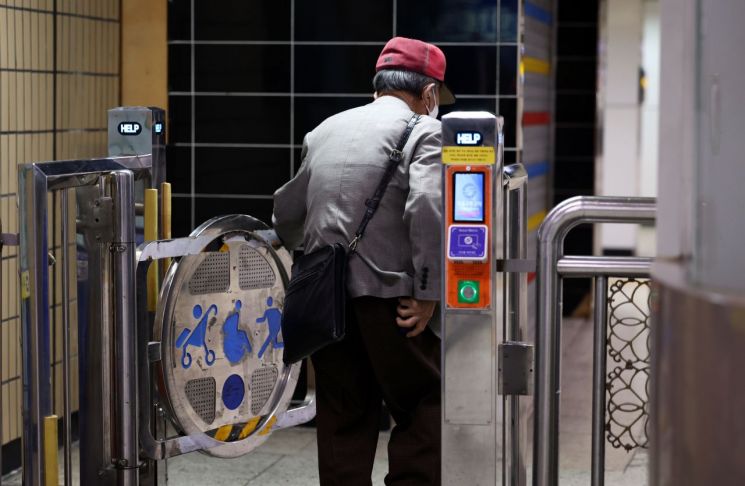
The elderly population living with relatives accounted for 72.8%, a decrease of 0.2 percentage points from the previous year. Among the elderly population aged 65 and over, the proportion living in relative households decreased with age: 77.6% for ages 65-74, 69.7% for ages 75-84, and 55.2% for those aged 85 and over. The proportion of single-person households was higher among those aged 75 and over (24.6% for ages 75-84, 26.8% for 85 and over), and the proportion living in collective households was highest at 16.2% among those aged 85 and over. The sex ratio of elderly people living in collective households was 117.3 for ages 65-74, indicating more men, but it sharply decreased to 41.4 for ages 75-84 and 17.6 for those aged 85 and over.
The residences of the elderly population were apartments (45.9%), detached houses (39.3%), and row houses/multifamily houses (10.7%) in that order. The proportion living in multi-family housing (apartments, row houses, multifamily houses) decreased with age, while the proportion living in detached houses increased. Households with elderly members aged 65 and over accounted for 29.8% of general households, households with only elderly members accounted for 16.0%, and single elderly-person households accounted for 9.1%.
As the elderly population increases, the burden of dependency is also rising. Last year, the youth dependency ratio per 100 working-age people was 16.0, a decrease of 0.5 compared to the previous year, while the elderly dependency ratio increased by 1.4 to 24.9. The aging index was 156.1, an increase of 48.8 compared to 107.3 in 2017. According to the United Nations (UN), if the proportion of the population aged 65 and over exceeds 7%, it is classified as an 'aging society'; over 14% as an 'aged society'; and over 20% as a 'super-aged society.' South Korea is rapidly entering the super-aged society category.
© The Asia Business Daily(www.asiae.co.kr). All rights reserved.
![Clutching a Stolen Dior Bag, Saying "I Hate Being Poor but Real"... The Grotesque Con of a "Human Knockoff" [Slate]](https://cwcontent.asiae.co.kr/asiaresize/183/2026021902243444107_1771435474.jpg)

















