Law: "Undermining Fairness in the Stock Market... A Serious Crime"
The former CEO of a KOSDAQ-listed company, who was prosecuted for stock price manipulation through false press releases and pocketing hundreds of billions of won in illicit profits, has been sentenced to five years in prison.
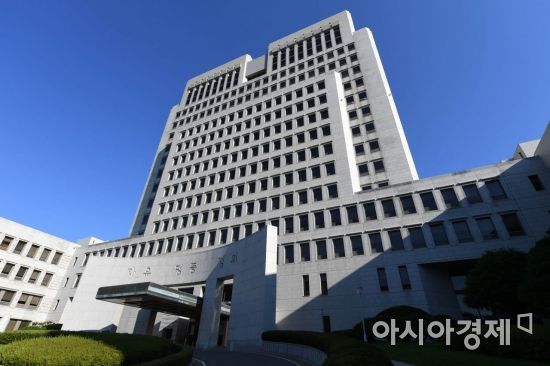
The Supreme Court's First Division (Presiding Justice Oh Kyung-mi) on the 27th upheld the lower court's ruling sentencing Kim Mo to five years in prison and a fine of 300 million won on charges including violation of the Act on the Aggravated Punishment of Specific Crimes (embezzlement).
Kim was indicted on charges of conspiring with Esmo Chairman Lee Mo while serving as CEO of Esmo's subsidiary to acquire a listed company through a no-capital merger and acquisition (M&A), artificially boosting stock prices by distributing false disclosures and press releases related to new businesses, thereby obtaining illicit profits such as capital gains.
He was also accused of exaggerating and fabricating that Esmo was developing and supplying electric vehicle parts together with a British defense company after signing a business agreement to assist the company's entry into the Korean market in 2017. In addition, he faced charges of embezzlement and breach of trust by registering fictitious employees at Esmo and paying their salaries.
It is known that funds from Lime Asset Management's fund, which caused a large-scale redemption suspension incident during the M&A process, were injected.
The first trial court stated, "The fraudulent unfair trade in this case poses a great risk of causing significant damage to general investors, undermines the fairness of the stock market, and is a socially serious crime," and sentenced him to five years in prison and a fine of 300 million won.
The appellate court also sentenced him to five years in prison and a fine of 300 million won, stating, "Distorting information provided to many general investors disrupts the financial order itself and undermines the fairness of the capital market," but acquitted him partially regarding the payment of salaries to fictitious employees, which the first trial court had found guilty of. The Supreme Court also agreed with the appellate court's judgment.
© The Asia Business Daily(www.asiae.co.kr). All rights reserved.
![Clutching a Stolen Dior Bag, Saying "I Hate Being Poor but Real"... The Grotesque Con of a "Human Knockoff" [Slate]](https://cwcontent.asiae.co.kr/asiaresize/183/2026021902243444107_1771435474.jpg)
















