As concerns over inflation ease, expectations are growing stronger that the U.S. economy will achieve a soft landing without entering a recession.
According to the National Association for Business Economics (NABE) on the 24th (local time), more than 7 out of 10 corporate economists (71%) who participated in the July survey predicted the probability of a recession within the next 12 months to be below 50%. This marks a significant improvement in economic outlook compared to the April survey, where respondents were evenly split on the possibility of a recession.
Carlos Herrera, Chair of the NABE survey and Senior Economist for North America at Coca-Cola, explained, "The majority of respondents are more confident about the economy next year," adding, "because they expect the likelihood of a recession to decrease."
In this survey, respondents reported that their companies’ sales have continuously improved compared to the previous quarter. The future outlook Net Rising Index (NRI), which reflects expectations for sales growth in the next quarter, rose from 25 in April to 38 this month. The earnings NRI, which had recorded negative values for four consecutive surveys, improved from -8 to 0. Bloomberg News reported, "This suggests that many are now completely changing their views on the inevitability of a recession."
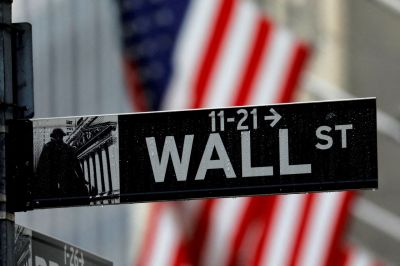
The reduction in recession concerns is due to the recent clear easing of U.S. inflation, which had surged to its highest levels in decades. Expectations are also growing that the Federal Reserve (Fed), which has been fighting inflation for over a year, may end its tightening cycle early with this month’s final rate hike. In a survey of economists released earlier by The Wall Street Journal (WSJ), the percentage of respondents who believed the U.S. economy could enter a recession within the next 12 months dropped to 54%, down from 61% in the previous two surveys.
Even Wall Street economists who initially predicted a recession are showing signs of change. Deutsche Bank, which had been concerned about the prolonged inversion of the yield curve between short- and long-term government bonds?a signal of recession in the bond market?recently stated in an investment memo that "the possibility of a soft landing is increasing." Goldman Sachs also lowered its recession probability within 12 months from 25% to 20%. Jan Hatzius, Chief Economist at Goldman Sachs, cited a strong labor market and a rebound in real disposable income as reasons, saying, "There is growing confidence that U.S. inflation will continue to decline without a recession." Bloomberg News also reported that Fed officials, including Austin Goolsbee, President of the Federal Reserve Bank of Chicago, have expressed sentiments such as "it seems we are on a path to avoid a recession," noting that "Wall Street economists are revising their economic forecasts."
However, concerns about a recession still persist. MarketWatch reported that many economic experts consider a recession scenario possible, citing the Fed’s tightening, corporate investment slowdown, housing market downturn, and manufacturing slump. Experts particularly focus on the fact that the inversion of the 10-year and 2-year Treasury yields has persisted for a year, and that the Conference Board’s Leading Economic Index has recorded its longest consecutive decline since the global financial crisis. These are all regarded as leading indicators of a recession. MarketWatch noted, "A severe recession like the global financial crisis is unlikely," but also pointed out the uncertainty ahead, stating, "Depending on the Fed’s tightening stance, a longer and deeper recession could occur."
© The Asia Business Daily(www.asiae.co.kr). All rights reserved.
![Clutching a Stolen Dior Bag, Saying "I Hate Being Poor but Real"... The Grotesque Con of a "Human Knockoff" [Slate]](https://cwcontent.asiae.co.kr/asiaresize/183/2026021902243444107_1771435474.jpg)
















