Crime Against Unrelated Bystanders
Structural Social Issues Behind Random Attacks
On April 3rd, at an apartment complex playground in Pyeongtaek-si, Gyeonggi-do, a teenage boy suddenly approached an elementary school student who was eating cup noodles with a friend and slashed his neck with a weapon before fleeing. The next day, the perpetrator, a high school student who had no relationship with the victim, was caught. The perpetrator stated, "I was taking a walk when suddenly anger surged, and I just swung the weapon I had at the child I saw." It was a typical ‘random attack’ crime.
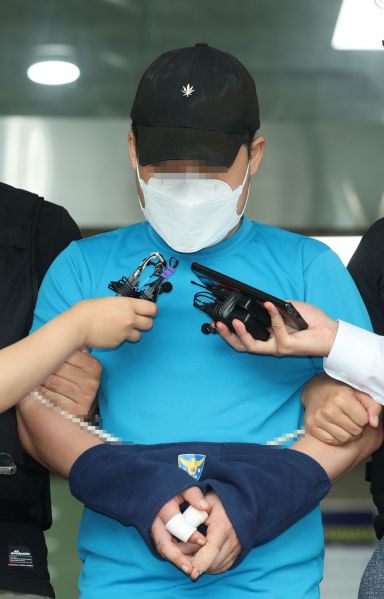 Jo Mo, who indiscriminately wielded a weapon against pedestrians, killing one person and injuring three others, is leaving Gwanak Police Station to attend a pre-arrest detention hearing at the Seoul Central District Court on the 23rd, responding to questions from the press.
 [Image source=Yonhap News]
Random attack crimes have been occurring one after another recently, including the ‘Shillim-dong stabbing incident’ that happened on the 21st. Experts point out that such crimes are not merely individual problems but are connected to social issues such as wealth disparity, hikikomori (social withdrawal), and solitary death.
Random Attack Crimes with No Clear Purpose or Motive
The Shillim-dong stabbing incident involved Jo (33, male) who suddenly attacked unrelated pedestrians with a weapon. Just before his arrest, Jo was sitting on roadside stairs and said, "I worked hard, but it didn’t work out." On May 26th in Busan, Jeong Yujeong (23, female) murdered a woman in her twenties by stabbing her 110 times with a weapon, despite having no prior acquaintance with the victim.
Random attack crimes are committed against unspecified strangers with no prior relationship, and their motives are unclear. Instead, most of these crimes are indiscriminate expressions of despair about one’s situation or dissatisfaction with society. Jo lamented his situation after committing the crime, and Jeong Yujeong was found to have been a hikikomori from a poor environment. Professor Kim Dowoo of the Department of Police Science at Gyeongnam National University analyzed, "Relative deprivation is the core issue," adding, "They avoid accepting that the cause lies within themselves and direct their frustration toward society, becoming increasingly isolated until it leads to crime."
'Toorima Jiken' Issue in Japan Is Not Someone Else’s Problem
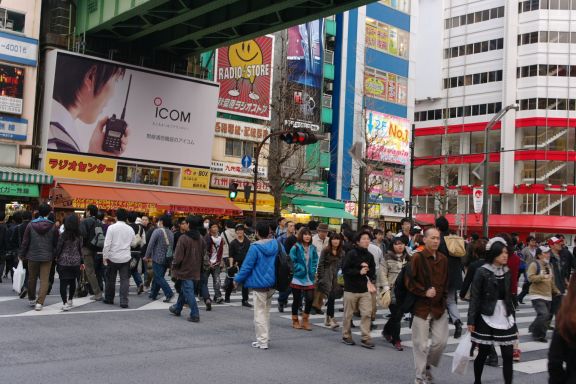
The country where random attack crimes first emerged as a social issue is neighboring Japan. In Japan, random attack crimes are called ‘Toorima Jiken (通り魔事件),’ meaning ‘incidents committed by a passing demon.’ A representative case is the 2008 Akihabara incident in Tokyo, where Tomohiro Kato drove a 2-ton truck into pedestrians at a crosswalk and stabbed passersby with a weapon, killing seven people. In March of this year, a high school student also entered a middle school and indiscriminately wielded a weapon.
Toorima Jiken reflects Japan’s structural social problems. After the bubble economy burst, issues such as wealth disparity, hikikomori, and solitary death surfaced in Japanese society. Kato was also known to have an unstable life due to unemployment. Professor Kim said, "South Korea is walking a similar path." According to last year’s youth life survey by the Office for Government Policy Coordination, the number of hikikomori youth nationwide is estimated to be between 300,000 and 400,000. Solitary deaths have increased by an average of 8.8% annually, with 3,378 people dying alone last year. Professor Kim diagnosed, "The perpetrators of these crimes are in their 20s and 30s, a group difficult to include in social safety nets, and are fully exposed to problems like hikikomori and wealth disparity."
Professor Lee Woonghyuk of Konkuk University’s Department of Police Science stated, "Korea has become a society of anger," and suggested, "The behaviors and characteristics of random attack criminals should be analyzed and reflected in the establishment of public safety policies."
© The Asia Business Daily(www.asiae.co.kr). All rights reserved.


















