'Bankbook Threat' Funds Not Used for Embezzlement: Partial Payment Suspension After Explanation
Financial Companies and Simple Remittance Operators Share Fraudulent Account Information
As new types of voice phishing scams, such as so-called 'account threats,' are rampant targeting self-employed individuals and small business owners, the ruling party and the government have decided to regulate these new methods by law.
According to the financial sector on the 24th, Yoon Chang-hyun, a member of the National Assembly's Political Affairs Committee from the People Power Party, in consultation with the Financial Services Commission and the Financial Supervisory Service, officially proposed the "Partial Amendment to the Special Act on the Prevention of Telecommunications Financial Fraud and Refund of Damages" on the 18th.
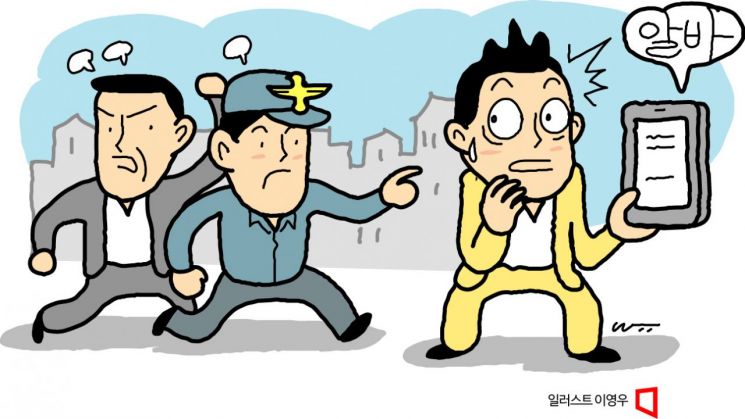
This bill contains provisions to prevent new scam methods such as account threats. Account threats refer to a new type of voice phishing scam that abuses the current system, which suspends payments on accounts suspected of being used for voice phishing crimes. Scammers make voice phishing victims transfer small amounts to a third party’s account, then suspend payments on that account and threaten the victim by making the release of the suspension conditional, thereby extorting money.
For self-employed individuals and small business owners who urgently need funds, even if they send money to the voice phishing criminals, the payment suspension is not lifted, and since direct contact with the victim (the third party) is difficult, it is hard to lift the payment suspension.
Accordingly, the amendment includes provisions allowing objections to the payment suspension if it can be objectively proven that the suspended account was not used for extorting damages. Through this, partial payment suspension can be applied only to the amount related to the damages in the account balance, reducing the inducement for account threat crimes and preventing related damages. This is the core content of the bill.
Measures against voice phishing using simple remittance services are also included. This type of scam abuses simple remittance services that allow money transfers by knowing only the recipient’s ID and contact information without knowing the bank account number. The scam deceives victims into transferring money, then extorts money during the time it takes for the victim to identify the bank account. As of June 2022, the amount of damages and number of victims from this type of voice phishing reached 4.2 billion KRW and 2,095 people, showing a sharp increase compared to 2018 (78 million KRW, 34 people).
Until now, victims of scams using simple remittance could not apply for payment suspension because they did not know the scammer’s bank account. Moreover, electronic financial service providers such as simple remittance operators are not classified as financial companies under current law, so they could not provide account data or financial company information.
As a result, victims had to obtain remittance confirmation from the simple remittance operator to identify the scammer’s bank account, delaying payment suspension measures. If the victim transferred money to the scammer’s bank account, the money was quickly moved to the simple remittance account and then to another bank account, making it impossible to know which bank account ultimately received the damages. Financial companies usually only learn the final receiving account one to two months later, making prompt relief difficult.
Considering this, the ruling party and government included in the amendment a provision allowing information sharing about scam accounts between financial companies and electronic financial service providers. This will enable rapid payment suspension and refund of damages for the relevant accounts. Representative Yoon said, "Despite being unfairly involved in voice phishing crimes, victims have limited means of relief and must prove their innocence themselves, which takes a long time. Due to limitations in current law, we prepared this amendment."
© The Asia Business Daily(www.asiae.co.kr). All rights reserved.

















