US Invests Simultaneously in Three Leading Companies
"Companies That Win Competition Will Bring Benefits"
China Develops Technology Following Moore's Law
Market Disruption Seems Unlikely
"The United States is highly likely to simultaneously bet on Samsung Electronics, TSMC, and Intel."
This is the anticipated direction of U.S. semiconductor subsidy payments predicted by Chris Miller, author of Chip War?which highlights the U.S.-China conflict surrounding semiconductors?and a professor at Tufts University. However, Professor Miller expects growth from only about one of these companies.

On the 20th, Professor Miller spoke at the webinar titled "Untold Story of Chip War," hosted by Nikkei Asia in Japan, where he shared these insights.
U.S. Simultaneously Bets on TSMC, Intel, and Samsung Electronics
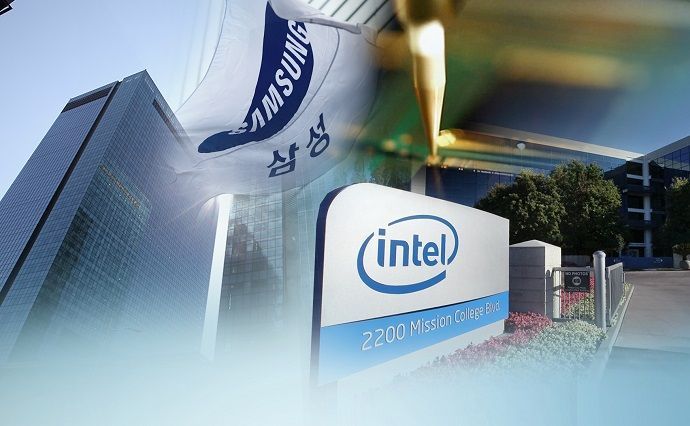
Professor Miller explained that the current semiconductor industry anticipates that the future U.S. semiconductor sector will be structured with TSMC handling foundry production and U.S. companies responsible for design.
However, he predicted that the U.S. government "will provide subsidies to all three companies (TSMC, Intel, Samsung) competing for a share of the benefits under the CHIPS Act." Since it is impossible to predict which of the three will possess the most cutting-edge technology, the U.S. is likely to bet on all possible variables. Nevertheless, "the U.S. hopes that one of these companies will pull ahead and bring benefits," he observed. Regarding the U.S. interests in this strategy, he explained, "While the subsidized companies will increase factories within the U.S. at this point, it is uncertain whether they will reinvest in the U.S. after fully utilizing the subsidies."
Currently, semiconductor companies such as Samsung Electronics and SK Hynix face significant risks in expanding to the West solely to obtain subsidies. To receive U.S. subsidies, they must obtain prior approval from the U.S. Department of Commerce when selling advanced semiconductor manufacturing equipment to Chinese semiconductor companies, which could become an obstacle for overseas operations outside the U.S. Korean companies operating in the U.S. have been granted a one-year grace period for this measure, but uncertainty remains beyond that, complicating long-term investment strategy planning.
Cultural differences also present challenges to overcome. When Asian companies, including TSMC, enter Western countries, it is expected to be difficult to apply their home country’s rigorous labor culture to their U.S. branches. TSMC’s founder, Morris Chang, once stated that it is part of Taiwan’s tech industry culture to travel on business trips even at dawn when repair schedules are set.
China Develops Technology Following Moore’s Law... Difficult to Cause Major Disruptions
Professor Miller predicted that China, positioned opposite the U.S., will find it difficult to secure an independent supply chain. He said, "There are likely people within the Chinese government who want self-sufficiency in producing products with domestic technology," but added, "Chinese companies want to establish a supply chain where they manufacture many pieces of equipment from foreign companies and domestic companies produce the finished products, rather than complete self-sufficiency, to increase production capacity."
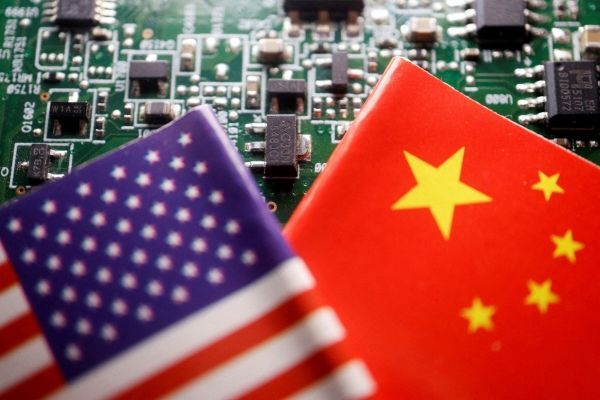
He viewed China’s semiconductor technology as a potential future threat to the U.S. Professor Miller diagnosed, "Currently, Chinese semiconductor equipment companies have very low market shares, and semiconductor companies lag one to three generations behind leading companies in technology." However, "China is conducting research on cutting-edge technology by following ‘Moore’s Law,’" and he emphasized, "What matters is not the speed of copying technology but how far they can develop and achieve a certain level of technological capability." The fact that China is leveraging Moore’s Law (the performance of integrated circuits doubling approximately every two years) as a driving force to compete for cutting-edge technology is itself significant.
Nevertheless, Professor Miller predicted that China will find it difficult to change the semiconductor industry landscape. He stated, "The semiconductor industry is led by a structure dominated by five countries, and this trend will not change dramatically," adding, "In ten years, the concentration of technology by region may differ, but it is unlikely that a new leading player will emerge in the industry."
U.S. Imposes Targeted Sanctions on China... Potential to Impact Entire Chinese Supply Chain
Regarding the semiconductor conflict between the U.S. and China, he forecasted that China could launch stronger attacks than the U.S. While the U.S. imposes export controls designed to minimize damage to its own companies, China could use rare earth export restrictions and a Taiwan invasion as leverage.
However, he predicted, "China’s attacks would cause significant damage not only to the U.S. but also to multiple countries and the entire supply chain," and added, "If China carries out such attacks, it will also suffer damages such as a decrease in foreign investment."
© The Asia Business Daily(www.asiae.co.kr). All rights reserved.
![User Who Sold Erroneously Deposited Bitcoins to Repay Debt and Fund Entertainment... What Did the Supreme Court Decide in 2021? [Legal Issue Check]](https://cwcontent.asiae.co.kr/asiaresize/183/2026020910431234020_1770601391.png)

















