Specific Roles and Responsibilities of the Board of Directors, CEO, and Compliance Officer Detailed
The authorities will specify the roles and responsibilities of executives and reporting officers related to anti-money laundering (AML) operations in financial companies. Additionally, to strengthen the expertise and independence of AML operations, a qualification requirement of at least two years of experience will be applied to reporting officers, and a minimum position level will be set for those responsible for executing the operations.
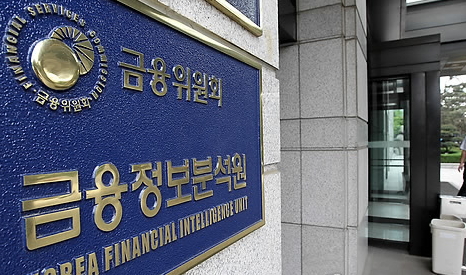
The Financial Intelligence Unit (FIU) held a meeting with related organizations on the 20th at the Bankers' Hall in Jung-gu, Seoul, and announced the "Plan to Strengthen Responsibility and Expertise in AML Operations," which includes these details. This plan was prepared after six months of discussions and feedback collection with financial industry associations, banks, insurance companies, securities firms, and other financial institutions since early this year.
First, the authorities decided to clearly define the roles and responsibilities of the board of directors, CEOs, compliance officers, and reporting officers concerning AML operations. For the board of directors, the scope of executives subject to supervision will be specified as the CEO, compliance officer, and reporting officer, and the supervisory content will be subdivided into improvement orders for vulnerabilities, approval of action results, and review.
For the CEO, roles and responsibilities are specified as follows: preparing AML operation guidelines and submitting them to the board, appointing reporting officers, organizing operational teams, and receiving reports on vulnerabilities related to AML operations from reporting officers and issuing improvement orders. This reflects opinions that the current regulation on "establishing and operating a system for reporting suspicious transactions and large cash transactions" is somewhat ambiguous in terms of the scope of work.
Regarding compliance officers, considering their inherent duty to check employees' compliance with internal regulations, they will supervise whether employees comply with AML-related operational guidelines. Also, if a reporting officer belongs to the compliance officer's department, the obligations under the Act on Reporting and Using Specified Financial Transaction Information performed by the reporting officer as an actor will be included within the compliance officer's supervisory scope. Furthermore, if the compliance officer concurrently serves as the reporting officer and violates the obligations under the Act as the reporting officer, the CEO will be assigned supervisory responsibility over the compliance officer.
The scope of responsibility for reporting officers will be adjusted so that they bear actor and supervisor responsibility only for violations within the "scope they can inspect." This reflects the reality that it is difficult for the head office reporting officer to inspect violations such as unreported large cash transactions or customer identification breaches occurring at the branch level under the current system.
Institutional improvements to guarantee the expertise and independence of reporting officers will also be implemented. The authorities will require that reporting officers be experts with at least two years of experience in AML operations. However, considering the shortage of such experts in the industry, this qualification requirement will be applied only to financial companies required to have compliance officers under the current Financial Company Governance Act, with a grace period of two years and six months.
Additionally, the minimum position for reporting officers will be set as the person responsible for executing operations in banks and as a position directly below the compliance officer in other large financial companies. This is based on the judgment that, given the nature of the reporting officer's work, which has little relevance to business performance, it is difficult to sufficiently guarantee operational independence unless a certain level of position with direct reporting authority to senior management is ensured.
The authorities plan to revise and announce the "Regulations on AML and Prohibition of Financing Public Terrorism" in the second half of the year, reflecting opinions from financial companies and others. Considering the preparation period for revising internal regulations and organizational arrangements in financial companies, the implementation will take place in the first half of next year, six months after the announcement.
Lee Yoon-soo, head of the FIU, stated, "As new money laundering risks such as virtual assets increase and techniques become more sophisticated and specialized, it is necessary to operate financial companies' AML systems with substance." He added, "This institutional improvement is also part of that effort, and as roles and responsibilities within financial companies are more clearly organized, it is expected to serve as an opportunity for autonomous yet responsible AML operations to take root."
© The Asia Business Daily(www.asiae.co.kr). All rights reserved.
![User Who Sold Erroneously Deposited Bitcoins to Repay Debt and Fund Entertainment... What Did the Supreme Court Decide in 2021? [Legal Issue Check]](https://cwcontent.asiae.co.kr/asiaresize/183/2026020910431234020_1770601391.png)















