Aftermath of Russia Halting Black Sea Grain Deal
Heatwaves and Floods Reduce Harvests
Rising Wheat and Corn Futures
UN and Others Discuss Response to Russia's Withdrawal
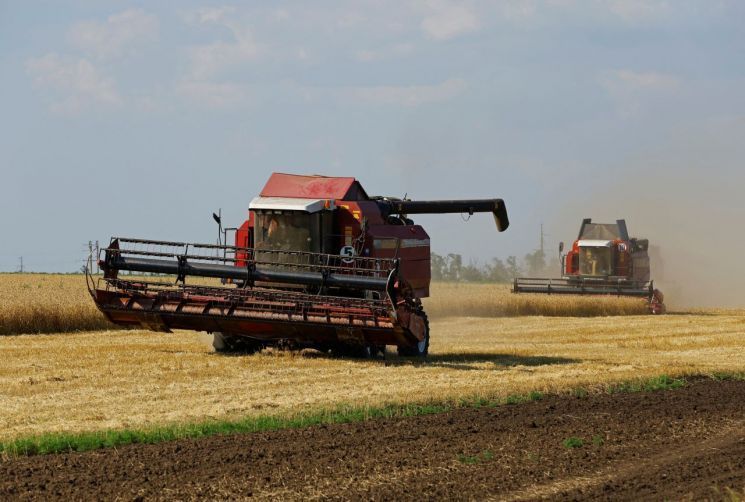
The suspension of Russia's Black Sea Grain Initiative and abnormal weather events have brought the fear of 'foodflation' (food + inflation) closer to reality. With Russia halting the agreement, Ukraine, a major global grain producer, has been blocked from exporting, and the harvest volume has decreased due to weather anomalies such as heatwaves and floods, increasing uncertainty in grain supply and demand. As signals of reduced grain production emerged, grain prices have soared to unprecedented levels.
On the 19th, wheat futures traded on the Chicago Board of Trade (CBOT) in the United States rose more than 8.5% from the previous closing price, reaching $7.277 per bushel. ETFs tracking wheat futures also showed an increase of over 7%. Corn futures prices rose 3.46% from the previous close, climbing to $5.530 per bushel. Soybean futures prices increased to $14.087 per bushel.
The significant impact came from Russia's announcement on the 17th, one day before the expiration of the Black Sea Grain Initiative, that it would no longer extend the agreement. Last year, Russia and Ukraine signed the agreement to alleviate the global food crisis. Since then, Ukraine's export routes, previously blocked by Russia, were reopened, and 32 million tons of grain have been exported worldwide since August last year. However, Russia suspended the agreement, citing that promises to guarantee the export of its own agricultural products and fertilizers were not kept.
The international community has raised alarms over global food security. The International Monetary Fund (IMF) warned through a spokesperson on the same day, "The suspension of this agreement will significantly impact food supplies in North Africa, the Middle East, and South Asia, which heavily depend on Ukraine's shipments," adding, "(Russia's withdrawal from the agreement) risks worsening food security prospects and causing food inflation worldwide."
Amid this situation, poor harvests due to abnormal weather continue worldwide, leading to forecasts of a significant reduction in grain production. On the 17th, the U.S. Department of Agriculture (USDA) lowered its estimate for rice production in Thailand, a major global rice exporter, for this year and next year by 800,000 tons to 19.7 million tons. This downward revision was due to a 28% decrease in rainfall compared to the same period last year, significantly reducing the expected shipment volume.
The supply and demand of sugarcane, the raw material for sugar, have also become uncertain due to drought in India. As of April, the price of sugarcane reached its highest level in 11 years and 6 months, soaring more than eightfold compared to the end of 2019 before the COVID-19 outbreak.
The international community is urging Russia to comply with the agreement. The United Nations and T?rkiye reportedly discussed response measures following Russia's withdrawal. The U.S. White House also stated in a briefing the previous day, "The end of the agreement will worsen food shortages and harm millions of vulnerable people worldwide," urging "the Russian government to immediately reverse its decision."
© The Asia Business Daily(www.asiae.co.kr). All rights reserved.

















