Battery, Electric Vehicles, Bio, System Semiconductors, etc.
Export Products Reorganized Mainly into High Value-Added Products
"Strategy for 'Trade Structure Transformation' to be Established by Year-End"
The Korea International Trade Association (KITA), together with the Ministry of Trade, Industry and Energy, announced that it will hold the "Trade Structure Transformation Forum Kickoff Meeting" on the 20th at the Trade Tower in Samseong-dong, Gangnam-gu, Seoul.
The meeting will be attended by related agency heads and private experts, including Jeong Manki, Vice Chairman of KITA and co-head of the forum, Ahn Deokgeun, Director-General for Trade Negotiations at the Ministry of Trade, Industry and Energy, Kim Heungjong, President of the Korea Institute for International Economic Policy, Yoo Jungyeol, President of KOTRA, and Joo Hyun, President of the Korea Institute for Industrial Economics and Trade.
Vice Chairman Jeong stated that Korea's share of the global market for Korean products peaked at 3.23% in 2017 but fell to 2.74% last year. This indicates that the export industry base is weakening. He emphasized the need to devise export strategies tailored to Korea's circumstances, considering external factors as well as labor force, technological capabilities, and capital accumulation levels.
Vice Chairman Jeong said, "Due to low birth rates and an aging population, Korea's most important factor, the working-age population, is decreasing. In the near future, the overseas relocation of labor-intensive industries will accelerate, making exports more difficult and potentially reducing the number of export items." He added, "Export products may rapidly shift toward high value-added goods such as batteries, electric vehicles, bio products, system semiconductors, and hydrogen carriers." He further noted, "'K-Culture' and 'K-Content,' the spread of startups and digital trade, and the expansion of intermediate goods exports will also become established export trends."
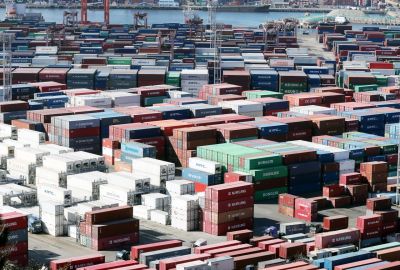
Director-General Ahn said, "Korea's exports are vulnerable to external conditions due to a trade structure concentrated on specific items and regions, resulting in periodic fluctuations in response to recent global economic changes." He added, "It is urgent to transition to a stable trade structure that is resilient to changes in the global trade environment, such as the global economy, the U.S. Inflation Reduction Act (IRA), and the European Union's Carbon Border Adjustment Mechanism (EU CBAM)."
They plan to elect heads of four subcommittees focused on export diversification and trade structure advancement to finalize the forum's composition and operational methods. KITA and the Ministry of Trade, Industry and Energy aim to gather opinions from public and private experts over five months until November and establish a "Trade Structure Transformation Strategy" within this year.
Vice Chairman Jeong stated, "Going forward, we will prepare alternatives based on scientific investigations and research by subcommittee, making a sober diagnosis of reality rather than idealism, and actively communicate with the export field." Director-General Ahn said, "We will actively support ensuring that the diverse expert opinions presented through the forum are reflected as much as possible in future government policies."
© The Asia Business Daily(www.asiae.co.kr). All rights reserved.

















