Abandoned Lead Cables from the Past... Removal Costs 74 Trillion Won
South Korea Has Already Replaced Them... "Using PE Sheath Cables"
While major US telecom companies are struggling with the harmful effects of lead-based wired telephone cables, it has been confirmed that such cables have already been phased out domestically.
Recently, US telecom companies such as AT&T, Verizon, Frontier Communications, and Lumen Technologies saw their stock prices plunge following a Wall Street Journal (WSJ) report that abandoned lead-sheathed cables they used in the past cause environmental pollution and negatively impact health. AT&T, in particular, recorded its lowest stock price in 30 years.
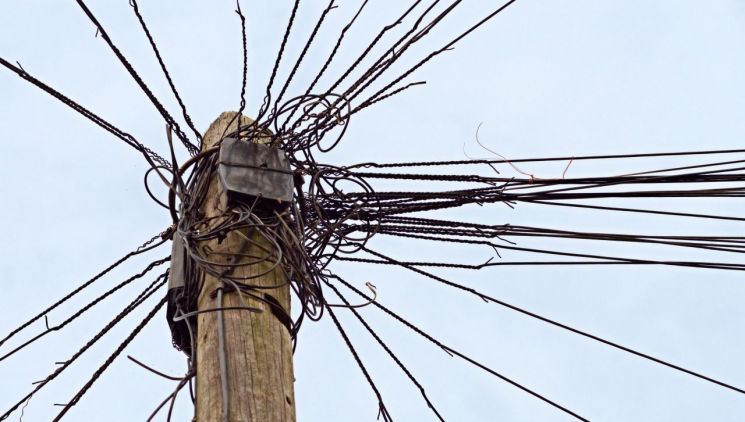
Earlier, on the 9th, WSJ reported that lead-sheathed cables abandoned across the US by telecom companies are contaminating soil and water and adversely affecting health. The report pointed out that although telecom companies recognize the harmfulness of lead-sheathed cables, they leave them unattended due to the enormous cost burden. Jonathan Chaplin, a researcher at New Street Research, estimated that telecom companies would need $59 billion (approximately 74.399 trillion KRW) to remove the lead cables. Experts believe it will take several years to resolve this issue. There is also a possibility of legal liability.
In the past, the outer sheath of wired telephone cables was made of lead. The problem arose because these were left in place without replacement for a long time. Lead-sheathed cables first began to be used in the US in the 1880s and were gradually phased out starting in the 1950s. Domestically, they are known to have been used until the 1980s. SK Telecom and KT have replaced these cables and currently do not use lead-sheathed cables.
A KT official stated, "The issue in the US concerns the lead sheath of the cables," adding, "The cables currently used by KT have polyethylene (PE) sheaths and contain no lead." An official from the Ministry of Science and ICT said, "Telecom companies used lead cables from the 1960s to the 1980s, but now (they have all been replaced) and none remain."
Additionally, the copper wires used in the past are soon to disappear. Currently, domestic wired networks consist of 26% copper wires and 74% optical cables. The government plans to upgrade the network by converting 100% of the copper wires, which were built for voice telephone use in the past, to optical cables by 2026.
© The Asia Business Daily(www.asiae.co.kr). All rights reserved.

















