Amid a trend of easing inflation, U.S. retail sales continued to rise for the third consecutive month but fell short of market expectations. Analysts are divided between interpreting this as a sign of the U.S. economy gradually slowing down and viewing it as evidence that strong consumer spending is still supporting the economy.
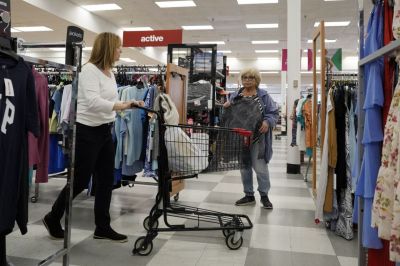
According to the U.S. Department of Commerce on the 18th (local time), retail sales in June increased by 0.2% compared to the previous month, marking three consecutive months of growth. However, this was below the expert forecast (+0.5%) compiled by the Wall Street Journal (WSJ) and also fell short of the increase seen in May. On the same day, the May growth rate was revised upward from 0.3% to 0.5%. After showing negative figures at the end of last year and the beginning of this year, U.S. retail sales turned positive in April. Meanwhile, core retail sales excluding gasoline and automobiles rose by 0.3%, meeting Bloomberg's forecast.
By category, 7 out of 13 categories showed growth compared to the previous month. Spending at furniture stores and electronics stores increased by 1.4% and 1.1%, respectively. Non-store retailers, including online sales, rose by 1.9%, driving overall retail sales. In contrast, department store sales fell by 2.4%, and gas stations also saw a 1.4% decline.
Retail sales are considered a pillar accounting for two-thirds of the U.S. real economy and a comprehensive indicator of economic health. This data was released amid a clear easing trend in inflation indicators such as the Consumer Price Index (CPI), which has reduced the Federal Reserve's tightening concerns and raised expectations for a so-called "soft landing." According to the Chicago Mercantile Exchange (CME) FedWatch, the federal funds (FF) futures market expects the Fed to implement a baby step (a 0.25 percentage point increase in the benchmark interest rate) at next week's FOMC meeting, followed by a pause in September.
Oren Klatchkin, an economist at Oxford Economics, said in an investor memo on the same day, "June retail sales suggest that consumers are becoming more cautious with their purchases." Robert Fredrick, a corporate economist at Navy Federal Credit Union, also analyzed, "(The retail spending data) is positive but weaker than expected, showing that consumers are exercising more caution in their purchases." He added, "Overall, Americans have more jobs, higher wages, and lower inflation, so they have money to spend. However, considering the slowdown in spending and increased savings, most are making cautious choices, anticipating a rise in unemployment by the end of the year."
On the other hand, considering the cumulative effects of tightening, some evaluations still regard U.S. consumer spending as solid. Local media analyzed that demand continues to outpace supply in the labor market, supporting wage growth, and combined with the recent trend of easing inflation, consumer spending is continuing.
CNN reported, "U.S. consumers are still opening their wallets despite high interest rates, stubborn inflation, and ongoing economic uncertainty," but added, "Whether this momentum will continue after the summer remains to be seen." Jamie Dimon, CEO of JPMorgan Chase, assessed the U.S. consumer situation during the earnings announcement on the 14th, saying, "Consumers are in good shape" and "They are spending cash in excess."
© The Asia Business Daily(www.asiae.co.kr). All rights reserved.
![Clutching a Stolen Dior Bag, Saying "I Hate Being Poor but Real"... The Grotesque Con of a "Human Knockoff" [Slate]](https://cwcontent.asiae.co.kr/asiaresize/183/2026021902243444107_1771435474.jpg)
















