Companies Utilizing Senior Workforce
Actual Salaries Double and Retirement Age System Abolished
Japanese companies are increasingly utilizing senior workers aged 60 and above. As the working-age population declines due to ongoing aging, companies have turned their attention to already skilled senior workers.
According to the Japanese media outlet Nihon Keizai Shimbun on the 17th (local time), the Japanese chemical giant Sumitomo Chemical plans to gradually raise the retirement age starting from April 2023. Currently, Sumitomo Chemical’s retirement age is 60. However, going forward, they plan to employ workers up to the age of 65.
The company already rehires willing workers aged 60 and above. Their pay is about 40-50% of what they earned while active. With the introduction of the new system, the actual salary of workers aged 60 and above will more than double.
Sumitomo Chemical aims to increase the proportion of employees aged 60 and above to 17% of the total workforce. Currently, it is only 3%.
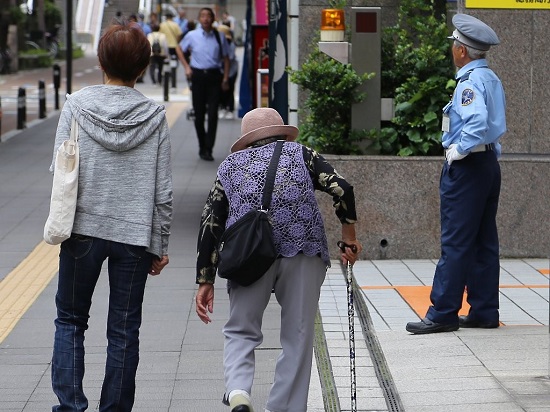 As the aging population continues, more Japanese companies are expanding their senior workforce.
 [Image source=Yonhap News]
Murata Manufacturing, a major electronics components company, is also accelerating efforts to secure senior workers. Murata recently extended the retirement age to 64 and is promoting a plan to maintain the wage system prior to age 59 for these senior workers.
The food service industry, which is already experiencing severe labor shortages, is much more proactive in this movement. Toridoll Holdings, which operates the famous udon chain Marugame Seimen, has expanded the age limit for on-site managers from 65 to 70. Some companies like Asics are reportedly considering abolishing the retirement age system altogether, according to Nikkei.
The reason Japanese companies are expanding their senior workforce appears to be largely due to the prolonged aging population. According to the Japanese think tank Recruit Works Institute, Japan is expected to face a shortage of about 11 million workers by 2040.
Nikkei explained, "In the industrial sector, there is growing concern that the generation hired in large numbers during the bubble economy around 1990 will soon reach the retirement age of 60, accelerating labor shortages."
It added, "In line with the '100-year life era,' it is essential to create an environment where those aged 60 and above, who are becoming a larger share of the labor market, can work enthusiastically."
© The Asia Business Daily(www.asiae.co.kr). All rights reserved.

















