Send a 20-page official letter
Request for response on data security practices
Investigation into false information posted about real individuals
FTC's recent regulatory performance remains weak
Criticism that it undermines market logic
The U.S. Federal Trade Commission (FTC), which has been pressuring big tech companies on all fronts, recently suffered consecutive losses in court cases, and now the FTC's regulatory focus has shifted to OpenAI, the developer of ChatGPT.
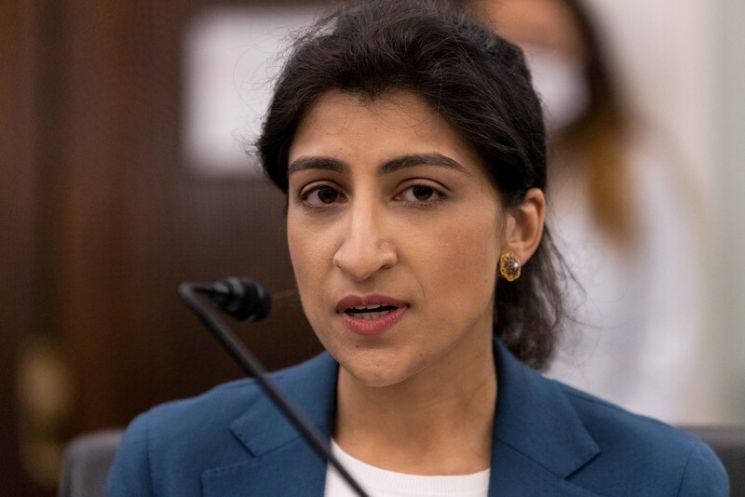
According to The Washington Post (WP), on the 13th, the FTC sent a 20-page letter to OpenAI demanding answers regarding the company's data security practices. The FTC is reportedly investigating whether OpenAI's generative AI, ChatGPT, has disseminated false information about real individuals, causing harm to them. To uncover this, the FTC has requested OpenAI to disclose the materials used to train ChatGPT, as well as the sources and methods of acquisition of those materials.
WP reported that "OpenAI is facing the strongest regulatory threat since it started doing business in the U.S.," noting that the FTC, which had previously targeted big tech companies like Meta and Twitter but lost, has now turned its regulatory focus to the AI sector.
However, some view the FTC's recent actions with skepticism. Lina Khan, the head of the FTC who has pursued antitrust lawsuits against big tech over the past two years without significant success, is now said to have shifted her attention to OpenAI. On the 11th, the U.S. District Court for the Central District of California dismissed the FTC's request for a preliminary injunction to block Microsoft's acquisition of Blizzard. The court had also dismissed the FTC's January request to block Meta's acquisition of Within Unlimited over antitrust concerns.
Republican lawmakers, the opposition party, have criticized Chairwoman Khan for undermining market logic through antitrust regulations. Representative Darrell Issa called her a "monster" trying to prevent big tech mergers, stating, "Mergers should have a positive impact on consumers in some way; if not, they are not good mergers," accusing her of setting unattainable standards. House Judiciary Committee Chairman Jim Jordan described her leadership as "disastrous."
In particular, Chairwoman Khan faces a difficult situation as allegations have arisen that the FTC did not comply with federal ethics regulations during its investigation of Twitter. She appeared before the House Judiciary Committee that day and defended herself, saying, "I consulted with relevant parties about ethics regulations during the investigation process and complied with recommendations when making decisions."
Since assuming the position of FTC Chair in 2021, Khan has tightened restrictions on big tech citing antitrust reasons. While attending Yale Law School in 2017, she gained attention inside and outside academia for a thesis advocating the application of financial and industrial separation regulations to platform companies, raising high expectations for her as a big tech watchdog early in her tenure.
© The Asia Business Daily(www.asiae.co.kr). All rights reserved.

![User Who Sold Erroneously Deposited Bitcoins to Repay Debt and Fund Entertainment... What Did the Supreme Court Decide in 2021? [Legal Issue Check]](https://cwcontent.asiae.co.kr/asiaresize/183/2026020910431234020_1770601391.png)














