Dollar Index Hits Lowest in 15 Months
Emerging Market Currencies Like Latin America Expected to Rise
As U.S. inflation slows down, expectations for the central bank to end its tightening have increased, causing the value of the dollar to fall to its lowest level in over a year. Following last year's rapid interest rate hikes by the Federal Reserve (Fed), the era of the 'King Dollar' that dominated global financial markets is expected to come to an end, leading investors to bet on a decline in the dollar's value.
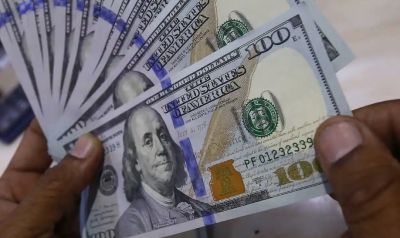
According to the international foreign exchange market on the 13th, the dollar index, which measures the value of the dollar against the currencies of six major countries worldwide, stood at 100.49 as of 2:26 p.m. Korean time. This is the lowest level in 15 months since it recorded 100.39 (closing price) in April last year.
Compared to the dollar index's peak of 114.11 in September last year, it has fallen 11.9% in 10 months.
The dollar's value declined as U.S. inflation slowed. The U.S. Department of Labor announced the previous day that the Consumer Price Index (CPI) for June rose 3.0% year-on-year, below the expert forecast of 3.1%. This is the first time since April 2021 that the U.S. CPI inflation rate has fallen below 4%.
The market has started betting on a weaker dollar. Expectations that the Fed will end its tightening steps with a final 0.25 percentage point rate hike this month have manifested as selling pressure on the dollar. Bloomberg reported, based on Commodity Futures Trading Commission data, that hedge funds have turned to net selling the dollar for the first time since March.
Institutional investors anticipate the Japanese yen, New Zealand dollar, and emerging market currencies to appreciate. Brad Gibson, Co-Head of Asia-Pacific Fixed Income at AllianceBernstein, said, "The U.S. economy is slowing, and the Fed is likely to begin easing monetary policy. We generally believe the U.S. dollar has peaked, and other currencies have room to perform better from the second half of this year through next year."
There are also opinions emphasizing attention to emerging market currencies. For example, the Colombian peso, from one of the Latin American countries, has risen 18% against the dollar this year.
Shamaila Khan, Head of Emerging Markets and Asia-Pacific Fixed Income at UBS, said, "Currencies of Latin American countries such as Brazil, Mexico, Chile, and Colombia are likely to outperform the market average. The double-digit high returns offered by emerging market currencies are why these currencies are preferred. The dollar is expected to weaken in the second half of this year." M&G Investments is betting on yen strength.
On the other hand, some argue that the strong dollar trend will continue. If the global economic recession deepens, investors may flock to the dollar as a safe-haven asset amid spreading anxiety. Brandon Murphy, manager at Insight Investment, explained, "We have not taken many risks in foreign exchange. Real interest rates are rising. Although there are concerns about the U.S. economy, it is performing much better than Europe or China."
© The Asia Business Daily(www.asiae.co.kr). All rights reserved.
![Clutching a Stolen Dior Bag, Saying "I Hate Being Poor but Real"... The Grotesque Con of a "Human Knockoff" [Slate]](https://cwcontent.asiae.co.kr/asiaresize/183/2026021902243444107_1771435474.jpg)
















