The US Consumer Price Index (CPI) inflation rate, which surged to the 9% range last year, has dropped to 3%. There is a growing consensus that the Federal Reserve's (Fed) year-long series of interest rate hikes to curb inflation is now nearing its end. In the market, expectations are spreading that the Fed's tightening will conclude with a baby step (a 0.25 percentage point rate hike) as soon as this month.
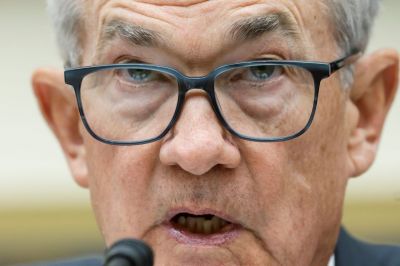
US CPI Rises 3%, Below Expectations... Core CPI Also in the 4% Range
According to the US Department of Labor on the 12th (local time), the June CPI rose 3.0% year-on-year. This was below Wall Street's forecast of 3.1%, marking the lowest level since March 2021. After peaking at 9.1% in the same month last year, it has fallen to 3% in one year. The June CPI also recorded a 0.2% increase month-on-month, below the Wall Street estimate of 0.3%. The core CPI, which excludes the volatile energy and food sectors, rose 4.8% year-on-year, showing the slowest pace since October 2021. It also increased by only 0.2% month-on-month. These figures all fell short of market expectations (5.0%, 0.3%).
The CPI inflation rate, which has eased to its lowest level in over two years, is seen as a signal that the Fed's cumulative tightening is taking effect. Particularly, Wall Street places significance on the core CPI, which had fueled concerns about prolonged tightening, finally dropping into the 4% range. The New York Times (NYT) reported, "The slowdown in core CPI, closely monitored by the Fed, is noteworthy," calling it "good news for consumers and the Fed."
There are many positive details in the sub-indicators as well. Used car prices, which had driven inflation last year, fell 0.6% in one month. This is the largest drop since April 2020, the early stage of the pandemic. Considering that new car production is increasing due to the resolution of supply chain disruptions, including vehicle semiconductors, used car prices are expected to continue declining. Airfares, which had soared due to 'revenge travel' demand after the pandemic, also dropped 8.1% in one month. Compared to the same month last year, they plunged 18.9%.
Housing costs, including rent, are also gradually slowing down. Housing costs rose 0.4% month-on-month and 7.8% year-on-year. Although still high, the rate of increase was lower than the previous month. The month-on-month increase was the lowest since March. Wall Street expects housing costs to soon turn downward in the data, considering there is at least a six-month lag before recent rent price declines are reflected in the CPI. According to the Department of Labor, housing costs, including rent, accounted for more than two-thirds of the core CPI increase in June.
George Mateyo, Chief Investment Officer (CIO) at Key Private Bank, said, "We have finally confirmed that inflation is cooling. The Fed will take this report as evidence that its tightening policy is having the desired effect." Bethany Stevenson, an economics and public policy professor at the University of Michigan, also appeared on CNBC's Squawk Box, saying, "We are seeing a slowdown without a labor market collapse. Inflation is also slowing," adding, "This is exactly what a soft landing looks like."
The Fed's Beige Book economic report released that day also included content that inflation rose at a moderate pace but the rate of increase slowed in several regions. Future outlooks were also lowered. In some areas, consumers have become more price-sensitive, leading to reluctance to raise prices. While service companies still faced high cost pressures, the manufacturing sector showed noticeably eased pressures.
Baby Step Likely in July... Expectations Spread That "It Will Be the Last Tightening"
However, an interest rate hike is likely at the July FOMC meeting scheduled for the 25th-26th. Mateyo welcomed the June CPI report as a "significant improvement" but assessed, "It does not seem likely to prevent the Fed from raising rates at the end of this month." Although the core inflation closely watched by the Fed has entered a downward trend, it remains at a high level, and there is still a long way to go to reach the inflation target of 2%.
Accordingly, investors' attention is focused on the Fed's moves after the July rate decision. Jim Reid, strategist at Deutsche Bank, predicted, "The July rate hike is almost certain, but anything is possible afterward." If the inflation decline trend becomes more evident next month, the Fed could end tightening sooner than expected. The Fed indicated through the June dot plot that two rate hikes could occur this year, and there are four remaining meetings this year, including this month, in September, November, and December.
Ryan Sweet, chief economist at Oxford Economics, said, "The new data (June CPI) gives the Fed a reason to discuss whether additional rate hikes are needed after this month," and predicted, "The Fed's tightening cycle will end." Gregory Daco, chief economist at accounting and consulting firm EY, also tweeted, "I do not expect additional rate hikes after July. It will be the last hike in this cycle." Julia Pollak, chief economist at ZipRecruiter, analyzed, "The Fed is likely to pause rate hikes after the last increase in July and gradually lower rates until 2024."
In the market, the consensus is also for a rate hike in July followed by a pause in September. According to the Chicago Mercantile Exchange (CME) FedWatch, the federal funds (FF) futures market was pricing in about a 95% chance of a baby step in July as of that morning. The probability of a pause in September was around 82%, up from the 70% range the previous day. The expectation of an additional baby step in September was only in the 13% range. The Wall Street Journal (WSJ) reported, "The rate futures market is also betting that the July hike could be the last."
However, there are also counterarguments that it is not yet time to consider ending tightening. It is explained that a single CPI report cannot confirm a downward trend in core inflation. Bloomberg noted, "Inflation remains well above the Fed's 2% target, and the final stage of lowering inflation could be the most difficult," adding, "Base effects may have made the latest figures look better." Considering that core CPI accounts for about 80% of the total CPI, some point out that the downward trend in core prices needs to be clearer to achieve the 2% target. Sarah House, chief economist at Wells Fargo, said, "We are still far from the 2% target," and "The Fed will proceed very cautiously."
Fed officials have also repeatedly stated that it is premature to declare victory in the fight against inflation. Thomas Barkin, president of the Federal Reserve Bank of Richmond, said at an event that day, "Inflation is still too high," and "If we retreat too quickly, inflation will strengthen again, and the Fed will have more work to do," showing a cautious stance. Neel Kashkari, president of the Minneapolis Fed, also mentioned in a blog post, "If inflation becomes more persistent than expected, rates could rise," adding that although the US banking system is generally sound now, bank stress could reoccur at any time, and preparations for related scenarios are necessary.
© The Asia Business Daily(www.asiae.co.kr). All rights reserved.
![Clutching a Stolen Dior Bag, Saying "I Hate Being Poor but Real"... The Grotesque Con of a "Human Knockoff" [Slate]](https://cwcontent.asiae.co.kr/asiaresize/183/2026021902243444107_1771435474.jpg)
















