Record-breaking heavy rain in 40 years causes vegetable prices to soar
Tomato prices quadruple in two months
India's economy is staggering under the heavy rains that have poured down.
The Monsoon's Significant Impact on the Economy... Called the 'Monsoon Economy'
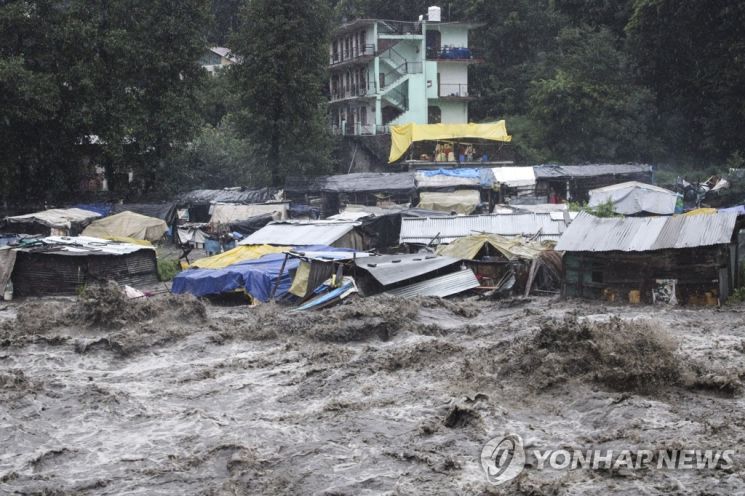 On the 9th, during the monsoon heavy rains in northern India, the Beas River flooded in Kullu, Himachal Pradesh. The heavy rains on that day caused at least 22 deaths across northern India.
 [Image source=Yonhap News]
According to foreign media such as the UK Guardian and India Business Standard on the 11th (local time), heavy rains in India caused retail food prices, including tomatoes, to surge sharply in northern Delhi and its surrounding areas.
There is a saying in India called the 'Monsoon Economy.'
The monsoon is a seasonal wind accompanied by rainfall. In India, it starts from the southwestern coast of Kerala in early June, spreads across the entire country by mid-July, and usually continues until September.
The term 'Monsoon Economy' was coined because the monsoon has a very large impact on the economy.
Agriculture accounts for 30% of India's total Gross Domestic Product (GDP). The monsoon period provides 70-80% of the absolute rainfall needed for crop cultivation. Therefore, if the monsoon, which usually begins in early June, is delayed by just two weeks compared to the average, it directly affects the Indian economy.
Vegetable Prices Soar Due to Record-Breaking Rainfall in 40 Years... Inflation Concerns
This monsoon has become problematic as the record-breaking rainfall in 40 years greatly exceeded the expected precipitation.
India's inflation rate was slowing down until May. According to the Indian National Statistical Office, the Consumer Price Index (CPI) in May recorded its lowest level since April 2021.
However, the situation completely changed in just two months. According to the India Meteorological Department, rainfall exceeded ten times the average precipitation for June and July, raising concerns about inflation. Flood damage and poor crop yields have worsened.
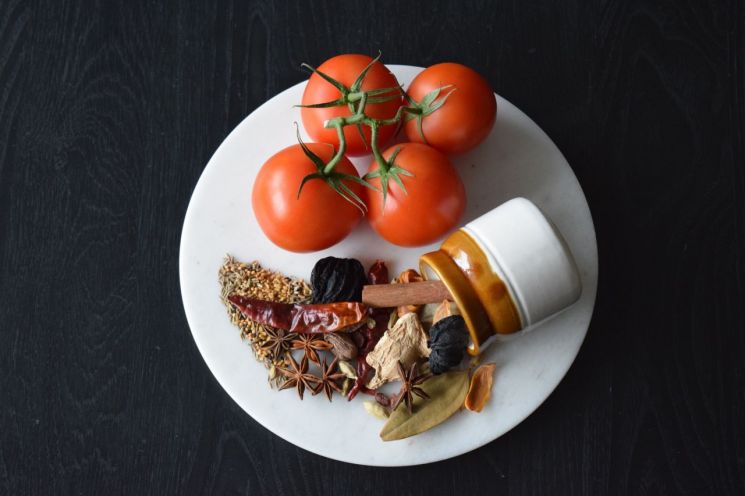
The price of tomatoes, a key ingredient in traditional Indian cuisine, has quadrupled in just two months. Prices of other vegetables have also risen simultaneously.
Arvind Malik, a tomato farmer in Kurukshetra, Haryana in northern India, said, "Until a few months ago, the price of tomatoes was about 40 rupees (626 won) per kilogram. We neither harvested nor sold them even when they ripened." He added, "Now, they are selling for 160 rupees (2,500 won) per kilogram. We are even forced to sell rotten ones."
Although vegetables including tomatoes have a small weight in the CPI, they are a major factor increasing inflation volatility. Price increases in these items can drive up prices of other goods, ultimately shaking the livelihood economy.
The media added, "It seems it will take at least three months to stabilize the supply and demand chain," and warned, "If inflation caused by the monsoon rains prolongs and price stabilization fails, public anger toward Prime Minister Narendra Modi and the ruling party will intensify."
Heavy Rains Worldwide Cause Deaths and Extensive Damage
Meanwhile, many countries around the world are suffering from heavy rains. The northeastern United States, India, Japan, Pakistan, and others have experienced damage from heavy rainfall. Some areas in New York State received over 200mm of rain within 24 hours. Flood warnings were issued for more than 4 million residents across four neighboring states. Rising river levels due to the heavy rains have raised concerns about additional damage.
In Japan, five people died due to the heavy rains, and many remain missing. Toyota Motor Corporation halted operations at three factories in Fukuoka Prefecture, and tire manufacturer Bridgestone also stopped operations at four factories.
In Pakistan, since the end of last month, heavy rains have reportedly caused 80 deaths and injured 182 people.
© The Asia Business Daily(www.asiae.co.kr). All rights reserved.
![Clutching a Stolen Dior Bag, Saying "I Hate Being Poor but Real"... The Grotesque Con of a "Human Knockoff" [Slate]](https://cwcontent.asiae.co.kr/asiaresize/183/2026021902243444107_1771435474.jpg)

















