The first malaria alert of the year has been issued in Incheon.
Incheon City has issued a malaria alert for Gyeyang-gu, where a cluster case occurred, and Yeonsu-gu, where a suspected cluster case occurred, urging residents and visitors in these areas to exercise special caution.
A suspected cluster case refers to when two or more patients occur within 1 km of each other's residences and within 30 days of symptom onset in a malaria risk area. If genetic analysis shows that each patient's genotype is identical, it is classified as a cluster case.
Incheon City (10 districts), northern Gyeonggi Province, and Gangwon Province are designated as malaria eradication project subsidy areas and are considered risk areas. Malaria risk areas are selected annually by the Korea Disease Control and Prevention Agency based on patients' addresses.
Starting this year, according to the 'Malaria Management Guidelines,' a malaria alert is issued in the district when three or more suspected cluster cases or cluster cases occur.
Accordingly, Incheon City plans to conduct field investigations such as mosquito habitat surveys in patient occurrence areas, residence inspections, and risk factor identification. Additionally, the city will actively carry out mosquito control in patient occurrence and suspected infection areas within the affected districts, intensive publicity through local medical and pharmaceutical associations to detect additional cases, rapid diagnostic testing, and provision of preventive medication (Primaquine).
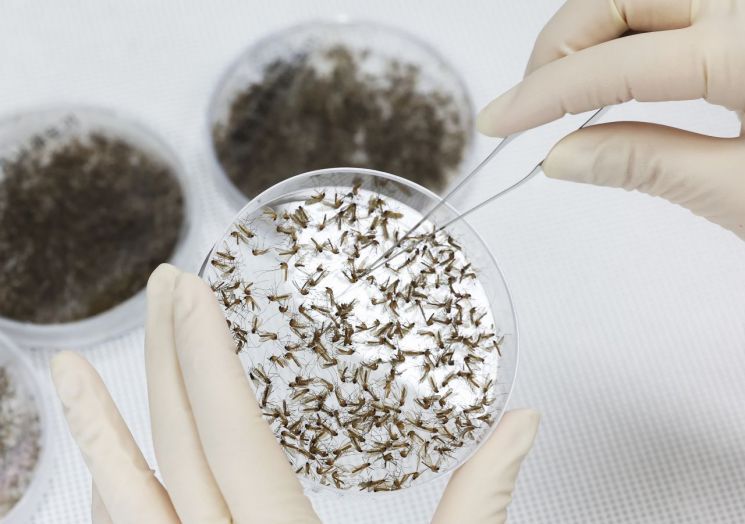 Due to this year's hot and humid weather, mosquito activity has increased, resulting in more than double the number of malaria patients nationwide and in Incheon compared to last year (as of July 11, 321 nationwide, 44 in Incheon). The photo shows a researcher demonstrating mosquito classification work at the Gyeonggi-do Institute of Health and Environment.
 [Image source=Yonhap News]
To prevent malaria, it is most important to avoid mosquito bites. According to malaria prevention guidelines, malaria-carrying mosquitoes are mainly active from April to October, from just after sunset until just before sunrise, so it is advisable to refrain from going out at night. If nighttime outings are unavoidable, it is recommended to wear light-colored long clothing and use mosquito repellent.
An official from Incheon City stated, "Due to hot and humid weather this year, mosquito activity has increased, resulting in more than double the number of malaria patients nationwide and in Incheon compared to last year (as of July 11, 321 nationwide, 44 in Incheon). We urge residents or travelers in malaria risk areas to be especially careful to avoid mosquito bites and to visit health centers or medical institutions immediately for testing if symptoms such as fever and chills occur after a mosquito bite."
When a suspected cluster case occurs, residents of the affected area can visit their local health center within 30 days from the symptom onset date of the last patient to receive rapid diagnostic testing and preventive medication free of charge.
© The Asia Business Daily(www.asiae.co.kr). All rights reserved.
![Clutching a Stolen Dior Bag, Saying "I Hate Being Poor but Real"... The Grotesque Con of a "Human Knockoff" [Slate]](https://cwcontent.asiae.co.kr/asiaresize/183/2026021902243444107_1771435474.jpg)
















