Rafael Grossi, Director General of the International Atomic Energy Agency (IAEA), stated on the 5th regarding Japan's plan to discharge contaminated water from Fukushima, "The IAEA will remain in Fukushima until the very last drop of contaminated water is safely discharged."
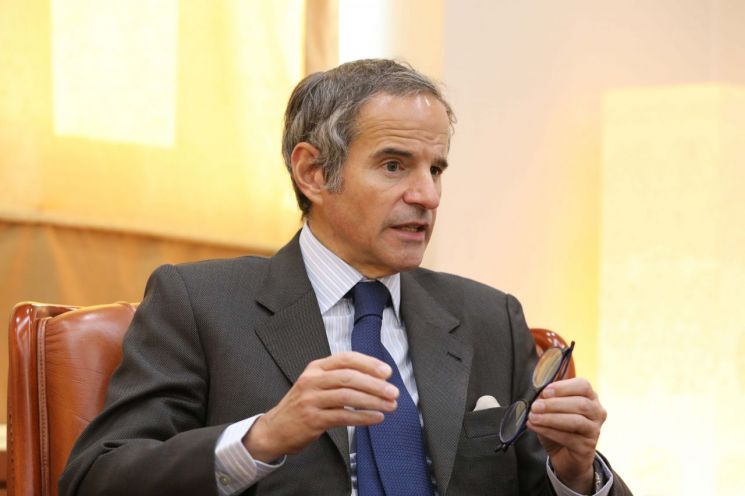 Rafael Grossi, Director General of the International Atomic Energy Agency (IAEA)
 [Photo by Yonhap News]
According to Kyodo News, on the same day, Director General Grossi attended a meeting held in Iwaki City, Fukushima Prefecture, with local fishermen and nearby local government heads to discuss measures for the disposal of waste and contaminated water.
He emphasized, "We will verify whether the discharge is proceeding as planned 20 or 30 years from now." The IAEA plans to open a local office at the Fukushima Daiichi Nuclear Power Plant to monitor the discharge site and confirm safety issues.
Government officials and Tokyo Electric Power Company (TEPCO) also attended the meeting to promise compensation measures and persuade local fishermen.
The Japanese government, having passed the IAEA's final verification, plans to discharge the contaminated water around this summer. However, various variables such as weather conditions and local elections in the Tohoku region have caused differing opinions regarding the specific timing of the discharge. Local media outlets, including the Nihon Keizai Shimbun, expect the discharge to occur in August or September.
Once the discharge timing is confirmed, Japan will dilute the contaminated water treated by the Advanced Liquid Processing System (ALPS) with seawater in front of the nuclear power plant and proceed with marine discharge. The concentration of tritium in the diluted contaminated water will be reduced to 1,500 becquerels (Bq) per liter (ℓ), which is 1/40th of Japan's regulatory standard. This corresponds to about 1/7th of the World Health Organization (WHO) standard for drinking water. The IAEA announced in its final verification report the day before that Japan's discharge plan complies with international safety standards.
After completing a three-day visit to Japan, Director General Grossi will visit South Korea from the 7th to the 9th. Although specific detailed schedules have not yet been set, he is expected to explain the safety of the contaminated water discharge throughout his visit. Afterwards, he plans to sequentially visit countries with strong opposition to the discharge, such as New Zealand and the Cook Islands.
© The Asia Business Daily(www.asiae.co.kr). All rights reserved.
![Clutching a Stolen Dior Bag, Saying "I Hate Being Poor but Real"... The Grotesque Con of a "Human Knockoff" [Slate]](https://cwcontent.asiae.co.kr/asiaresize/183/2026021902243444107_1771435474.jpg)
















