Interview with CEO of UK Used Watch Retailer
"Visibly Fake Watches Reduced from 80% to 20%"
Amid the popularity of secondhand luxury watches, the production of counterfeit watches, commonly referred to as 'jjaktung,' is rapidly increasing. It is known that more than half of the counterfeit watches currently in circulation are replicas of the Swiss luxury watch brand Rolex. Recently, as counterfeit manufacturing technology has advanced rapidly, distinguishing genuine products has become very challenging.
According to Bloomberg on the 4th (local time), Arjen van der Wal, CEO of UK-based secondhand watch retailer Watchfinder, said in an interview with Bloomberg Radio, "Rolex is the most in-demand luxury watch brand."
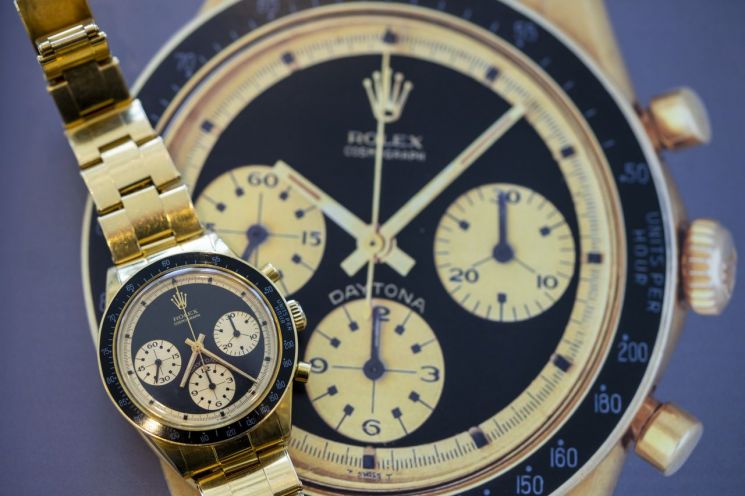
According to the 'Rolex Market Index,' which shows the average transaction prices of the top 30 Rolex models in the global secondhand market, Rolex prices have risen 60% compared to five years ago as of the 3rd. The annual average growth rate is 13.4% compared to five years ago. Although there has been a slight decline this year, the surge in revenge spending on luxury watches after COVID-19 drove the price increase.
As the market size grows and demand increases, fake secondhand luxury watches have also flooded the market.
Van der Wal, CEO, said it is becoming increasingly difficult to identify fake secondhand luxury watches. He explained that last year, 10% of the watches brought in by sellers for purchase were identified as counterfeit.
In particular, with the advancement of counterfeit watch manufacturing technology, whereas in the past about 8 out of 10 fake watches could be identified by the naked eye, now only about 2 out of 10 can be detected visually. Accordingly, Watchfinder employees conduct in-depth inspections to verify whether secondhand luxury watches are genuine before purchasing them.
As the issue of counterfeit watches grew, Rolex launched a certified pre-owned program in December last year, where authorized dealers verify the authenticity of secondhand watches. With this official certification process, certified products in the secondhand market are reportedly traded at prices about 25% higher on average than uncertified ones.
This is not a problem unique to Rolex. Van der Wal said, "You can practically find counterfeits of almost every major luxury brand." This means that as interest in luxury watches grows, not only Rolex but other famous brands are also seeing a surge in counterfeit products.
According to Boston Consulting Group (BCG) in April, the global luxury watch market size has exceeded 100 trillion won. It expanded from $75 billion (approximately 98.4 trillion won) in 2021 to $79 billion last year. It is expected to grow to $101 billion by 2026. The current size of the secondhand luxury watch market is estimated by the industry to be around $27.3 billion.
© The Asia Business Daily(www.asiae.co.kr). All rights reserved.

















