Kim Hyunjin, Outside Director at Hanwha Aerospace
Youngest Professor Appointed at Seoul National University in 2004
"Hope I Do Not Regret the Decision to Become an Outside Director in the Future"
"Hanwha Aerospace (hereinafter Hanwha Aero) had to review thousands of pages of documents and engage in heated debates over why it should acquire Daewoo Shipbuilding & Marine Engineering (currently Hanwha Ocean), a declining industry in shipbuilding that had experienced negative incidents such as accounting fraud. The discussions were so intense that voices were raised. Eventually, everyone agreed that the group had made a managerial decision to pursue defense industries across land, sea, and air."
If the starting point for Hanwha Group's acquisition of Hanwha Ocean was the decision of Group Chairman Kim Seung-yeon, the period came with the unanimous approval of Hanwha Aero's board of directors. Since then, Hanwha Aero invested the largest amount among affiliates, 1 trillion won, to acquire Hanwha Ocean. Kim Hyun-jin, a professor in the Department of Aerospace Engineering at Seoul National University who participated in the process as an outside director, said that the role of outside directors, often regarded as mere 'rubber stamps,' made him reconsider their importance.
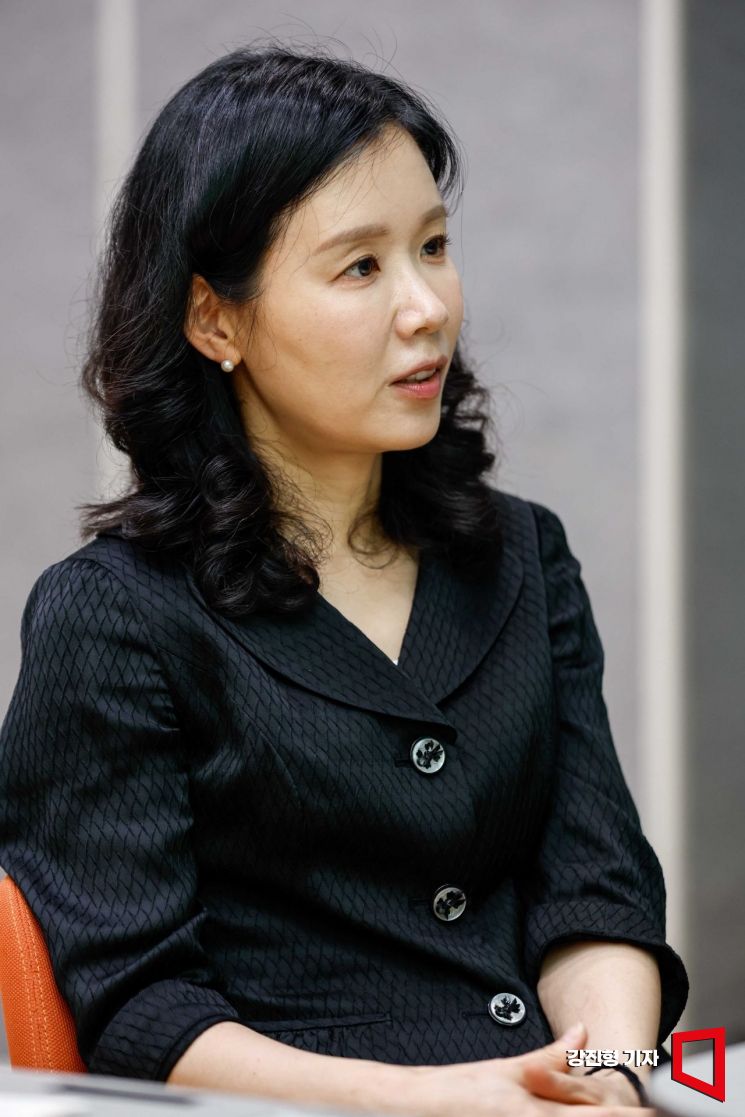 Professor Kim Hyunjin of the Department of Aerospace Engineering at Seoul National University is being interviewed on the 26th at the Automation Systems Joint Research Center, Seoul National University, Gwanak-gu, Seoul. Photo by Kang Jinhyung aymsdream@
"From the outside, people think outside directors just need to approve agenda items like a rubber stamp. (Having experienced it myself,) various experts provide deeply researched and analyzed materials and reports on the agenda items, which are reviewed thoroughly over sufficient time. Opinions are organized, and then the board meeting takes place. Intense deliberations and debates naturally occur within that process."
Professor Kim, who had devoted himself to research as a mechanical and aerospace engineer for 20 years, has been serving as an outside director at Hanwha Aero since 2021. Participating in management activities unrelated directly to his field is not easy. He said, "Professors can stay locked in their labs all day and may not pay attention to worldly affairs," but added, "As an outside director and an engineering professor receiving public research funds, it is not only a way to contribute to society but also an opportunity to learn how decisions that can change the landscape of our economy are made."
Having researched AI-automated drones, Professor Kim was asked how he views Hanwha Aero, which dreams of becoming a 'comprehensive top-tier space defense company.' He evaluated, "Hanwha Aero is a company with a strong will not to remain only in industries with upper limits, such as aircraft parts manufacturing. With the merger of Hanwha Defense, it is actively consolidating capabilities as a comprehensive defense company, possessing land, sea, and air technologies, and striving to secure synergies with other affiliates."
"If you think only about the present, there is little reason to invest in the aerospace industry. Massive investments are required, and it is actually unclear when those investments will yield returns. However, I believe it is commendable just to have interest in challenging fields like aircraft, urban air mobility (UAM), and space exploration, thinking about 50 or 100 years from now."
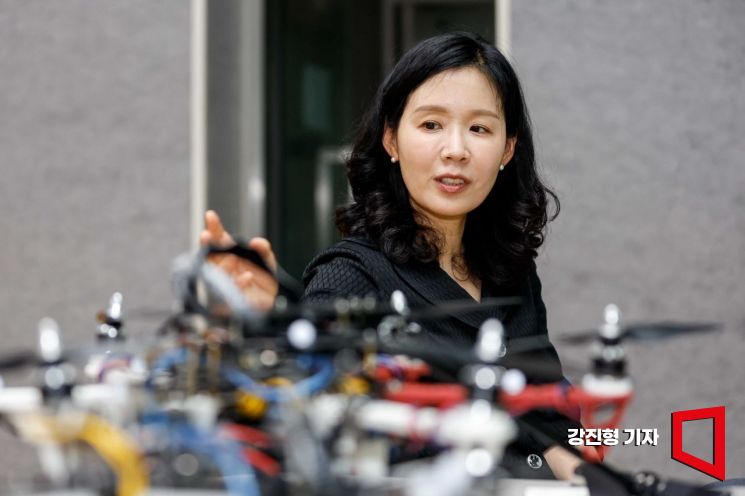 Professor Kim Hyunjin of the Department of Aerospace Engineering at Seoul National University is being interviewed on the 26th at the Automation Systems Joint Research Center, Seoul National University, Gwanak-gu, Seoul. Photo by Kang Jinhyung aymsdream@
He cited the 'K9 self-propelled howitzer' as a successful example of such managerial decisions. The K9 was originally developed to replace expensive German self-propelled howitzers. Now, it has grown to compete alongside Germany. He said, "It may take 10 or 20 years to judge whether a manager's decision was correct," and added, "I also hope that the decisions I make as an outside director will be regarded as good decisions in the future."
Professor Kim, who had a strong interest in moving objects, graduated from Gwangju Science High School and KAIST, then earned his master's and doctoral degrees in mechanical engineering at UC Berkeley. Afterward, he worked as a researcher and lecturer in the Department of Electrical Engineering and Computer Sciences at UC Berkeley, and in 2004, he was appointed as the youngest professor (at age 29) at Seoul National University, which attracted attention.
He emphasized, "Even in engineering colleges, the ratio of female students in mechanical and aerospace fields is particularly low, and there are only two female aerospace professors nationwide, but rather than feeling uncomfortable as a woman, I found many advantages." He added that he has never thought of himself as a special female engineer nor wished for special treatment.
"When I think that if I had been born 100 years ago, I might not have even been allowed to enter school, I feel grateful. Even just two years before me, female students were not admitted to science high schools. There are disadvantages to being a woman, but I want to let female juniors know that there are also advantages."
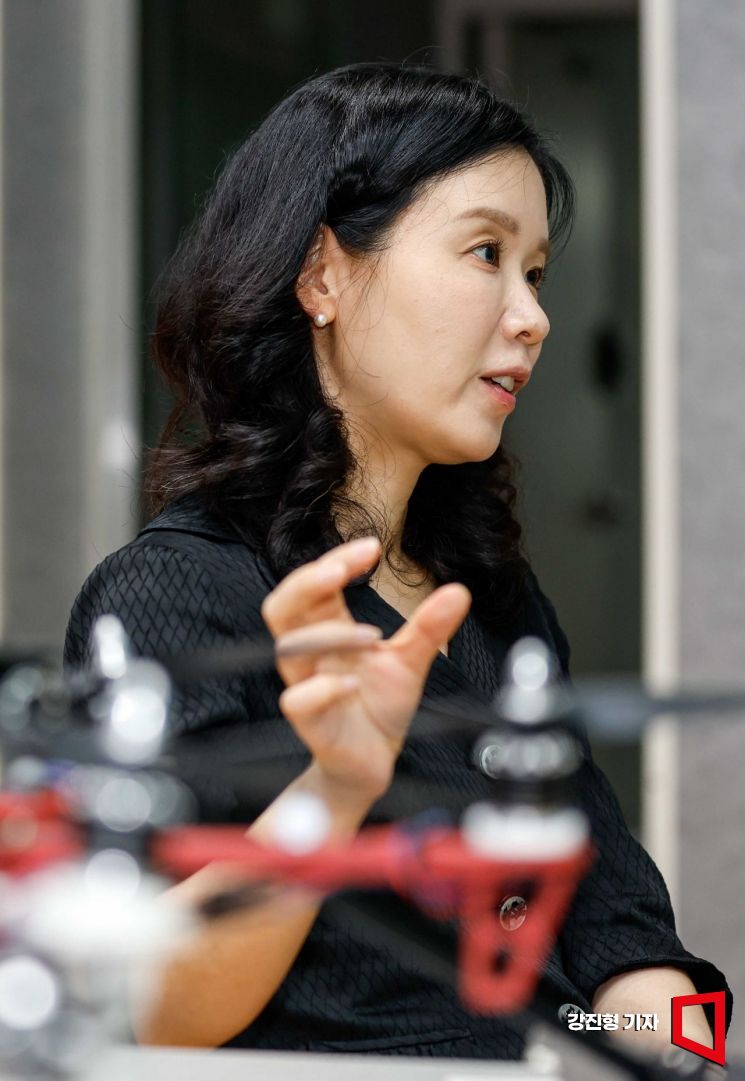 Professor Kim Hyunjin of the Department of Aerospace Engineering at Seoul National University is being interviewed on the 26th at the Automation Systems Joint Research Center, Seoul National University, Gwanak-gu, Seoul. Photo by Kang Jinhyung aymsdream@
© The Asia Business Daily(www.asiae.co.kr). All rights reserved.
![Clutching a Stolen Dior Bag, Saying "I Hate Being Poor but Real"... The Grotesque Con of a "Human Knockoff" [Slate]](https://cwcontent.asiae.co.kr/asiaresize/183/2026021902243444107_1771435474.jpg)













