JNN "45% Support Release, 40% Oppose"
Coalition Ruling Party Also Halts... Attention on Timing of Release Decision
As the Japanese government is reported to have completed preparations for the discharge of contaminated water from the Fukushima Daiichi Nuclear Power Plant, it has emerged that public support for the discharge is less than 50%, raising prospects that the timing of the release may be delayed beyond initial expectations. Criticism is also mounting in political circles, with calls to refrain from discharging during the summer vacation season, suggesting that the controversy is likely to intensify.
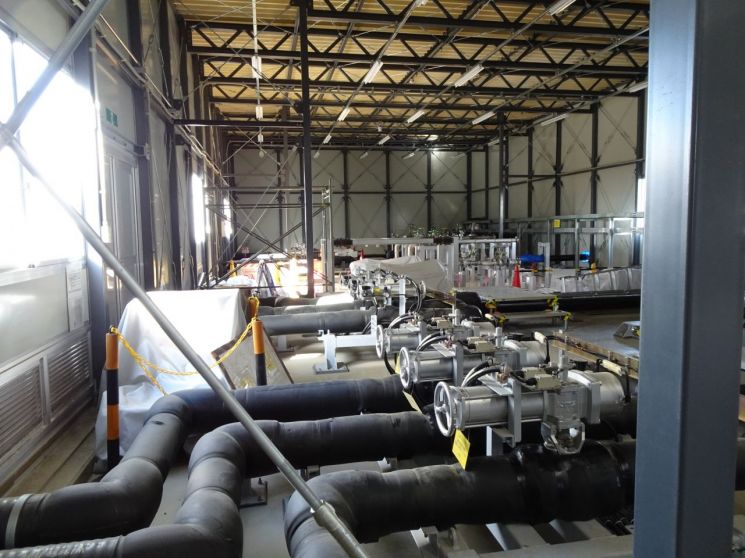 The contaminated water transfer pump at Fukushima Daiichi Nuclear Power Plant, revealed by Tokyo Electric Power Company on the 2nd. This facility purifies contaminated water and transfers it to the sea. [Image source=Yonhap News]
On the 3rd, Japan's JNN broadcast reported that a telephone survey conducted from the 1st to the 2nd targeting 1,207 citizens aged 18 and over across Japan showed that 45% supported the discharge of contaminated water, only 5 percentage points higher than the 40% who opposed it. This indicates that support for the discharge is less than half.
Compared to previous surveys, support for the discharge has significantly declined. In a joint survey conducted last month by Yomiuri Shimbun and Hankook Ilbo, 60% of Japanese respondents supported the discharge, overwhelmingly higher than the 30% who opposed it. In a March survey by Asahi Shimbun, support stood at 51%, 10 percentage points higher than the 41% opposition.
As opposition voices grow louder, especially among fishermen in the Fukushima region, overall public opinion against the discharge is worsening. On the 30th, the Fukushima Fisheries Cooperative held a general meeting and issued a special resolution stating that their stance against the discharge of contaminated water remains unchanged.
Political circles are also making statements reflecting this shift in public opinion. On the previous day, Komeito Party leader Yamaguchi Natsuo attracted attention both inside and outside Japan by saying regarding the timing of the contaminated water discharge, "It would be better to avoid the swimming season. There is no particular reason to deliberately discharge during this season." Komeito, which forms a coalition government with the Liberal Democratic Party and is seen as aligned with the government, effectively put a brake on the government's determination to proceed with the discharge through this remark. In fact, in Iwaki City, Fukushima Prefecture, four beaches are scheduled to open from the 15th of this month to the 15th of next month.
The impact of these remarks is spreading in conjunction with the survey results. Fukushima Prefecture Governor Uchibori Masao referred to the JNN survey results during a morning press conference, appealing that "the government must take full responsibility to enhance public understanding of the contaminated water discharge." Regarding Yamaguchi's comments on adjusting the discharge timing, he said, "The government itself must be fully aware that such voices are emerging."
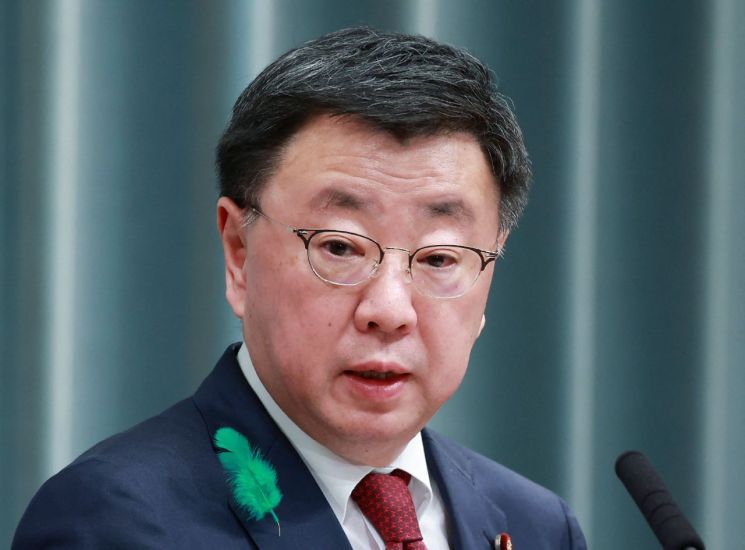
The Japanese government’s dilemma deepens after the International Atomic Energy Agency (IAEA) released its final verification report, which had initially prompted plans for the discharge. Chief Cabinet Secretary Matsuno Hirokazu expressed the government’s stance on the timing controversy during a morning press conference, stating, "The timing of the discharge will be decided after the government confirms safety assurance and measures to prevent reputational damage (harm caused by rumors)." This appears to be an attempt to calm public opinion.
However, some are concerned that Matsuno’s statement that "there is no change in the timing of the discharge" during the press conference may indicate the government’s intention to proceed regardless of public opinion. Jiji Press reported that "Matsuno clearly stated that the policy of discharging 'around summer' remains unchanged."
Meanwhile, IAEA Director General Rafael Grossi is scheduled to visit Japan on the 4th to deliver the final report. Considering the results of the interim reports previously issued by the IAEA, it is highly likely that Director General Grossi will conclude that there are no problems with the contaminated water discharge.
The contaminated water discharge facilities are currently undergoing trial operation, and the Nuclear Regulation Authority of Japan has completed the final inspection. It is expected to issue the inspection completion certificate to Tokyo Electric Power Company (TEPCO) sometime next week. Once TEPCO receives the certificate, the formal procedures for the discharge will be virtually complete.
© The Asia Business Daily(www.asiae.co.kr). All rights reserved.



















