Regulatory Reform... Criticism of Discrimination Against Sole Proprietorships Compared to Corporations
Comprehensive Survey on Regulations, Systems, and Damage Status
Considering Comprehensive Measures on Registration Requirements, Staffing, and Taxation
The government has officially launched regulatory reform efforts targeting individual enterprises (business owners). This move comes from the judgment that regulatory reforms under the Yoon Suk-yeol administration, a top national agenda, have so far focused on corporate enterprises. The aim is to identify regulatory difficulties that cause burdens or inconveniences for operators of individual enterprises such as small business owners and to ease these constraints.
According to the Presidential Office on the 3rd, the government recently began a comprehensive survey of related regulations and systems, centered on relevant ministries, to eliminate regulations that cause discrimination against individual enterprises compared to corporate enterprises. A key official from the Presidential Office stated, "Although regulatory reforms since the launch of the Yoon administration have not specifically targeted large corporations, in practice, there have been many cases where individual enterprises were neglected," adding, "We plan to review voices from the field and present comprehensive measures addressing inconvenient regulations experienced by them."
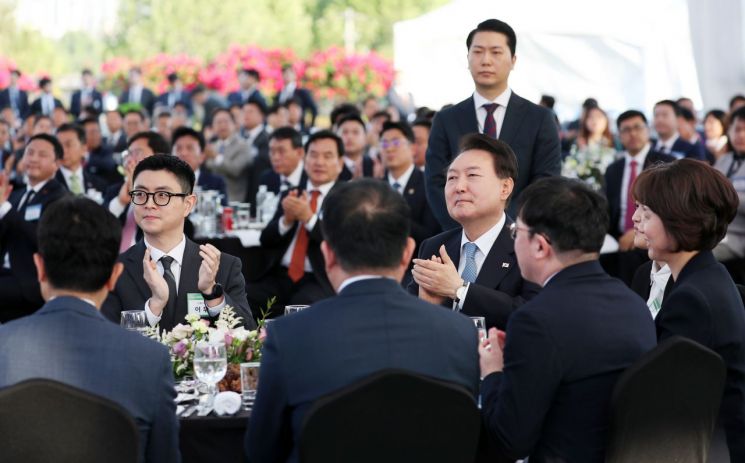
Regulatory reform is the top national agenda emphasized most by President Yoon Suk-yeol since his inauguration. Shortly after taking office, President Yoon also prepared a supplementary budget worth 60 trillion won for small business owners and self-employed individuals, emphasizing that "we must prioritize the plight of small self-employed businesses struggling to survive."
There have been tangible achievements. The Presidential Office and government established a dedicated regulatory reform department and removed 1,027 regulations within the first year of the administration until May. However, internal and external analyses pointed out that benefits were concentrated mainly on corporate enterprises, while inconveniences in daily life and issues related to investment, job creation, and new industry activation remained. The Presidential Office and related ministries’ efforts to listen to difficulties faced by individual enterprises are in the same context, aiming to address the 8.03 million individual business owners who account for 87.2% of all business operators.
First, the government decided to inspect regulations or systems that apply different standards depending on the type of business entity. These include registration requirements, personnel allocation and financial support criteria, tax standards, procurement entry, and administrative investigations, where overlapping or discriminatory regulations are applied despite belonging to the same business sector. A senior government official explained, "We will also look for actual damage cases such as discriminatory and meaningless tax impositions during public market entry or business operations of startup companies."
The government also plans to identify contradictory issues among laws. For example, problems related to manpower support for small business owners are representative. Under the current 'Small Business Manpower Support Special Act,' it is difficult for small business enterprises to secure or maintain manpower. The plan is to legislate by distinguishing detailed support measures, based on the judgment that improving the management environment of small business owners is essential to solving recurring labor shortages.
Accordingly, the government intends to focus more on uncovering hidden "sandbags" in the second half of the year. This includes discovering customized regulations for individual enterprises such as startups and small business owners, as well as additional regulatory reforms within major industries that have been pursued so far. As the government enters its second year, the goal is to produce substantial results and lay the foundation for economic re-leap. Following his recent visits to France and Vietnam last month, President Yoon chaired a Cabinet meeting and promised, "We will support companies so that they can operate dynamically and freely."
Led by the Office for Government Policy Coordination, the government plans to focus on improving regulations in key new industry sectors. Starting with biohealth, robotics, and metaverse fields, they will proactively prepare and revise regulatory innovation plans for new industries such as drones, eco-friendly vehicles, and artificial intelligence (AI), reflecting changes in technology and market conditions. To build an innovative ecosystem for new industries, efforts are also underway to shift to negative regulation in core areas such as mobility, logistics, and fintech beyond the regulatory sandbox. Additionally, regulatory administration improvements tailored to local conditions will be pursued. For example, the authority to lift development restrictions in non-capital region local governments will be significantly expanded (from 300,000㎡ to 1,000,000㎡ or less), demonstrating a strong will to boldly delegate regulatory authority to local governments and identify and improve regulations that do not fit regional realities.
© The Asia Business Daily(www.asiae.co.kr). All rights reserved.

















