A drunk driver who filed a lawsuit claiming that their driver's license cancellation should also be revoked in accordance with the Constitutional Court's ruling that declared the 'Yoon Chang-ho Act' provision?which imposes heavier penalties for repeated drunk driving?unconstitutional, lost the case.
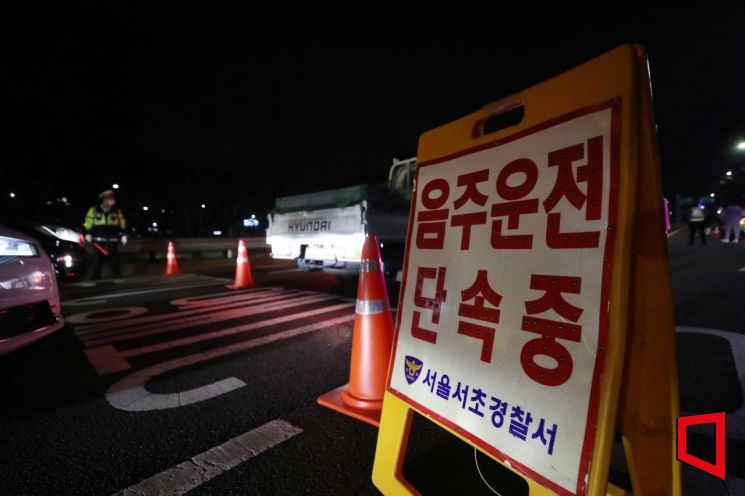
According to the legal community on the 3rd, Judge Jeong Woo-yong of the Seoul Administrative Court, Administrative Division 7, recently ruled against Mr. A in the first trial of the lawsuit he filed against the Seoul Metropolitan Police Agency Chief to cancel the driver's license revocation. The court also ordered Mr. A to bear the litigation costs.
Mr. A was caught driving under the influence with a blood alcohol concentration of 0.038% in Bucheon-si, Gyeonggi Province, last September. He had a prior record of license suspension due to drunk driving in December 2003. The police canceled Mr. A's Class 1 regular driver's license based on the relevant provisions of the Road Traffic Act concerning license cancellation and suspension.
Mr. A filed an administrative lawsuit requesting the cancellation of the license revocation. In court, he cited the Constitutional Court's ruling declaring the Yoon Chang-ho Act provision unconstitutional as the basis.
On November 25, 2021, the Constitutional Court ruled that the part of Article 148-2, Paragraph 1 of the Road Traffic Act concerning "persons who have violated Article 44, Paragraph 1 (prohibition of drunk driving) two or more times" is unconstitutional. The court reasoned that imposing aggravated punishment without considering the period and severity between the two drunk driving offenses is unjust.
Mr. A's side argued, "Although this concerns criminal punishment provisions, we ask for consideration of the Constitutional Court's ruling of unconstitutionality," and claimed, "Because of the old record of license suspension for drunk driving, I am now subject to the heavy penalty of license cancellation."
Furthermore, they argued, "At that time, the police officer said, 'If blood sampling is done, the alcohol measurement value will be higher,' so I could not undergo blood sampling. Since the measurement value of the measuring device cannot be said to be more accurate than blood sampling, the procedure starting from the alcohol measurement is illegal." They also claimed, "I need a driver's license for my job and am experiencing difficulties in making a living. Considering this, the license cancellation is an abuse of discretion and illegal."
The first trial court ruled that the license cancellation was justified. The court stated, "The Constitutional Court's ruling of unconstitutionality concerns criminal punishment. The mere purpose of the unconstitutionality ruling does not mean that the law underlying this case violates the Constitution," and explained, "According to the supplementary provisions of the Road Traffic Act, the number of violations is counted from June 30, 2001. Even if Mr. A's past drunk driving record is somewhat old, the provisions related to license cancellation and suspension apply."
Additionally, "the blood test was not conducted because Mr. A refused, and there is no evidence to consider the alcohol measuring device inaccurate. It cannot be seen that the police officer on duty unreasonably forced or gave up the blood sampling measurement method," and added, "According to the relevant laws, Mr. A's driver's license must be canceled without discretion. The claim that the police chief in charge has discretion to decide this is not acceptable."
© The Asia Business Daily(www.asiae.co.kr). All rights reserved.

















