Korea Gallup Regular Public Opinion Survey
President Yoon's Government Approval Rating 36% for 2 Consecutive Weeks
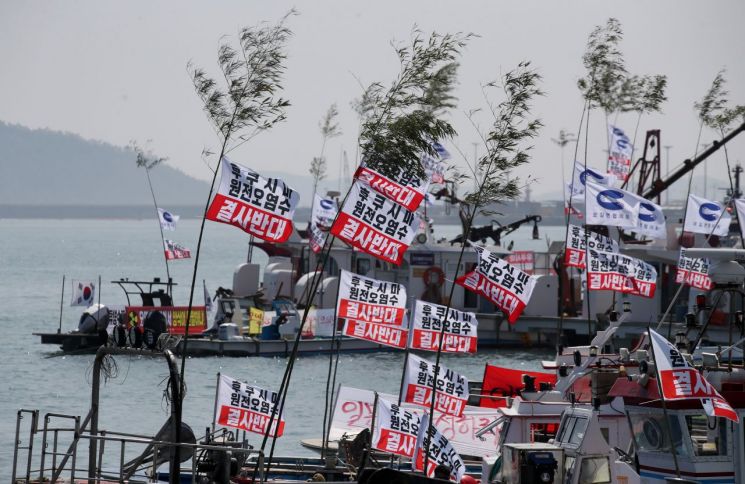
About 8 out of 10 people in South Korea expressed concerns about the discharge of contaminated water from the Fukushima nuclear power plant in Japan, according to a public opinion survey.
A survey conducted by Gallup Korea from the 27th to the 29th among 1,007 adults aged 18 and over nationwide found that 78% of respondents worried about marine and seafood contamination in South Korea due to the Fukushima contaminated water discharge. Among them, 62% said they were "very worried," and 16% said they were "somewhat worried." Meanwhile, 11% responded that they were "not very worried," and 9% said they were "not worried at all."
About half of those who gave a positive evaluation of the president's job performance (49%), supporters of the People Power Party (53%), conservatives (57%), and those aged 60 and over (50%) also expressed concerns. Based on the "very worried" responses, concerns were particularly high among women (68%), people in their 30s to 50s (around 70%), progressive-leaning individuals (83%), and supporters of the Democratic Party (87%).
President Yoon Suk-yeol's approval rating for his administration remained in the mid-30% range for the second consecutive month. The positive job performance rating was 36%, while the negative rating was 56%. The positive rating was the same as in the previous survey conducted in the fourth week of June (20th to 22nd), and the negative rating decreased by 1 percentage point (p). Gallup Korea analyzed, "Since last month, the positive job approval rate has remained in the mid-30% range, and the negative rate has stayed in the mid-to-high 50% range, with only slight changes in the reasons for each evaluation," adding, "It can be seen that there has been no issue influential enough to cause a significant change in the overall attitude toward the president."
The reasons for positive evaluations included "diplomacy" (34%), "decisiveness/drive/tenacity" (5%), "economy/livelihood," "national defense/security," and "labor union response" (all 4%). Reasons for negative evaluations included "diplomacy" (22%), "Fukushima contaminated water discharge issue" (11%), "economy/livelihood/prices" (9%), "autocratic/unilateral" (6%), "lack of experience/competence/incompetence," "overall poor performance" (all 5%), as well as "relations with Japan," "education policy," and "lack of communication" (all 4%).
Party support was measured at 33% for the People Power Party and 34% for the Democratic Party. Compared to the previous survey, the People Power Party's support dropped by 2 percentage points, while the Democratic Party's support rose by 3 percentage points. Gallup Korea explained, "The gap or trend between the two major parties is within the margin of error, making it statistically indistinguishable." The proportion of respondents with no party preference was 28%, and the Justice Party had 4% support.
The margin of error for this survey is ±3.1 percentage points at a 95% confidence level. The survey was conducted via telephone interviews, with 95% mobile and 5% landline calls, and the response rate was 10.9%. For more detailed information, please refer to the website of the Central Election Survey Deliberation Commission.
© The Asia Business Daily(www.asiae.co.kr). All rights reserved.

















