Long-chain omega-3 polyunsaturated fatty acids (omega-3) are considered one of the most consumed health functional foods alongside red ginseng, multivitamins, and probiotics. Omega-3 is commonly known for improving lipid profiles as well as having anti-inflammatory, antiplatelet, and vascular protective effects, leading to increased intake especially among middle-aged and older adults. However, despite numerous studies, the benefits of omega-3 for cardiovascular diseases have not been clearly established, resulting in some controversy regarding its efficacy.
Amid this, a domestic research team recently published a meta-analysis on the effects of omega-3 supplementation on cardiovascular diseases in an international academic journal, drawing attention. In conclusion, omega-3 supplementation helps reduce the risk of myocardial infarction and cardiovascular-related mortality, but the risk of atrial fibrillation increased.
The research team led by Professor Lim Soo from the Department of Endocrinology and Metabolism at Seoul National University Bundang Hospital (including Professor Bae Jae-hyun from the Department of Endocrinology at Korea University Anam Hospital and Professor Lim Hyun-jung from the Department of Medical Nutrition at Kyung Hee University) conducted a meta-analysis of 17 randomized controlled trials administering eicosapentaenoic acid (EPA) and docosahexaenoic acid (DHA), known as omega-3. The included studies involved at least 500 participants and had a follow-up period of at least one year after intervention. Additional analyses were also conducted to identify factors related to omega-3 effects, such as type and dosage, type of control group, and type of cardiovascular disease prevention.
 Professors Soo Lim of Seoul National University Bundang Hospital, Jae-Hyun Bae of Korea University Anam Hospital, and Hyun-Jung Lim of Kyung Hee University. (from left)
As a result, the omega-3 supplementation group showed a 14% reduction in the risk of death from cardiovascular-related diseases compared to the control group. The risk of fatal and non-fatal myocardial infarction was also reduced by 16%. Omega-3 supplementation was associated with a dose-dependent reduction in major cardiovascular events and cardiovascular mortality risk. The benefits were particularly significant when EPA was used alone. However, there were no significant differences between the supplementation and control groups in terms of stroke, total mortality, or hospitalization due to heart failure. Conversely, the risk of new-onset atrial fibrillation increased in the omega-3 supplementation group in a dose-dependent manner. This increased risk was observed both when EPA was used alone and when EPA and DHA were used together.
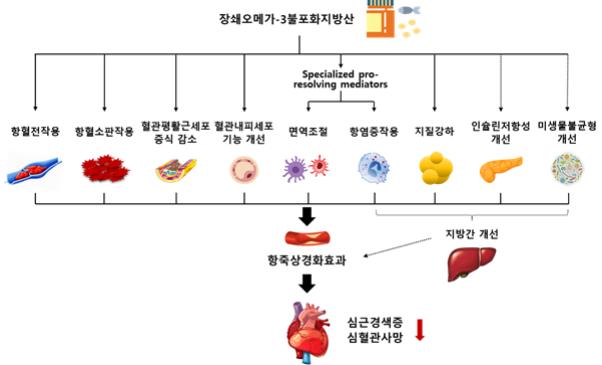 The mechanism by which Omega-3 suppresses arteriosclerosis and reduces cardiovascular risk. [Source: Bundang Seoul National University Hospital]
Professor Bae Jae-hyun stated, "This study confirmed that omega-3 supplementation has a positive effect in reducing cardiometabolic diseases, especially cardiovascular mortality and myocardial infarction risk," adding, "However, the risk of atrial fibrillation may increase with omega-3 supplementation, and EPA monotherapy showed greater effectiveness in preventing vascular diseases. Therefore, treatment decisions should always be made in consultation with experts, considering various factors including the patient's existing conditions."
Professor Lim Soo added, "This study is significant in that it comprehensively analyzed previously inconsistent clinical trials on omega-3 and clearly confirmed the benefits of omega-3 supplementation for cardiovascular diseases," and continued, "Further research is needed to understand the characteristics and mechanisms of EPA and DHA, and to develop more effective treatments through well-designed clinical trials comparing the effects of EPA monotherapy and combined EPA and DHA therapy."
The results of this study were published in the latest issue of 'Advances in Nutrition,' a prestigious international journal in the field of nutrition.
© The Asia Business Daily(www.asiae.co.kr). All rights reserved.



















