The Supreme Court reaffirmed the legal principle that even if production volume decreases due to illegal strikes, liability for damages cannot be imposed if it is proven that this did not lead to a decrease in sales.
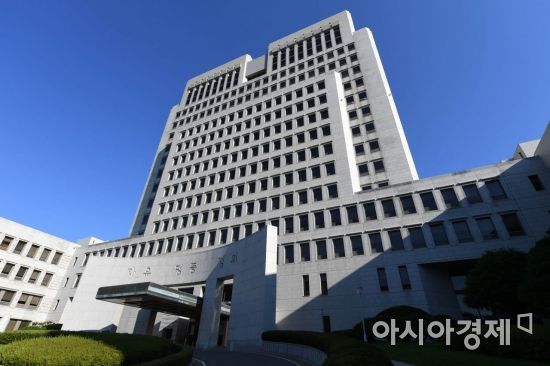
The Supreme Court's First Division (Presiding Justice No Tae-ak) on the 29th overturned all parts of the lower court rulings that ruled against the defendants in three damage claims filed by Hyundai Motor Company against the Non-Regular Workers' Branch of the Metal Workers' Union under the Korean Confederation of Trade Unions, and remanded the cases to the appellate court.
A Supreme Court official explained, "All three cases were remanded on the grounds that there were errors such as legal misinterpretations in the lower court's recognition of damages equivalent to fixed costs."
Earlier, on the 15th, the Supreme Court issued a new ruling regarding liability for damages in the final appeal of another strike damage case filed by Hyundai Motor against five union members. The ruling emphasized that individual liability of workers for collective labor actions should be limited as much as possible.
This case involved Hyundai Motor claiming a total of 540 million KRW against union members and the union related to factory occupations that occurred in August, November, and December 2012. Approximately 440 million KRW in damages was recognized in the lower courts. Hyundai Motor withdrew claims against individual union members.
The court ruled that it was wrong to reject the union members' claims of production recovery without examining whether the lost production volume had been compensated, and thus overturned and remanded the parts of the lower court rulings that ruled against the defendants.
© The Asia Business Daily(www.asiae.co.kr). All rights reserved.

















