Major Changes in Insurance Regulations
Implementation of Comparison and Disclosure of Insurance Product 'Retention Rates'
Disclosure Obligations Eased for Small-scale GA
Improvement of Fire Insurance Joint Underwriting System
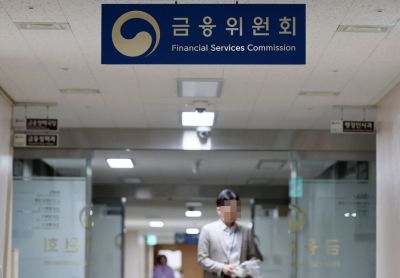 On the 9th, officials were busy moving in the corridor of the Financial Services Commission at the Government Seoul Office in Jongno-gu, Seoul, where the financial authorities decided to include mortgage loans (Judaemae) in the 'debt refinancing' infrastructure scheduled to be launched in May by the end of the year. The financial authorities explained that they aim to reduce the interest burden on mortgage loans by establishing a debt refinancing platform that allows users to compare financial sector loan interest rates at a glance and switch loans easily. Photo by Dongju Yoon doso7@
Starting in the second half of the year, all insurance companies will allow customers to purchase insurance through video calls. Insurers will be able to offer gifts worth up to 200,000 KRW or 10% of the annual premium to policyholders. Additionally, measures such as the comparison and disclosure of insurance product retention rates and improvements to the fire insurance co-insurance system will be implemented.
On the 28th, the Financial Services Commission announced that following amendments to insurance-related laws the previous day, the "Insurance Sector Regulatory Improvement Plan" containing these measures will be fully implemented from the second half of this year.
First, insurance solicitation using hybrid methods (where customers listen on a smartphone while simultaneously viewing explanatory materials on the screen) and video calls will be permitted. Currently, telephone solicitation conducted non-face-to-face requires consumers to understand insurance products solely through voice calls with insurance planners before applying, which posed difficulties. Going forward, consumers will be able to listen to explanations via voice on smartphones while directly viewing explanatory materials combining text and images. Furthermore, customers will be able to listen to explanations from planners via video calls at their office or home without meeting them in person and purchase insurance. Until now, only some insurers could use this method through innovative financial services, but now all insurers will be able to do so.
The price limit for items that can be provided upon insurance subscription will also change. Previously, the limit was 30,000 KRW, but now items that reduce the risk of incidents for each insurance product can be provided up to 200,000 KRW (or 10% of the annual premium). For example, when subscribing to home fire insurance, consumers can receive gas leak and fire detection devices, or for pet insurance, pet deworming medication and vaccinations can be provided.
The comparison and disclosure items related to insurance products operated by the Life Insurance Association and the General Insurance Association will be reorganized. First, a long-term indicator, the insurance contract "retention rate" (e.g., the proportion of contracts maintained for 1, 2, 3, and 5 years after signing), will be additionally disclosed. Although incomplete sales rates have been disclosed for each insurance product, these are short-term indicators within one year and do not provide information on mid- to long-term customer satisfaction.
Obligations to explain will be strengthened when selling foreign currency insurance. Insurers must confirm whether the consumer has a genuine need for foreign currency insurance and provide quantified explanations of premiums, insurance benefits, and surrender values at different cancellation points according to exchange rate fluctuations. Foreign currency insurance involves premium payments and benefit receipts in foreign currency, but actual sales are conducted in Korean won, exposing the product to exchange rate risk.
Disclosure obligations for corporate insurance agencies (GA) with low performance or small size will be relaxed. Going forward, corporate insurance agencies with recruitment performance below 1 million KRW in a half-year period will be exempt from disclosure obligations, and the maximum fine for small corporate insurance agencies with fewer than 100 insurance planners will be lowered from the current 10 million KRW to 5 million KRW.
The fire insurance co-insurance system will also be improved. The current system limits coverage to liability for bodily injury and property damage of special buildings and damage to the insured building itself. Therefore, it was difficult to subscribe to additional coverages (endorsements) such as flood, pipe damage, and sprinkler damage, or for multi-family housing (such as low-rise apartments) that are not special buildings. In the future, the coverage of the co-insurance system will be expanded to include all endorsements added to fire insurance, and multi-family housing will also be included as an underwriting target.
Additionally, with the introduction of the new accounting standard "IFRS17," the Insurance Business Act has been amended, and various detailed regulations have been revised. First, procedures and details for issuing contingent capital securities (write-down type, convertible to insurance company shares, convertible to financial holding company shares) have been stipulated to allow insurers to issue them. Also, as insurers autonomously establish actuarial assumptions for reserves, regulations have been prepared to expand the role of the appointed actuary who verifies these assumptions and to strengthen qualification requirements for the appointed actuary’s assistants. Regulations on asset management ratios for derivatives will also shift from preemptive regulations to post hoc soundness regulations.
© The Asia Business Daily(www.asiae.co.kr). All rights reserved.

















