Geopolitical Uncertainty Lowers Central Banks' Interest in Yuan Across Countries
There is an analysis that the status of the US dollar as the global reserve currency is very unlikely to be undermined over the next decade. Due to the cooling of investment sentiment caused by geopolitical uncertainties such as US-China conflicts, the perception of the Chinese yuan as a risky asset has strengthened, which is expected to slow down the de-dollarization trend.
On the 27th (local time), the London-based think tank Official Monetary and Financial Institutions Forum (OMFIF) conducted an annual survey of foreign exchange reserve managers from central banks of 75 countries. The survey projected that the share of the dollar in central banks' foreign exchange reserves will remain at around 54% even 10 years from now, maintaining the current level of 58.4%.
On the other hand, the Chinese yuan, which has directly challenged the dollar's dominance, is expected to account for only 6% of global foreign exchange reserves 10 years from now, remaining a negligible level compared to the dollar. Nikkei Sanghani, OMFIF’s Chief Economist who conducted the survey, stated, "Central bank reserve managers believe that due to uncertainties such as the US-China confrontation, it is not yet the time to increase yuan holdings," and predicted that "the de-dollarization movement over the next 10 years will not significantly change from the trend of the past decade."
While central banks' interest in the dollar has increased, their interest in the yuan has decreased. In this survey, about 16% of respondents said they plan to increase their dollar currency holdings, while only 10% of central banks said they would reduce their dollar holdings. Conversely, the percentage of respondents planning to increase yuan currency holdings dropped sharply from 30% last year to 13%.
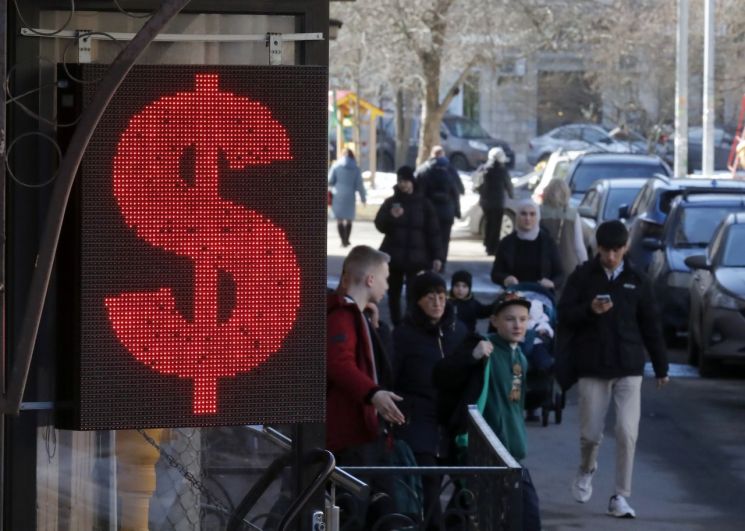
According to the International Monetary Fund (IMF), the share of the dollar in central banks' foreign exchange reserves has significantly decreased from 70% in 1999 to 58.4% at the end of last year. Consequently, some have speculated that if this trend continues, the dollar's share of global foreign exchange reserves could fall below half within the next decade.
China, which holds the world's largest foreign exchange reserves ($3.18 trillion), has led the de-dollarization trend by increasing the share of its currency in trade and raw material settlements amid the hegemonic competition with the US. Additionally, Saudi Arabia, which had been central to the US-led reserve currency system, has recently shown signs of moving away from a pro-US stance, and pro-China countries such as Brazil and Argentina have agreed to settle oil transactions in yuan instead of dollars, further consolidating forces challenging the dollar's dominance.
Chief Economist Sanghani said, "Following the Ukraine war, the US-led financial sanctions on Russia and the rise of geopolitical issues due to intensified US-China confrontation have made central banks reluctant to invest in China," and he believes that this cooling of investment sentiment toward China will contribute to maintaining the dollar's status as the global reserve currency.
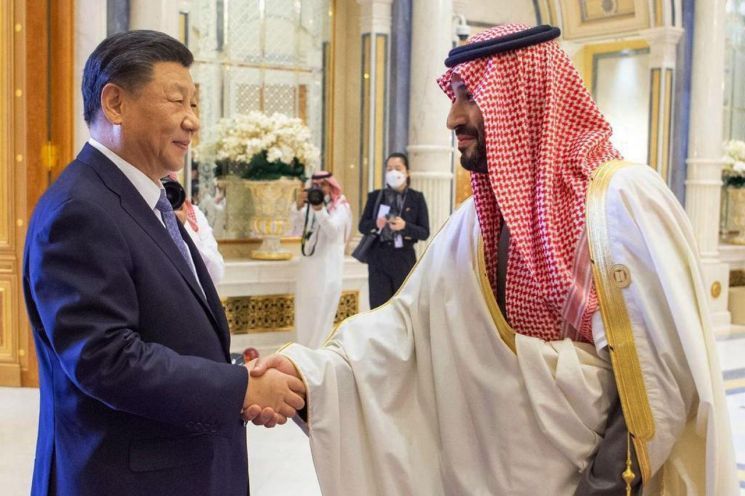 In December last year, Xi Jinping (left), President of China, who made a state visit to Saudi Arabia, arrived at Al Yamamah Palace in the capital Riyadh and shook hands with Crown Prince Mohammed bin Salman.
 [Image source=AP Yonhap News]
There is also a forecast that the biggest beneficiary of the US-China currency competition will be the euro. In this survey, about 14% of central banks said they plan to increase their euro holdings over the next two years. The euro accounted for about 23% of global foreign exchange reserves at the end of last year. OMFIF pointed out, "As an international reserve currency, the euro holds the second-highest share after the dollar," and noted, "It is a remarkable change considering that last year, not a single central bank said it would increase euro holdings."
© The Asia Business Daily(www.asiae.co.kr). All rights reserved.
![Clutching a Stolen Dior Bag, Saying "I Hate Being Poor but Real"... The Grotesque Con of a "Human Knockoff" [Slate]](https://cwcontent.asiae.co.kr/asiaresize/183/2026021902243444107_1771435474.jpg)

















