Most of the structure remained intact despite being submerged for 60 years
In a reservoir in Mexico that has dried up due to drought, a church built in the 16th century has fully reappeared.
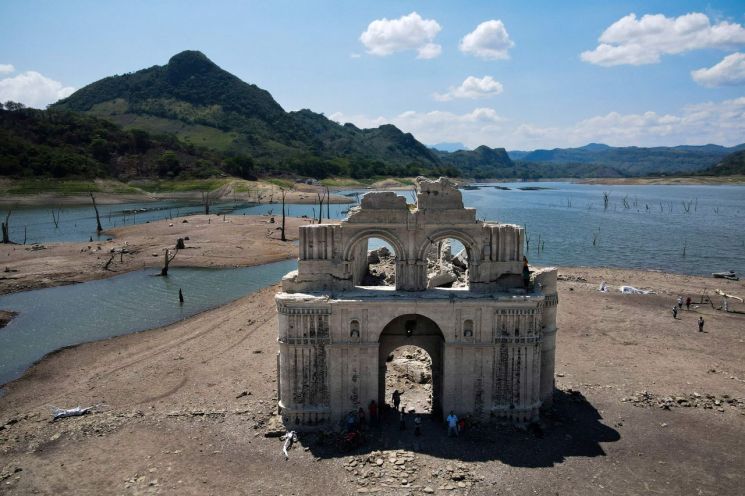 The Ketchula Church in Mexico, which was submerged underwater due to the completion of a reservoir in 1966, has recently fully reappeared as water levels dropped due to severe drought.
 [Image source=AFP Yonhap News]
According to National Geographic and others on the 26th (local time), the Ketchula Church, built 460 years ago, emerged from the Neuacoyotl Reservoir in Chiapas, Mexico, on the 18th. This occurred due to the drought that began in March caused by the scorching heatwave covering most parts of Mexico.
Although submerged underwater for about 60 years, the church was preserved in good condition, with most of its structure intact.
National Geographic reported, "Most local residents do not even know the full appearance of this church," calling it a "rare opportunity."
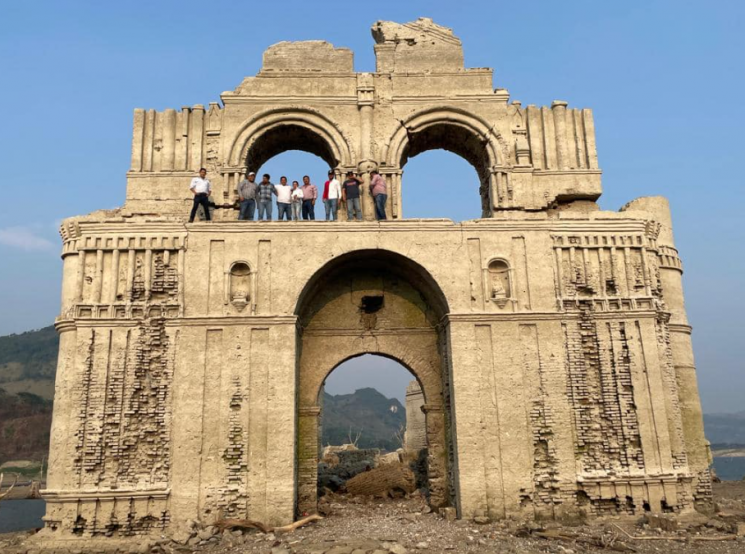 The Quechula Church in Mexico, which was submerged underwater due to the completion of a reservoir in 1966, has recently fully reappeared as water levels dropped due to severe drought.
 [Photo by Facebook capture]
The Ketchula Church was built in 1564 with hopes of revitalizing the village, but it had no regularly stationed priest and few worshippers.
Then, in the mid-18th century, the plague spread in the area, and the church was abandoned and fell into ruin. When the Malpaso Dam reservoir was constructed in 1966, the church was submerged about 30 meters underwater.
People began visiting the Ketchula Church only after the reservoir was completed. In 2009 and 2015, parts of the church surfaced as the reservoir's water level dropped, attracting public interest.
In response, local residents started tourism businesses, selling food to tourists near the reservoir and developing boat tours to the church.
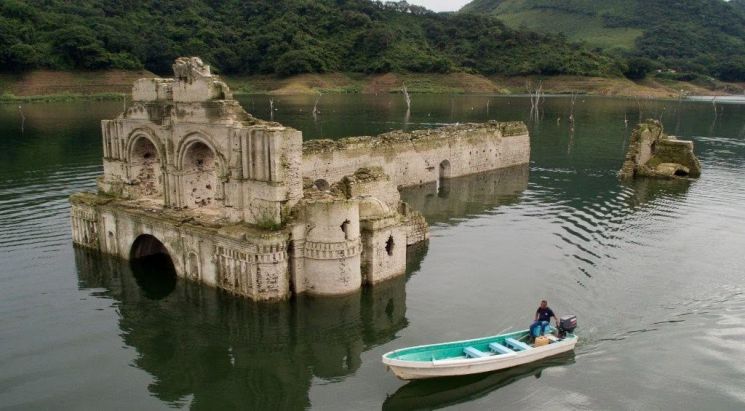 Local residents have developed a tourism product that visits the Ketchula Church, which is only partially visible.
 [Photo by National Geographic]
Meanwhile, this is not the first time that historical sites have appeared due to rivers or reservoirs drying up from record heatwaves and droughts.
Last summer, the Yangtze River in China recorded its lowest water level in 150 years, revealing a Buddha statue estimated to be 600 years old.
In Italy, the Po River dried up, exposing ancient village ruins in the northwest Piedmont region. Also, in Rome's Tiber River, remains of a bridge believed to have been built by Emperor Nero were discovered.
Additionally, as glaciers melt, human remains buried for over half a century have been found in European mountainous regions.
© The Asia Business Daily(www.asiae.co.kr). All rights reserved.
![Clutching a Stolen Dior Bag, Saying "I Hate Being Poor but Real"... The Grotesque Con of a "Human Knockoff" [Slate]](https://cwcontent.asiae.co.kr/asiaresize/183/2026021902243444107_1771435474.jpg)


















