The Jeju Fire Safety Headquarters launched a practical inspection by visiting vulnerable areas on the 25th at 9 a.m., when a heavy rain warning was issued, to prepare for flood and wind damage situations during the rainy season.
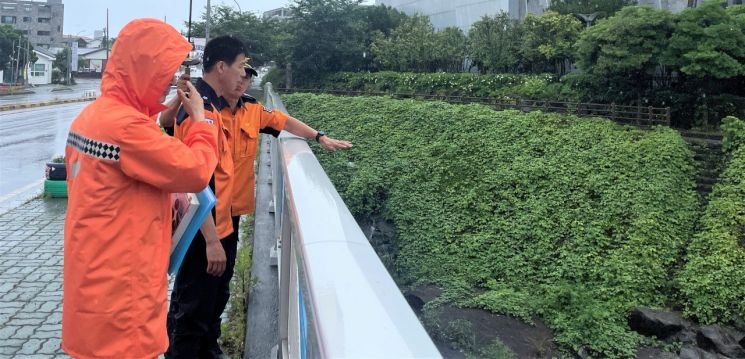
The purpose is to thoroughly review and establish detailed countermeasures by pre-identifying the locations and sections of major rivers prone to flooding, including ▲Sanji Stream ▲Hancheon ▲Byeongmun Stream ▲Doksacheon, and the surrounding risk factors in case of flooding.
According to the Jeju Fire Safety Headquarters, the flood and wind damage emergency rescue control team has been activated a total of 44 times over the past three years during heavy rain advisories and other events. Last year, the flood and wind damage control team was activated 17 times in total, including 9 times for heavy rain and 8 times for typhoons.
Due to Jeju’s geographical conditions, it is always exposed to natural disasters. Especially this year, the El Ni?o phenomenon, which raises the average sea surface temperature, is expected to increase the likelihood of strong typhoons and heavy rainfall.
Accordingly, the Jeju Fire Safety Headquarters plans to strengthen its response by promptly collecting typhoon-related information through cooperation with the forecast team and visiting the National Typhoon Center on the 23rd, holding situation assessment meetings based on the collected data, and concentrating firefighting resources in areas expected to be damaged.
Also, placing ‘prevention of human casualties’ as the core of this measure, they will establish effective countermeasures assuming worst-case scenarios such as a surge in emergency calls and simultaneous multiple dispatches.
Detailed measures include ▲prioritizing life rescue situations ▲expanding emergency reception desks at the 119 comprehensive situation room ▲securing reserve firefighting forces through emergency duty ▲forming specialized dispatch teams for life rescue in underground flooded areas such as semi-basement houses ▲operating a flood and wind damage situation management system that transfers simple dispatches like drainage support to fire stations.
In particular, during heavy rain, they will actively issue risk warnings and evacuation orders based on strengthened standards reflecting Jeju’s unique characteristics, and minimize human casualties through mobile patrols and forward deployment of firefighting forces in areas prone to flooding damage.
Chief Kim Su-hwan said, “We will respond with a solid, tailored plan without any gaps to unprecedented abnormal weather events,” and added, “We will do our best to ensure that 119 fire services can quickly provide help when residents need it.”
Jeju = Asia Economy Honam Reporting Headquarters, Reporter Hwang Jeong-pil bless4ya@asiae.co.kr
© The Asia Business Daily(www.asiae.co.kr). All rights reserved.

















