Toru Showcases Expertise in Slope Embankment Technology
Stone Retaining Reservoir Reconstructed at Least Four Times
At Mireuksanseong Fortress in Iksan, which was a strategic defensive point in the past, an earthen rampart and a reconstructed stone retaining reservoir have been discovered. An earthen rampart is a defensive structure made by piling up earth into a mound, and a reservoir is a large container used to store water for purposes such as water supply and firefighting.
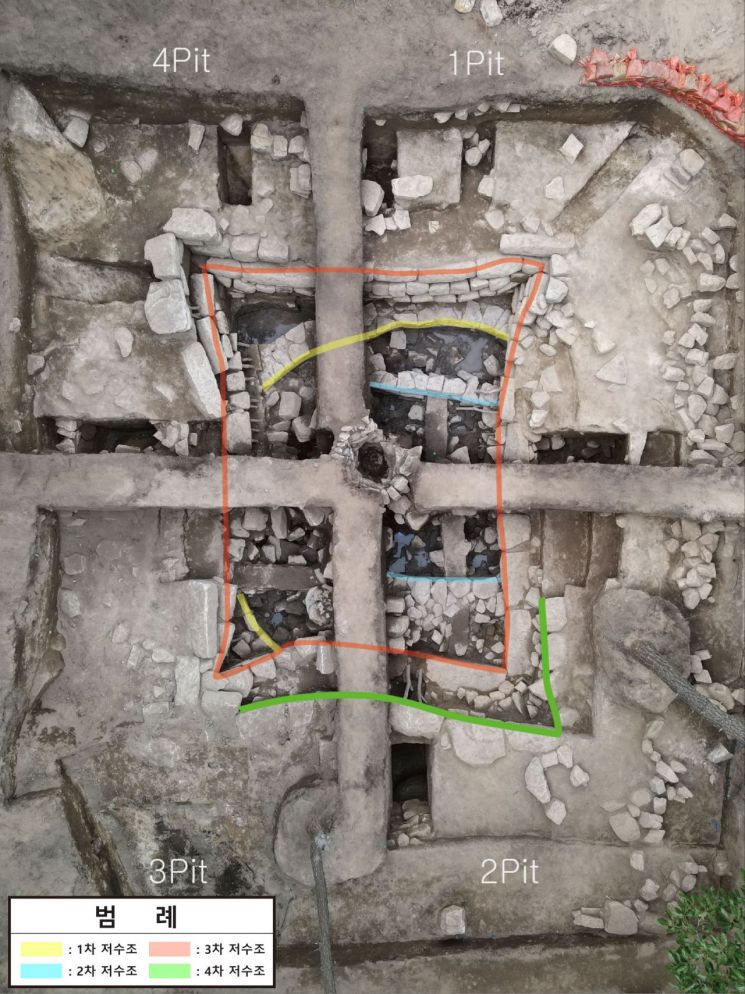
According to the Cultural Heritage Administration on the 21st, the site where the earthen rampart and stone retaining reservoir were confirmed is located at San 124-1, Sinyong-ri, Geumma-myeon, Iksan-si, Jeonbuk. It is a flat area below the summit (Janggunbong) of Mireuksanseong Fortress, where previously a Baekje-era inscribed roof tile with the place name 'Geummajeo (金馬渚)' was found.
The initially discovered earthen rampart is semicircular in shape, measuring 9.8 meters in width, 3.1 meters in remaining height, and 77.3 meters in circumference. Different types of soil were alternately layered, and earthen retaining stones (stones used to support the sides of underground structures to prevent collapse) were installed in the middle. The technique of changing directions as needed to create a sloped embankment by layering soils of different properties alternately is remarkable.
The stone retaining reservoir had been reconstructed at least four times. The Jeonbuk Cultural Heritage Research Institute, which conducted the excavation, stated, "The first phase was circular, the second was polygonal, the third was rectangular, and the fourth was square," adding, "Pottery from the Three Kingdoms period and large jars (daeho) and flat roof tiles from the Unified Silla period were excavated inside."
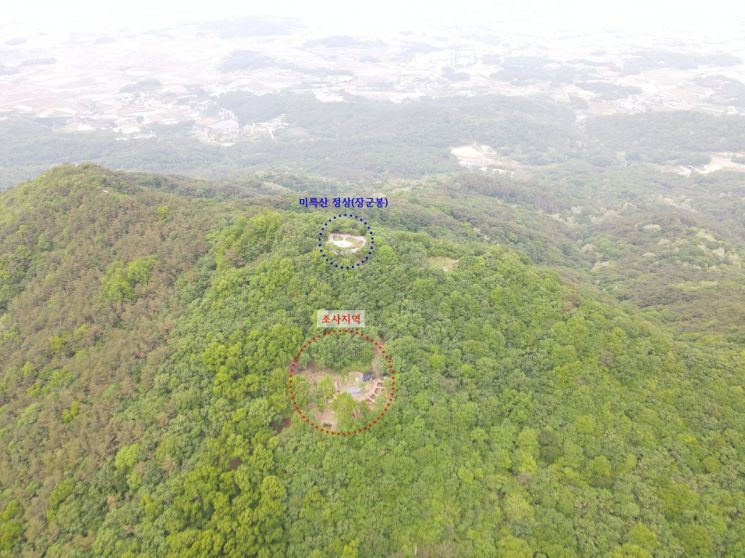
The Cultural Heritage Administration and Iksan City plan to open the excavation site to the public on the 22nd and establish plans for maintenance and management. Excavations at Mireuksanseong Fortress have been conducted three times since 1990. So far, gates, barbicans, fortifications, and building sites presumed to have been constructed after the Unified Silla period have been confirmed, but Baekje remains have not been identified.
© The Asia Business Daily(www.asiae.co.kr). All rights reserved.
![Clutching a Stolen Dior Bag, Saying "I Hate Being Poor but Real"... The Grotesque Con of a "Human Knockoff" [Slate]](https://cwcontent.asiae.co.kr/asiaresize/183/2026021902243444107_1771435474.jpg)

















