Medical School Graduates per 100,000 Population Declining in Korea
Specialists and Private Practitioners Earn Highest Income Among OECD Countries
Among major countries worldwide, South Korea has shown a marked decline in the number of medical school graduates per 100,000 people. Despite a shortage of medical personnel, the number of medical service users is high, resulting in doctors' wages being recorded at the highest level globally.
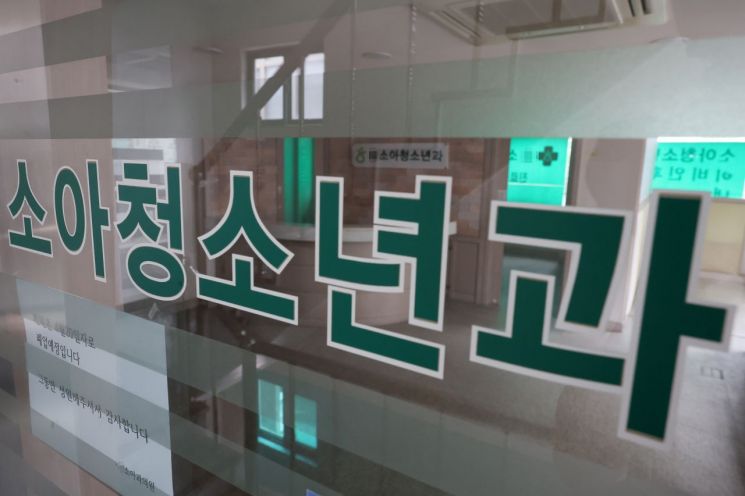 On the 24th, a notice regarding closure was posted at a pediatric clinic in downtown Seoul. [Image source=Yonhap News]
According to statistics on the 'Number of Medical School Graduates per 100,000 Population in OECD Member Countries' received by Rep. Jeong Chun-sook's office of the National Assembly Health and Welfare Committee from the Ministry of Health and Welfare on the 21st, South Korea (including Korean medicine schools) peaked at 8.99 graduates in 2006, 8.94 in 2007, and 9.08 in 2008. Afterward, the numbers generally declined, recording 8.99 in 2009, 8.13 in 2010, 7.87 in 2011, 7.95 in 2012, 7.74 in 2013, 7.79 in 2014, 7.57 in 2015, 7.59 in 2016, 7.59 in 2017, 7.48 in 2018, 7.39 in 2019, and 7.22 in 2020.
Compared to 2006, when South Korea froze medical school quotas, only four countries showed a decrease in medical school graduates per 100,000 population by 2020 (or 2019): South Korea (8.99 → 7.22), Austria (18.98 → 14.44), Greece (14.84 → 13.51), and Iceland (13.17 → 11.37).
It can be interpreted that from 2006, when South Korea froze medical school quotas, until 2020 (or 2019), the number of medical school graduates per 100,000 population in 36 OECD member countries (excluding Luxembourg) generally showed an increasing trend despite fluctuations in some countries.
Number of Clinical Doctors in Korea, 2.5 per 1,000 People... Second Lowest After Mexico

Compared to other OECD member countries, South Korea has relatively fewer medical personnel relative to medical demand.
According to the 'OECD Health Statistics 2022' released in early July 2022, as of 2020, the number of clinical doctors in South Korea was 2.5 per 1,000 people, the second lowest among OECD countries after Mexico (2.4). This is 1.3 fewer than the average (3.7).
The number of medical graduates was also low at 7.22 per 100,000 people, ranking third lowest after Japan (6.94) and Israel (6.93).
However, the number of outpatient visits per capita was 14.7 times annually, the highest among OECD countries, and 2.5 times higher than the OECD average (5.9 visits).
The average length of hospital stay per inpatient was 19.1 days, more than ten days longer than the OECD average (8.3 days), ranking second after Japan (28.3 days) among member countries.
Specialists (Employed Physicians) and Private Practitioners Have the Highest Income Among OECD Countries
With fewer medical personnel but high medical utilization, doctors' incomes were among the highest.
The annual wage income of employed specialists was $195,463 USD, and private practitioners earned $303,000 USD annually, both the highest among OECD countries.
South Korea's medical school quota has been fixed at 3,058 students since 2006. This was the result of a phased 10% reduction in medical school quotas following opposition from medical associations to the separation of prescribing and dispensing in 2000.
Concerns about medical service gaps have grown as the medical school quota has remained fixed at 3,058 since 2006. While the supply of doctors remains unchanged, medical demand is rapidly increasing due to an aging population and rising chronic disease incidence.
In particular, recent phenomena such as 'emergency room cycling' and 'pediatric open runs' have intensified the sense of crisis in essential medical sectors.
Government and Korean Medical Association Agree on Medical School Quota Expansion but Face Thorny Path... Significant Struggles Expected
Earlier, after much difficulty, the government and the Korean Medical Association (KMA) agreed on expanding the medical school quota at the 10th Medical Issues Council on the 8th. The increased quota is expected to be reflected starting with the 2025 admissions, with the main issue now being how much to increase the quota.
However, before formal discussions on the scale of the increase, significant struggles are anticipated as the government and medical associations engage in tense negotiations.
At the 11th Medical Issues Council held on the 15th at Dalgaebi in Jung-gu, Seoul, the Ministry of Health and Welfare and the KMA faced off over issues including the medical school quota increase. The KMA emphasized the negative aspects of quota expansion using strong words such as 'destruction' and 'collapse,' while the Ministry mentioned the need to broaden the discussion table to include parties other than medical associations.
© The Asia Business Daily(www.asiae.co.kr). All rights reserved.



















