Bank of Korea Governor Lee Chang-yong: "No Signs Yet Requiring Policy Response"
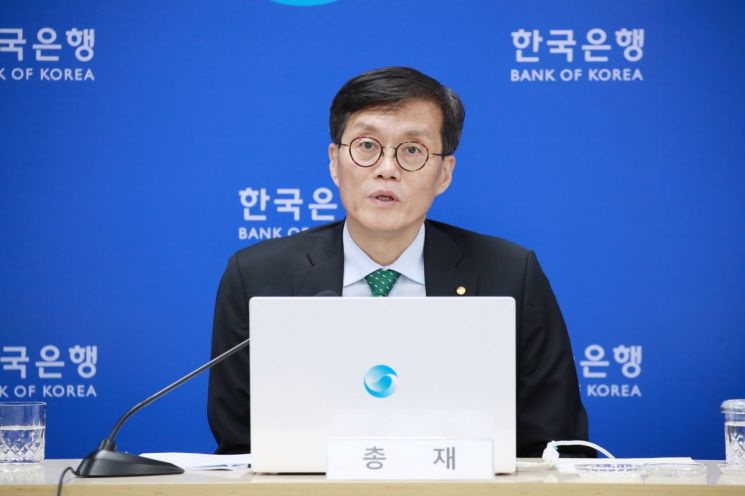
The Bank of Korea (BOK) forecasted that the consumer price inflation rate, which had fallen to the 2% range in June and July due to base effects, will rise again and fluctuate before settling around 3% by the end of the year. Lee Chang-yong, Governor of the BOK, stated that the long-term inflation rate is expected to stabilize slightly above 2%, and although policy responses may be necessary if prices deviate significantly from the expected path in the second half of the year, there are currently no signs of such deviations.
At a press briefing on June 19 regarding the 'Price Stability Target Operation Status Review,' the BOK presented this inflation outlook. On the same day, Choi Chang-ho, Director of the BOK's Research Department, said, "Due to the base effect from last year's sharp rise in international oil prices in the first half, there is a high possibility that the consumer price inflation rate will be in the 2% range in June and July this year. However, since petroleum prices fell significantly in August last year, the base effect will reverse in August this year, causing the inflation rate to rise again."
This means that the consumer price inflation rate is expected to remain in the 2% range through July due to base effects, staying below the core inflation rate for a while, but will rise again after August. Previously, the BOK projected the consumer price inflation rate for this year at 3.5% in its revised economic outlook last month. The expected core inflation rate for this year was also raised from 3.0% to 3.3%.
Service Price Inflation Slows More Slowly Than in the Past
The upward trend in consumer prices has shown a clear slowdown in the first half of this year. The inflation rate from January to May this year was 4.2% year-on-year, significantly lower than 5.6% in the second half of last year. Since the beginning of the year, inflation has rapidly slowed from 5.2% in January to 3.3% in May, but it still considerably exceeds the price stability target of 2%.
Core inflation rose by 4% in the first half of this year, only slightly lower than 4.1% in the second half of last year. Monthly trends during the first half show a slow decline from 4.1% in January to 3.9% in May, with core inflation exceeding consumer price inflation since April.
Director Choi said, "Globally, core inflation is slowing down slowly, and in South Korea, it is falling more slowly compared to previous periods of inflation slowdown. In 1998, 2008, and 2021, inflation peaked and then slowed down. While goods prices have not shown a significant difference in the rate of slowdown compared to before, service prices have slowed down markedly more slowly than in the past."
The BOK analyzed that the rigid trend in service prices is due to service consumption and employment showing better-than-expected performance. Private consumption was constrained in services due to pandemic-related restrictions and increased mainly in goods consumption, but service consumption rebounded rapidly after the reopening of economic activities. On the employment side, while the number of employed persons decreased in 1998 and 2008, it has recently increased, contributing to the rigidity in core inflation. On the supply side, accumulated cost pressures are also believed to be affecting core inflation.
Looking ahead, the BOK assessed that international oil prices will face moderate upward pressure in the second half of the year due to increased crude oil demand from China's economic recovery and seasonal demand. However, ongoing economic sluggishness in major countries and concerns over intensified monetary tightening pose downside risks, making the situation highly uncertain.
Regarding international food prices, although grain prices have fallen significantly from last year's peak in the second quarter, risks remain from unstable sugar and meat prices, abnormal weather due to El Ni?o, and the potential suspension of the Russia-Ukraine grain export agreement.
On the demand side, service consumption is expected to continue a moderate recovery in the second half, and wage growth is anticipated to gradually slow. However, if face-to-face service sectors improve more than expected due to increased travelers and the pass-through of accumulated cost pressures to core inflation continues, upward pressure on core inflation could increase.
Public Transportation Fare Hikes and End of Passenger Car Individual Consumption Tax Cuts to Exert Upward Price Pressure
From the government side, the BOK expects that fare increases in public transportation and the end of individual consumption tax cuts on passenger cars in the second half will act as upward price pressures. Inflationary pressures are also expected to rise if the fuel tax cut is reduced or if electricity and city gas rates are further increased.
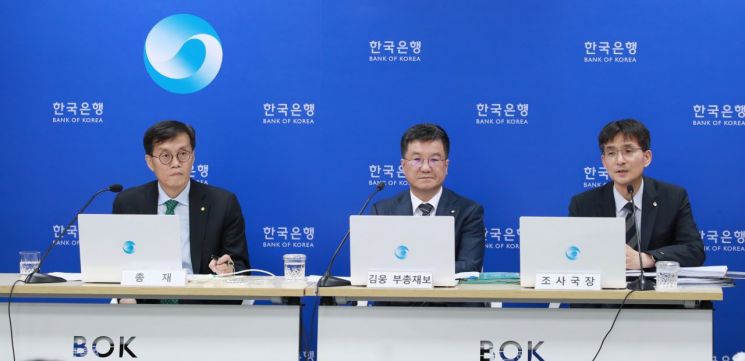
Director Choi added, "Amid high uncertainty regarding the future trends of international oil prices, domestic and international economic conditions, and the extent of public utility fee hikes, the upside risks to core inflation are somewhat significant. If favorable consumption and employment trends continue, the pass-through effect of accumulated cost pressures on core inflation may last longer than expected."
Regarding the possibility that recent stronger-than-expected employment indicators could push prices higher, Kim Woong, Deputy Governor of the BOK, said, "The labor market continues to expand in face-to-face service sectors, and labor supply has increased, especially among women and the elderly, showing better-than-expected levels. From an economic perspective, this means income and consumption are rising, which could exert upward pressure on core inflation."
When asked about the need for policy measures depending on future inflation, Governor Lee responded, "The long-term inflation rate is expected to stabilize slightly above 2%. If prices deviate significantly from our expected path in the second half, policy responses may be necessary, but there are no signs of that yet."
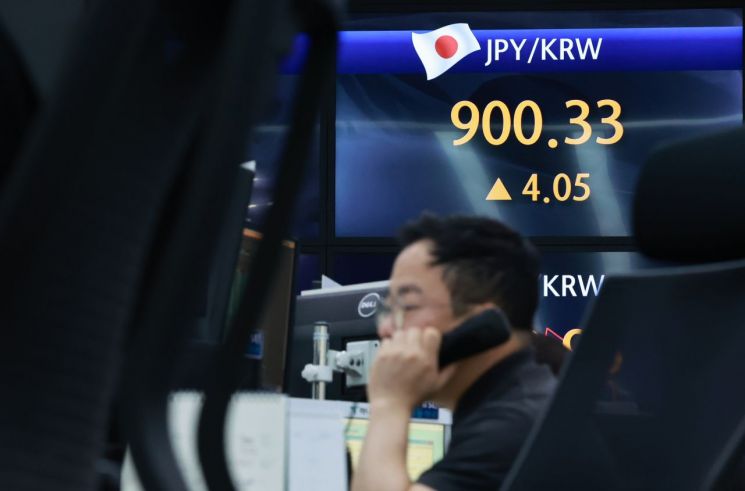
On the same day, amid the won-dollar exchange rate falling and the won-yen exchange rate entering the 800 won range, Governor Lee commented on the Deputy Prime Minister's mention of a Korea-Japan currency swap, saying, "The Korea-Japan currency swap can be discussed more as part of normalizing international relations and economic cooperation between Korea and Japan rather than for economic reasons. Even if it is not for exchange rate stability, I think it has symbolic importance as it reflects the restoration of economic relations, including economic exchanges and corporate investments, between the two countries."
Regarding the recent increase in household loans, he said, "Real estate prices fell by 15-17% last year but have recently shown signs of slowing down. During this process, real estate mortgage loans have increased mainly in the banking sector. It is premature to say that household loans are increasing and the real estate market is recovering at this point, and it does not seem like real estate prices will rise quickly."
© The Asia Business Daily(www.asiae.co.kr). All rights reserved.



















