It has been revealed that the regions vulnerable to emergency medical care, where it is difficult to receive treatment when severe emergency patients such as stroke and myocardial infarction visit the emergency room, are Gyeongbuk, Chungnam, and Jeonnam. This means that when emergency patients occur in these areas, there is a high possibility of patients drifting around looking for available beds, a phenomenon known as "emergency room spinning."
The Citizens' Coalition for Economic Justice (CCEJ) announced on the 19th the "Status of Emergency Medical Care Disparities by City and Province Nationwide" and improvement measures containing this information. Based on this year’s data, the study targeted regional emergency medical centers in 17 cities and provinces nationwide, analyzing the number of specialists, standard installation rates, and mortality rates in neurosurgery, thoracic surgery, and pediatrics.
First, the national average number of neurosurgery specialists treating strokes at regional emergency medical centers is 6.79, but Gyeongbuk (5.01), Chungnam (3.29), and Jeonnam (4.41) were all below this average. The standard installation rates for neurosurgery capable of 24-hour response (17%, 17%, 20%) were also less than half of the average (57%). The mortality rate of stroke patients per population within hospitals was also higher than the average (1.76). Gyeongbuk (2.62) had the highest mortality rate nationwide, while Chungnam and Jeonnam had rates of 2.10 each. A lower number of specialists and installation rates in emergency medical departments inevitably lead to higher mortality rates.
The situation in thoracic surgery was no different. The number of thoracic surgery specialists in Gyeongbuk, Chungnam, and Jeonnam (3.86, 3.86, 3.29) was far below the average of 5.18. Jeonnam had a 0% installation rate for thoracic surgery, and Gyeongbuk and Chungnam had rates of 17% and 20%, respectively, which were lower than the average of 40%. The in-hospital mortality rate for myocardial infarction patients was highest in Gyeongbuk at 10.05 nationwide, with Chungnam (8.59) and Jeonnam (8.02) also exceeding the average (6.75).
These regions also had poor pediatric emergency infrastructure. The number of pediatric specialists at regional emergency medical centers averaged 10.92 nationwide, but Jeonnam had only 1.65, Gyeongbuk 4.24, and Chungnam 6.12.
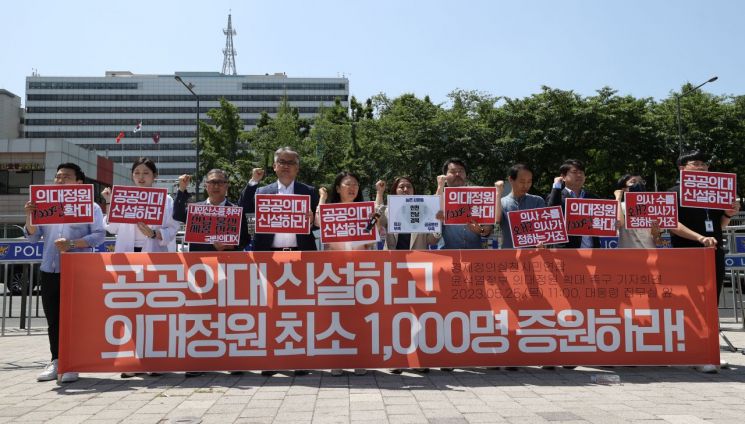
CCEJ reiterated that “to improve the gap in severe emergency medical care, it is necessary to increase the medical school quota by at least 1,000, including the establishment of public medical schools by region.” They also argued that a new physician training system, the public medical college, should be established to ensure that doctors are appropriately allocated to areas where they are needed.
© The Asia Business Daily(www.asiae.co.kr). All rights reserved.
![Clutching a Stolen Dior Bag, Saying "I Hate Being Poor but Real"... The Grotesque Con of a "Human Knockoff" [Slate]](https://cwcontent.asiae.co.kr/asiaresize/183/2026021902243444107_1771435474.jpg)
















