Court: "State Liability Recognized for Official Acts Losing Objective Legitimacy"
The Supreme Court has ruled that the state must compensate Kim Geoseong, former Senior Secretary for Civil Society at the Blue House (64), who served time for violating 'Emergency Measure No. 9' during the Park Chung-hee regime, for mental damages as well.
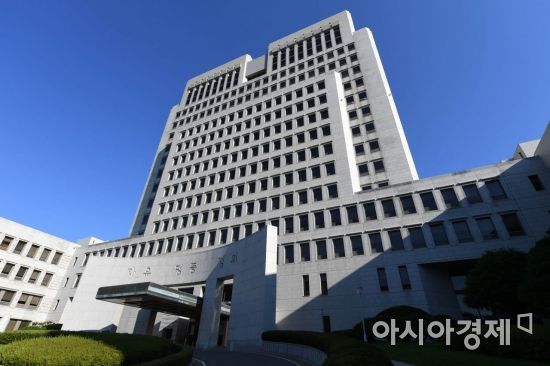
The Supreme Court's 3rd Division (Presiding Justice Oh Seok-jun) overturned the lower court's ruling that dismissed Kim's damages claim against the state and remanded the case to the Seoul Central District Court, the court announced on the 19th.
Kim was arrested in October 1977 on charges of violating Emergency Measure No. 9 by distributing a patriotic declaration criticizing the Yushin Constitution. He was tried while in custody, sentenced to imprisonment and disqualification, and served his sentence until he was released on a suspension of execution in August 1979. He later filed for a retrial and was acquitted in May 2014.
Subsequently, in September 2013, Kim filed a lawsuit seeking compensation for damages caused by Emergency Measure No. 9, but it was rejected on the grounds that he had already received 26.25 million won in compensation in 2006 under the former Democratic Compensation Act.
The old Democratic Compensation Act considered that if a victim received compensation, a judicial settlement was established, thereby barring claims for damages against the state. However, the Constitutional Court ruled this provision unconstitutional in 2018. Following this decision, Kim filed another lawsuit against the state in February 2019.
The trial focused on whether the issuance of Emergency Measure No. 9 constituted an illegal act by a public official, whether investigations and trials conducted under Emergency Measure No. 9 were illegal acts by public officials, and when the statute of limitations should begin.
The first and second trials held that "even if Emergency Measures were declared unconstitutional and invalid ex post facto, the exercise of emergency powers is a political act of the state, and the president does not commit a civil tort against individual citizens."
However, based on the plenary session ruling in August last year, the Supreme Court recognized the state's liability for compensation. The court stated, "From the issuance of Emergency Measure No. 9 to its application and enforcement, the state's actions involved public officials neglecting their objective duty of care in the execution of their duties, resulting in the loss of objective legitimacy of their official acts. Therefore, the state is liable for damages to citizens who suffered forced investigations or were convicted and imprisoned."
© The Asia Business Daily(www.asiae.co.kr). All rights reserved.

















