'14th Gwangju Biennale' Site Visit
Park Yang-woo, CEO: "We Will Elevate Global Status"
Expanding National Pavilions to Over 20 Next Year
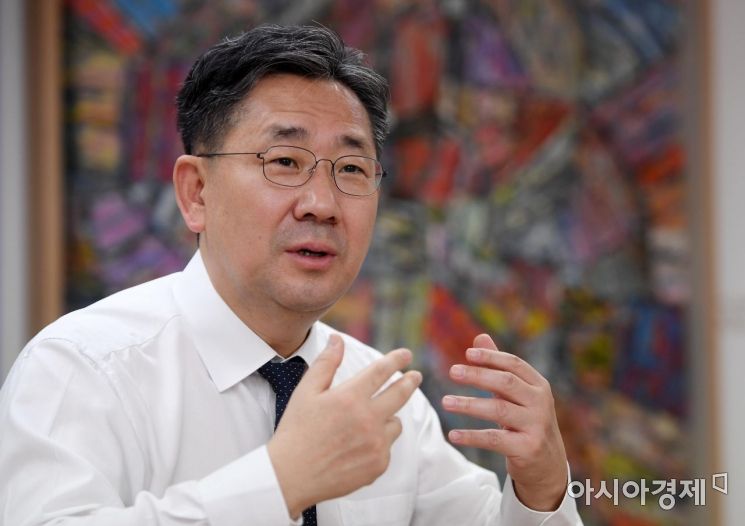
"This is both a crisis and an opportunity for the Biennale. The Gwangju Biennale will serve as a vanguard in shaping the discourse of contemporary art history and opening new paths."
Park Yang-woo, the director of the Gwangju Biennale, stated at a press conference held on the 14th, organized by the Korean Women Journalists Association, "The Biennale must break the limitations that general galleries or curated exhibitions have not been able to overcome and attempt to open a new era in art history." He repeatedly emphasized the raison d'?tre and essence of the Biennale. Park noted, "While the number of national and public art museums has increased and the art market has recently become more active, the Biennale, another pillar of the art world, has relatively slowed down, weakening its spirit of new challenges." He announced that the Gwangju Biennale, which will mark its 30th anniversary next year, aims to elevate its global status by discovering and introducing artists who transcend the times and leave a lasting mark on art history.
The dedicated exhibition hall for the Gwangju Biennale, located in Yongbong-dong, Gwangju, has been hosting the 14th Gwangju Biennale since April. As the first event held after the COVID-19 endemic, the number of visitors has reached approximately 250,000 so far, recovering to pre-pandemic levels, with a final target of 350,000 visitors. The theme of this exhibition is "Water." It focuses on the embracing and gentle power of water. The artworks depict a world where diverse ethnicities, histories, and traditions coexist and show solidarity despite their differences. Seventy-nine artists from around the world participated, 70% of whom are women. Lee Sook-kyung, senior curator of international art at Tate Modern in the UK, served as the artistic director. Choi Doo-soo, head of the Gwangju Biennale exhibition team, explained, "Director Lee’s strength lies in personally scouting artists on the ground. The artists introduced this time have long-standing careers in their respective regions and are characterized by the delicate sensibility unique to women."
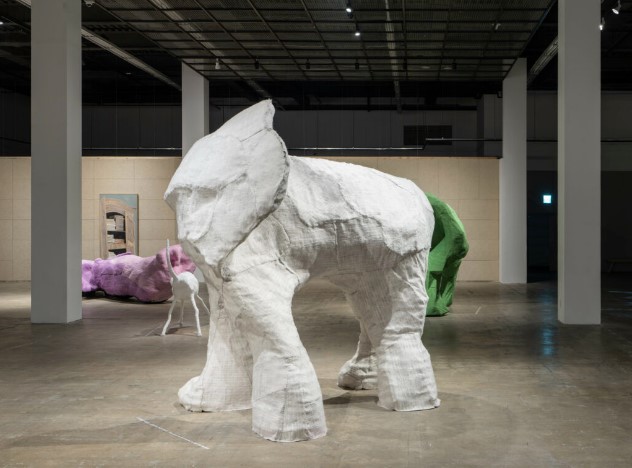
The exhibition begins with works by Bulebezwe Siwani, born in South Africa. Dozens of multicolored ropes made by twisting soil and wool yarn fill the space, overwhelming the audience. As an artist and "spiritual healer," he speaks of harmony between nature and humans. The Biennale’s representative work,
The Gwangju Biennale is originally held every two years, but next year, to celebrate its 30th anniversary, the 15th Gwangju Biennale will be held consecutively. This year, there were nine pavilions (national pavilions) featuring works grouped by country, including Canada, Switzerland, and the UK. Next year, more than 20 pavilions are expected to be located throughout Gwangju, attracting visitors. The plan is to establish the Gwangju Biennale as a representative tourist attraction, revitalizing the local economy and energizing the city. Nicolas Bourriaud, who has extensive international experience, has been appointed as the artistic director. Park said, "Next year, under the theme of 'Space,' we will faithfully present the spirit of the times and propose new trends. I hope visitors will feel, 'This is the real Biennale.'"
© The Asia Business Daily(www.asiae.co.kr). All rights reserved.


















