The Supreme Court has ruled that even if it is not possible to directly confirm whether the act of posting nude photos of unidentified individuals on the internet was against their will, the act can still be punished under the Sexual Violence Punishment Act.
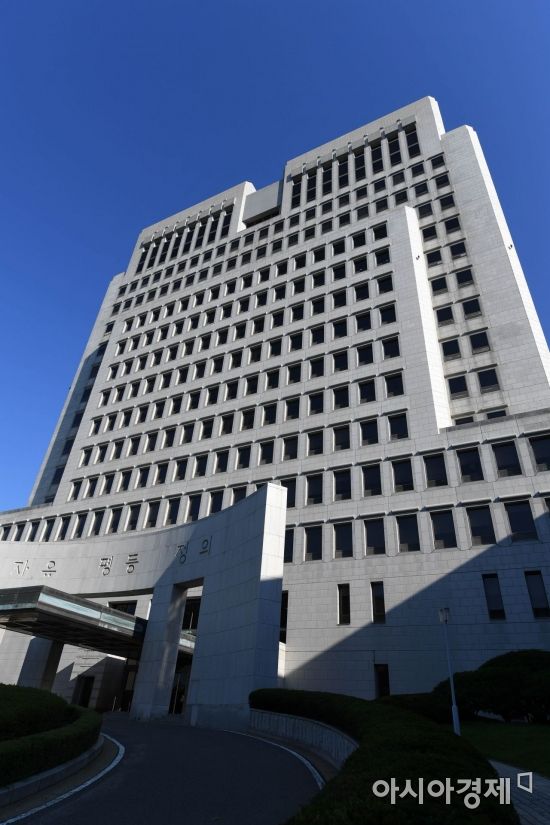 Supreme Court. / Photo by Mun Ho-nam munonam@
On the morning of the 15th, the Supreme Court's Third Division (Presiding Justice Lee Heung-gu) overturned the lower court's acquittal in the appeal trial of Mr. A, who was charged with violating the Sexual Violence Punishment Act (filming and distribution using a camera, etc.), and remanded the case to the Seoul Southern District Court.
The court stated, "In this case, where the identity of the subjects is unknown and their consent cannot be clearly confirmed, whether the photos were distributed against their will should be determined comprehensively by considering the relationship between the subjects and the photographer, the circumstances of the filming, the degree to which sexual desire or shame is induced, the identifiability of the subjects, and the circumstances of acquisition and distribution of the photos."
It also added, "It must be taken into account that if the photos are rapidly and widely distributed on the internet, it can cause tremendous harm and suffering to the victims."
Earlier, in September 2021, Mr. A posted files of photos of an unidentified man and woman, obtained through an internet search, on a certain community site’s bulletin board under the title "Hanguk Yadong" (Korean Porn).
The man and woman in the photos were sitting on a bed, and the man was nude.
The prosecution initially indicted Mr. A on charges of distributing obscene materials under the Information and Communications Network Act. The first trial court acquitted him, stating that "the photos do not qualify as obscene videos," reasoning that shadows obscured the main body parts making them difficult to recognize, and the man and woman were not posing in a way that suggested a sexual relationship.
The prosecution additionally indicted Mr. A for violating the Sexual Violence Punishment Act (filming and distribution using a camera, etc.). Accordingly, the second trial focused on whether the photos were distributed against the will of the man and woman.
Mr. A was acquitted again in the second trial. The second trial court stated, "The man in the photos appears to be the photographer. This corresponds to a case where he filmed his own body directly, and it is possible that the video was filmed for the purpose of distribution," adding, "Unless an investigation of the man is conducted, it cannot be proven that the defendant’s act of distributing the photos was against the man’s will."
It continued, "There is a strong suspicion that the man secretly filmed the woman, but since no investigation of the man and woman was conducted, it is also possible that the video was staged to appear as if it was secretly filmed." It also added, "Even if it was secretly filmed without the woman’s knowledge, the possibility that it was later consented to and distributed cannot be completely ruled out."
However, the Supreme Court ordered the case to be re-examined and judged. It pointed out, "At the very least, it is hardly conceivable that the woman in the photo consented to the distribution of the photo," and "The defendant’s act was carried out against the will of the subjects, and there is sufficient reason to believe that the defendant was aware of this circumstance."
© The Asia Business Daily(www.asiae.co.kr). All rights reserved.
















